Write On!’s Eithne Cullen interviews Sarah Westcott
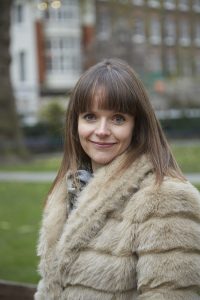
As an award-winning poet, journalist and observer of the natural world, Sarah embodies the art of transformation. Her journey from the fast-paced world of journalism to the reflective space of poetry mirrors the evolution at the heart of her work: the shift from reporting the world to truly listening to it. Sarah has won poetry prizes, including: The London Magazine, Poets And Players and Manchester Cathedral Poetry Prize. She’s also the author of two acclaimed collections: Slant Light and Bloom. As a poet, I love how Sarah’s writing captures the beauty and fragility of change. She reminds us that creativity, like nature, is a living, evolving force: an ongoing act of (R)Evolution.
Sarah pops up on my screen on a bright autumn morning. We agree, it’s the perfect time and setting for a conversation that covers nature, nature writing and so many aspects of evolution and transformation. Having attended one of her workshops, I’m keen to discover if she thinks, like me, that creativity is a way of making sense of change and finding meaning in transformation.
I begin by asking about how Sarah’s love of words and language has come about. She shares how she’s always been “fascinated” and “transfixed” by the natural world, concluding it’s almost certainly linked to the “unmitigated nature” her north Devon childhood offered. It’s clear that, for Sarah, the living world and the world of language are intertwined; she tells me how she uses a “larder” of words.
This encourages me to ask Sarah about her transformation from journalist to eco-poet. She explains that, as a journalist, she’d needed to be concise: “winnowing” facts down to fit the demands of journalistic writing. She also developed the sense of having to remove herself to listen, focus and tune in.
“A journalist’s writing is edited, making the story less personal – so different to writing a poem!”
Working in journalism on a national daily meant she was always moving on from one story to another; “whittling” to achieve the brevity demanded. Her poetry was a constant in the background and I wondered if this was a contrast to the style her day job demanded.
Sarah agrees this may well have been the case. However, she’s also quick to point out that she wasn’t consciously evolving as a poet. She felt her shift between the two worlds was an organic transformation; her writing truly evolving.
“I’ve always loved the freedom of poetry. You don’t have to behave or be good, you can go where you want, do what you want. For years my journalistic writing took precedence, but eventually they switched, the poetry becoming more important. It was a natural process – I wasn’t trying to control it all.”
She now writes mostly poetry interspersed with a little journalism and cites a recent article in Mslexia about poetry as an example of how these two worlds can collide.
At the moment, she’s completing a PhD in creative writing, which calls for another shift in her writing:
“The academic style of writing required is quite difficult for me. It’s not about the writing as such; rather the complexity.”
Sarah is keen to find a way to feed this into her creative writing. She refers to her PhD as: “An adventure I’m making my own.” She likes the idea of presenting her final thesis in a non-traditional form, drawn to a new movement linked to the lyric essay, combining personal creative non-fiction with poems.
Building on the idea of the evolution of types of writing and writers, Sarah tells me how much she admires writers such as Penelope Shuttle and Liz Berry; both evolving and experimenting with their styles across different works.
“It’s almost as though they are completely beginning again. Liz Berry’s The Home Child is a particular favourite: a mix of prose poems and songs, about children who were taken from the UK to work as domestic servants in Canada.”
We move to talking about her writing about the natural world, which first drew me to Sarah’s workshop. I ask what the phrase eco-poetry actually means. She says it refers to poems that are not human-centric: “They create a perspective that extends beyond human experience.”
Eco-poetry isn’t just about natural objects. It’s an approach that maintains an awareness of interconnectedness, often from an ecological perspective, while engaging readers, evoking personal associations and (though rooted in nature) remaining grounded in human language.
Sarah emphasises it’s crucial not to think of ourselves as separate from nature, reminding us that the perceptive equipment we possess must be used to tune in. Children do it instinctively; poets can too, but only after stripping away the veneer to discover what shimmers beneath. For Sarah, this means seeing humans as very much part of nature:
“What could be more natural than a human body? And think of how we respond to the world around us. I’m looking out of my window at the walnut tree. Now I see October’s golden leaves but in a couple of months’ time there will be starkness and then, next year, walnuts again. But though we’re comforted by the cyclical, we also recognise the fragility. It doesn’t matter where we live or who we are. We can find succour and solace in the non-human: at the edge of a motorway, little corners of life…”
This attention to the “little corners of life” links beautifully to the way Sarah uses natural objects in her workshops. When I ask about this, she draws comparisons to the nature table at school and the creative focus that comes from giving someone a single object: “It’s easier to write about an object you can feel, touch and smell and the associations it has.”
I love the way she refers back to our transformational autumn setting, pointing out that, if you hold a conker in your hand, it’s easier to write about capturing the whole story of a mature horse chestnut tree.
When I ask Sarah about how poetry is evolving, she explains:
“We’re in the middle of something transformational. Our attention spans can be fractured on a screen; something shallow and skippy. In contrast poetry and, indeed, physical books encourage us to stay ‘on the page.’”
Sarah is reading Moby Dick right now, recognising the privilege of having the time to engage with the written word in this way.
I ask her about the poems she’s written around the environmental loss we’re facing. She tells me this is where the power of poetry comes into its own. It’s the perfect vehicle for balancing awareness of beauty with the tragedy of ecological decline. But for her, rather than writing a ‘preachy’ message, it’s implicit.
“I deal with this by not really focusing on it; just assuming things will somehow filter into my work. I also think ambiguity is important. As poets we should explore loss and grief but also hope!”
She talks about using personal experiences of the natural world as a way of being “particular and specific,” and therefore creating awareness without being overwhelming or falling into cliché. One of Sarah’s recent poems was inspired by a visit to a glacier in Norway. She describes the physical intimacy of the experience.
“Walking on the glacier felt like trespassing; there was a sense of it being alive. Hearing the loud gurglings of the glacier made us feel it – She – was in trouble.”
I realise our time is nearly up and bring us back to our theme, asking Sarah to share her take on it in the few minutes we have left.
“As a woman, the idea of evolution is something that takes me back to my body. The small evolutions that go on every month, but also the wider transformation taking place in our lives. It reminds me of the importance of time; that we just need to ‘get on with it.’”
We circle back to how her work responds to both the small shifts of everyday life and the larger changes that shape us, much like the seasons she observes so closely. She reflects that each pamphlet or collection feels like a fresh start; sharing that looking back on her earlier work reminds her how important it is to trust our instincts and keep going, whatever the response.
“Sending work out into the world, is a positive act” she says and “maintaining belief in your own writing is essential.”
Her poems hold many things at once: grief, loss, hope, joy. All are grounded in the specific, in the natural world, in moments that resonate beyond themselves. As she puts it, “A poem can take you anywhere!”
Creativity is a way of noticing, of listening, of finding meaning in change.
We finish our conversation thinking, again, of autumn, aware of the changing seasons: a time for gleaning and foraging. I tell Sarah I’m certainly going to glean and gather words in different kinds of ways, inspired by how she takes inspiration from nature and the “larder” of words she gathers and stores for her writing.
*****
Issue 27, featuring eco-poet Sarah Westcott is out now. You will find it in libraries and other outlets. Alternatively, all current and previous editions can be found on our magazines page here.

You can hear great new ideas, creative work and writing tips on Write On! Audio. Find us on all major podcast platforms, including Apple and Google Podcasts and Spotify. Type Pen to Print into your browser and look for our logo, or find us on Podcasters.Spotify.com.
*****
If you or someone you know has been affected by issues covered in our pages, please see the relevant link below for information, advice and support: https://pentoprint.org/about/advice-support/