As we near the very end of 2025, it’s the perfect time to look back at all the insightful advice we’ve had this past year from the 24 authors we’ve interviewed.
“Don’t wait for the perfect time and story/idea to start. Just make a start and you’ll get some ideas along the journey!”
Sanjana Arunkumar
“I would tell aspiring writers to keep writing, without the constant worry of making errors or letting self-doubt take over. Writers can often become their own worst enemies, questioning each choice that they make; however, the key is not to give up, but to persevere and to remember that writing is personal. First and foremost, it’s the writer’s opinion that matters as well as conviction and belief in one’s work. Only we as writers can judge the quality of our work; initially, at least. If writers can get past this stage and adopt an open-minded approach thereafter, they will quickly move towards the creation of the piece they’d intended.”
Lucineh Danielian
“Read, read, read! To become a good writer you have to read and take in as much storytelling as possible, so as to learn and sharpen your craft.“
James Thomas
“To keep going. Experiment with different genres and writing styles and enjoy the process.”
Tracy Ryden
“Trust your own voice. No one else sees the world like you do, no one else has had those experiences. Write to find out what you think, write because it’s a way of tuning into yourself. Grace Paley says: “Everyone is articulate when they’re telling their own story.” I love that and find it very encouraging!”
Gemma Seltzer, Write & Shine
“Choose a story that inspires you, fall in love with your characters and always remember: if you want your work published it must be marketable.”
Viv Foster
“This will sound counterintuitive, but don’t get bogged down in the technicalities of writing (e.g. punctuation, spelling). We tend to think too much about the process of creating, when we should really be doing the creating; i.e. not just thinking about it! As long as you feel whatever it is you’re writing, editing can follow much later on in the process. I wouldn’t even say that intention is the most important thing either, as I’ve often started writing about one subject when my heart has taken me to another by complete accident. In my opinion, the best pieces of writing aren’t planned, they’re felt in the moment. So just write. Worry about the rest later!”
Charlotte Faulconbridge

“As a journalist, I’d spent so long writing light and fluffy pieces around celebrities I’d interviewed I wanted to do something that was going to challenge me. Fiction allowed me to explore something deeper. Of course, there’s a light side to life, but it’s the dark side people want to read about. We’re drawn to the darkness of others.”
John Marrs
“Be prepared to keep going back to the drawing board and don’t give up!”
Geraldine Stevens
“Be authentic and trust your own voice and story.”
Gemma Bishop
“I would give the same advice I received from the sculptor Kathleen Shillam when I was in my twenties. My great uncle and aunt were sculptors based in Brisbane. I had sent her some lino-cut prints of mine and she replied praising the composition of one of them, writing that she believed it was not what you say but how you say it that is important in art and that they were always more interested in the design than the meaning. At the time I was quite resistant to that idea, considering the meaning to be all-important; however, in time I came to realise she was perfectly right.
The meaning, no matter how important it is to you, can only be conveyed through the medium you use. If that medium has not been shaped in such a way that it arrests the attention of a viewer or reader, then nothing will be conveyed at all. The meaning is not concrete; often people will take different interpretations from the same work. I concluded that, although art stimulates meaning, the artist has limited control of that meaning and all they can do is concentrate on making the thing as well as possible and to do that you need to concentrate on the form. Composition is the combination of all the elements into a whole. When I realised this, my work began to slowly improve. There is a particular quality essential in each medium. When writing poetry, I find it’s important to read the work aloud as I go.”
Andrew Shillam

“If Jane Austen was writing now, she’d be given a pink cover. Nobody would have looked at the ‘womeny’ romantic fiction! I feel very strongly that implying one kind of writing is worthy of study, when another is not, is a fallacy.”
Sheila O’Flanagan
“There’s a saying: “If you want to be a writer, you must read lots first.” It’s true. You must read lots, no matter what. If you want to write novels, it’s important to read lots. Once you combine reading with the practice of writing, you are then ready to start your journey as a writer. Keep on taking feedback as to how you write. It might also help you to join writers’ forums, so you can regularly hear from others in your position.
Apart from all this, the next step is to edit your work; a skill you develop as time goes on. If you’re ready to move to the next step, feel free to submit your work to local or national writers’ competitions. Doing this will help you get noticed as a writer and collect further feedback.
View your experience as a journey. I know so many writers have had knock-backs. It’s a journey. If you enjoy something, it’s worth pursuing!”
Ripon Ray
“Read. Read widely. Beyond your chosen form. You must try to read for pleasure, but also read with intent. How does a writer communicate ‘xyz’ ideas? What is it about their work that resonates with you as a reader? What didn’t, and why? I would also say that you have to know the writing rules before you break them. Experiment, be playful, you will write a shitty first draft (we all go through it!) but be persistent with your writing. No one can write like you. So write on!”
Arun Jeeto
“Aspiring writers could think of writing with an analogy of sculpting a masterpiece from a huge slab of rock. The rock represents your thoughts, ideas and fantasies. The sculpting of the rock represents the writing process of unearthing the basic structure of your story from your consciousness. Chiselling represents the editing process, where you refine your story endlessly until you reach a beautiful piece of artwork.
I think this mantra is important to keep in mind as the writing process requires constant, long-term chiselling and sculpting (hard work and dedication) before you reach a finished body of work. Hopefully, this really grounds you to stay the course and, when you complete your final manuscript, it will be well worth it!”
Dami Edun
“Never give up, no matter how long it takes or how many rejections come your way. It comes with the territory. Rejections aren’t a reflection on your ability as writer, but they may be a reflection on how patient you are! Always be aware of what could be improved in your work. If your book is getting repeatedly rejected, it’s probably a sign it wasn’t ready, and you still have another layer to add. Never stop editing: simplify sentences, get rid of flabby text and think harder. On days you can’t write, read.”
Kate Potter
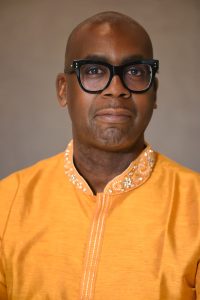
“Despite access to technology and resources, Britain stands at a crossroads. The power of writing and communicating is going to be even more critical. People want to be inspired.”
An advocate for giving ourselves permission to write, he recommends making the most of the existing infrastructure of writing networks, groups and platforms, citing Write On! as a prime example.
Patrick Vernon
“I would say, be obsessed with your characters! If you don’t love them or think of them as real people, then no one else will. Writing is first and foremost about belief, and you need to believe in your story completely as you are writing it.”
Costanza Casati
“Read widely and find a creative crowd, a writing or reading group, for inspiration and support. If you are unsure what to write, start small: blogs, reviews. Find your rhythm. Look online. There’s a lot of advice and expertise out there, some of which you’ll have to pay for. My affirmation was entering competitions. Enter the ones where you get feedback and take it from there. Keep reading and read around the genre you want to write for.”
Tony Durrant
“I would say just to write a lot, whatever you feel like writing, whether you finish a story or not. I’ve been told by people at the ‘Imagining History UK’ summer writing programme that no time spent writing is wasted since it’s a muscle and the more you use it, the easier it becomes. I really like that idea!”
Abbie Englund
“Actually, there are two pieces of advice: first, read everything in your chosen genre, both good and bad. That way, you’ll learn precisely what it is that makes the genre work. It can be very encouraging to read a bad book from time to time; something that makes you say, “Hey, I could write better than that!” My other piece of advice is to write something you yourself would pick up from a shelf and read. Don’t write the book you think will be popular; write the book you’re passionate about.”
Tom Mead
“Don’t lose heart. The one thing all published writers have in common is that they didn’t give up. Broken Horses experienced a LOT of rejection, but I tried not to take it personally. As a theatre-maker, I’ve seen a lot of great actors not get parts they auditioned for, even though they were really good and could have done a great job. So I know the rejection isn’t personal. Now, Broken Horses has found the right home and I couldn’t be happier.”
Kate Beales

“I’ve always loved the freedom of poetry. You don’t have to behave or be good, you can go where you want, do what you want. For years my journalistic writing took precedence, but eventually they switched, the poetry becoming more important. It was a natural process – I wasn’t trying to control it all.”
Sarah Westcott
You can’t be anything less than inspired after reading all that writerly advice! Everyone here at Pen to Print and Write On! wishes you an extremely creative and fruitful 2026.
*****
Issue 27 of Write On! is out now and you can read it online here. Find it in libraries and other outlets. You can find previous editions of our magazines here.
You can hear great new ideas, creative work and writing tips on Write On! Audio. Find us on all major podcast platforms, including Apple and Google Podcasts and Spotify. Type Pen to Print into your browser and look for our logo, or find us on Podcasters.Spotify.com.
*****
If you or someone you know has been affected by issues covered in our pages, please see the relevant link below for information, advice and support: https://pentoprint.org/about/advice-support/