By Niema Bohrayba
Few historians have done more to shape popular understanding of medieval and Tudor England than Dr Alison Weir. With nearly four decades of writing behind her and 40 books to her name, her career has been built on making the past vivid, intelligible and human.
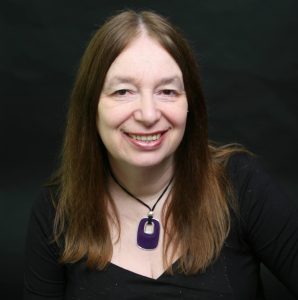 Alison is the UK’s biggest-selling female historian, having sold over three million books. She’s now working on two concurrent series: the Tudor Rose Trilogy about Elizabeth of York, Henry VIII and Mary I and England’s Medieval Queens – a quartet of historical non-fiction. As an avid reader of medieval history, Alison’s books are treasures I never tire of exploring.
She appears on my screen without fuss: calm, focused, and ready to begin. For years, Alison’s books have been steady companions on my shelves, shaping the way I think about history and storytelling. Now, at last, I’m about to meet the mind behind those pages. I’m both thrilled and filled with anticipation, eager to learn from a writer whose work has long inspired me.
I begin by telling her how powerful I find her work and how strongly I connect with the emotional and moral complexities of the eras she explores. I ask her how she’s able to make the past so vivid.
Alison tells me history is something inhabited; not just a chronology of facts, but an accumulation of context and detail:
“It’s the little things that bring stories to life. They make history human and accessible.”
Letters, household accounts and offhand remarks preserved in archives transform the past from abstraction into lived experience. It’s this insistence that shapes our discussion of the Middle Ages, a period often judged harshly through a modern lens.
“I’m always trying to bring history to life by giving it context; making it vivid within its own moral and social framework.”
Writers and artists have always responded to the currents of their own time, but Alison suggests that ours creates a particular kind of productive tension; one shaped by digital saturation. Even as someone who eschews social media and limits screen time, I’m keenly aware that our era offers unprecedented access to history. Manuscripts are digitised, archives searchable, the past endlessly repackaged in popular culture. I find myself wondering whether such proximity makes originality harder.
Alison shifts the emphasis. For her, the question is not originality, but integrity. The historian’s task is not to make the past more palatable, but to allow it to remain distinct.
“The contrasts are obvious. And they’re instructive… When I’m writing historical biography, I don’t try to draw parallels. You can’t judge people by today’s morals.”
Interestingly, when she began writing narrative history, her approach was dismissed as old-fashioned. Today, accessibility is increasingly recognised as a strength.
“Historical novelists and non-fiction writers often access the same sources. The difference is in presentation. Making history readable doesn’t mean making it inaccurate.”
Looking back, she believes history still offers space for fresh storytelling; not by recycling familiar narratives, but by re-examining them. As new evidence emerges and perspectives shift, each book becomes part of an ongoing debate about how power, belief and identity have shaped societies.
So I ask whether medieval struggles still resonate today.
“Yes, very much so. Particularly when looking at how power and belief operate across cultures. Before 9/11, many in the West struggled to comprehend the force of religious fundamentalism, but there’s been a much greater awareness since.”
In medieval Europe, that force was central rather than peripheral. Society was deeply structured, underpinned by faith, hierarchy, and a strong sense of order. “People believed God had called each person to a particular place in the world,” Weir explains.
Social mobility existed, but it was limited, often only achievable through education or the Church. Today’s fluidity, she suggests, is both liberating and destabilising. “We’ve lost that sense of order,” she reflects, “but we’ve gained freedom, and people are more able to change their status now.”
Alison explains that, in contrast to today, the Church wielded immense power and respect for the monarchy was profound. She goes on to say that, in our modern world, this absolute worldview would be almost impossible to maintain, as digital technology has transformed how history is recorded and witnessed.
“The immediacy is extraordinary. Events that would once have been filtered through weeks of reportage or official interpretation are now experienced in real time.”
She points to moments such as the live streaming of the meeting between King Charles and the Pope to a global audience. The images now circulating are a visible outcome of deep historical change, reminding us that progress often moves slowly, even when modern communication makes it appear instantaneous.
“Moments like these have been hard-won, overcoming centuries of religious division and entrenched bigotry.”
Nowhere is this more obvious than in discussions of women’s lives, so we move on to how modern readers can struggle to reconcile medieval attitudes toward women with contemporary values.
Alison insists we need to judge the past within its own framework, not ours.
“We have very different views about women today!”
She argues this is not marginal but structural.
“The difference is absolutely huge, particularly regarding marriage. For centuries, women were legally treated as dependents; their property automatically becoming their husbands’ –women with the most rights were widows.”
Among the aristocracy, marriage was inseparable from politics and territory. While these unions are often portrayed as uniformly brutal, the reality was more varied. I ask how women managed to access power despite the challenges.
Alison explains: “It was always through men… fathers, husbands, sons. Yet within these constraints, women could exercise remarkable authority. As state papers attest, when Catherine Parr served as regent for Henry VIII, she was effectively running the country. Incidentally, she was also the first English queen to publish a book under her own name.”
Yet such authority was precarious. Women were uniquely vulnerable to political attack, with accusations of witchcraft frequently used as weapons. As Alison tells me about Joan of Navarre, Eleanor Cobham and Jacquetta of Luxembourg, I find her comparison to modern witch hunts unsettling: “Online trolling operates on the same herd instinct.”
Alison’s work is renowned for its depth of research, yet she’s candid about the limits of crafting history as story, admitting: “There’s never enough room for everything,”
Even in non-fiction, selection is unavoidable. As I listen to Alison, it becomes increasingly obvious the task is not one of accumulation, but of judgement. What matters is clarity without distortion; interpretation rather than invention. Though these days publishers may favour tighter narratives, compression in itself isn’t the goal. I wonder whether this pressure drew her towards fiction?
“Not entirely,” she shares. “For me, it was also a way of responding to gaps in the historical record. In fiction, you sometimes have to come down on one side or another. Imagination does come into play but you still have to keep things grounded. Even when the evidence is ambiguous, research informs every decision.”
I turn our conversation to the writing process itself. As a budding writer, I’m curious about the daily rhythms behind literary success; the habits that sustain it. Alison is quick to dispel any notion of a romantic routine. “I’m beginning to wonder if a typical writing day really exists!” she laughs.
When circumstances allow, she’s at her desk by mid-morning, structuring her time carefully between fiction, non-fiction research and exercise. There’s no magic wand, just steady application.
The secret, she insists, is discipline. “Get something down. You can always edit later.”
This seems a natural moment to ask who she’s writing for.
“I think of the people who are interested. There’s never one single, ideal reader.”
Though women tend to form the majority at her events, the noted diversity of her readership bears this out. Alison believes this comes from a shared curiosity. To her, it’s increasingly shaped by screen adaptations; something she views with mixed feelings.
Television, she acknowledges, can draw people into history, but it also risks distortion.
“People assume that if it’s on screen, it must be true.” That assumption, she argues, is precisely the danger. Historical drama often operates in what she calls a “fantasy world”: entertaining, but not authoritative.
Books, by contrast, demand a different kind of engagement. “Reading requires time and attention,” she says, “but it also allows for depth.”
As our discussion draws to a close, I ask what she hopes readers will take from her work. Unsurprisingly Alison’s answer challenges me to think about my own response.
“Enjoyment matters, but so does understanding. I’d like readers to come away with a sound view of the subject. The idea that every book is part of an ongoing conversation matters.”
That idea of a conversation feels important. To me, it’s not only about the one we’ve just had, but it also encompasses the many we’ll continue to have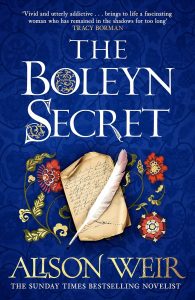 as a society.
History doesn’t belong to us. We enter it briefly, interpret what we can and add our own small record before stepping aside. The rest is context, reflecting the choices we make within it.
Alison’s new novel, The Boleyn Secret, will be published in May.
*****
Issue 28 of Write On! is out now and you can read it online here. Find it in libraries and other outlets. You can find previous editions of our magazines here.

You can hear great new ideas, creative work and writing tips on Write On! Audio. Find us on all major podcast platforms, including Apple and Google Podcasts and Spotify. Type Pen to Print into your browser and look for our logo, or find us on Podcasters.Spotify.com.
*****
If you or someone you know has been affected by issues covered in our pages, please see the relevant link below for information, advice and support: https://pentoprint.org/about/advice-support/