
Showcase: The Silenced Drum + My Readers’ World + The Evenings We Borrowed + Snatched Moments
- 29 April 2026
- News, WriteOn Showcase
Edited by Sebastian Elanko
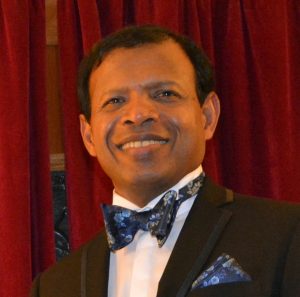
Welcome to my last Showcase for April. I wanted to start by saying a huge thank you to all the readers and writers who have engaged with me; it’s been my pleasure pulling these pages together for you. I want to concentrate our thoughts on borrowed silence. Something we don’t think of often and yet it affects our lives. Maybe it was a teacher looking at your artwork who said: “I would concentrate on writing if I were you,” which made you stop producing art. You borrowed the silence and stopped creating. Expression in any form is one of the ways we communicate with the world, so that borrowed silence has a lifelong implication.
As writers, we see rejections. The writer who isn’t silenced is the victor, as they don’t give up on their dream and belief in their work. They go from rejection to rejection until the work is accepted and in print. So, I urge you never to give up and keep following your dreams, as one day they may come true!
*****
Originally, I was due to be the Showcase editor for March and, being diligent, I started my research early. When looking at the theme of borrowed silence, something jumped out to me that happens on the 25 March as part of the United Nations days. It’s the ‘International Day Of Remembrance Of The Victims Of Slavery And The Transatlantic Slave Trade.’ We live in a society where life is so different to what it would have been many years ago. It made me reflect on borrowed silence – how these individuals had no voice for their autonomy and needed to live by strict rules to survive. I wrote the following short story in response to what I’d read.
The Silenced Drum
Year 1788
“My grandmother spoke of the German men who once said we were equal. That was 1688. The Quakers wrote it on paper. But no one listened. So, we borrowed silence for exactly one hundred years from today.”
Beck told her bridesmaid this, while she was decorating her hair for the wedding. Beck’s father, Cato, was watching his loving daughter with tears of joy because she was getting married. Beck was a free girl, unlike him when he was 13. Cato was an early pioneer of manumission by a Quaker family before that; his mother, father and he himself were slaves for a different master. Cato was bought by a Quaker family and freed just after few months later, when he was 14.
Cato heard what Beck said to her friend. It took him 40 years back in time.
March 1748
Jem, Cato’s father, was lying on his stomach on the little wooden hut floor and moaning and groaning with pain. Whiplash wounds on his back. Torn skin, with exposed red flesh wounds. Grace, Cato’s mother, was applying a paste of yarrow plant leaves on his wounds with tears in her eyes. Ten-year-old Cato was crying, holding his mother’s shoulder. The reason for the lash was that his master had caught him having few sips of rum, after nine pm, following a hard day’s work in the farm. Jem was not allowed to talk to anyone apart from his immediate family or his masters.
Jem told Grace: “There are ‘Black Codes’ passed by Pennsylvania to control slaves. We have to live by them to stay safe. I can’t remember them all, as there are so many, but these are the ones I remember:
- Slaves cannot meet in groups of more than four.
- Slaves cannot travel more than ten miles from their master’s residence without permission.
- Slaves cannot not marry Europeans.
- Slaves are not allowed trial by jury.
- Slaves cannot buy liquor.
- Slaves found ‘tippling or drinking’ after nine pm receive ten lashes.
It’s the last one I got caught out with. I was just finishing the last drops.”
Jim never repeated this mistake. The lashes kept his silence.
A few years later, Cato’s family was sold to a Quaker family. When Cato was 14, the family was manumitted by the Quaker family. On his father’s deathbed, he handed over an old drum and told him: “Son, this is my ancestors’ drum. Our old masters didn’t like to play it, as they thought we’d communicate with each other. I’m giving it to you. Preserve this. This is our identity.”
“I’m ready, Daddy.” Beck’s voice brought him back to reality.
His father’s figure came before his eyes and he thought: ‘They took the drum first. Then the language. Then the names. But the rhythm remained. Borrowed in the heart, passed down in secret, waiting for a hand brave enough to play it again.’
Cato rushed into the room, opened the old wooden box, took out the drum, ran out to the garden where the wedding stage was, and began to play it. The borrowed silence was broken on his daughter’s wedding day. The music floated through the air like the first drumbeat of a people who had borrowed silence long enough.
© Sebastian Elanko, 2026
*****
In the spirit of not letting your ‘drum’ be silenced, Mary’s lovely poem shows us, if we look hard enough, it’s possible to start hearing through the borrowed silence.
My Readers’ World
I turn the page
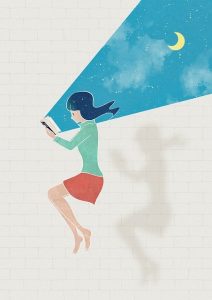
The world around fades
I am in a verdant forest
I am on a speeding train
I am in a dank dark cellar
I’m with a murderer
I’m in love and out of it
I’m on the battlefield
Transported away
Leaving my world behind
Engrossed in the tale
Until teatime.
© Mary L Walsh, 2026
Connect with Mary on Instagram: @marelwa60
*****
This piece from Divyanshu, The Evenings We Borrowed, asks us to consider: what do we borrow from the ones who wait for us in silence? Who asks for nothing but gives us everything in return? Through his words, Divyanshu makes us reflect on the fact that sometimes the most precious things in life arrive on four quiet feet, stay for a season and leave us richer than before: borrowed strength through silence and a presence.
The Evenings We Borrowed
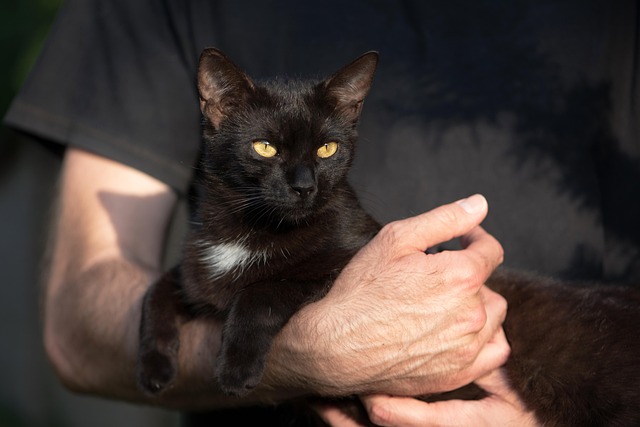
Julie came into his life quietly, the way most important things do.
There was no grand beginning. No moment that announced her importance. Just a small, warm presence that slowly made a place for itself in his everyday life. Before he realised it, she was part of everything. Not in a loud or demanding way, but in the simple certainty that she would always be there.
Every evening, she waited.
No matter how long the day had been, no matter how late he returned, Julie would be there with eyes bright, tail moving with a kind of joy that never seemed to fade. The day didn’t feel complete until he saw her.
They would walk together, often without direction. Sometimes through the park, sometimes along the beach, where the waves stretched endlessly into the horizon. Julie would run ahead, chasing waves she never caught, then come back to make sure he was still there. And he always was.
In those moments, life felt simple.
When he was upset, she seemed to know. She’d come closer, sit beside him quietly, offering a kind of comfort that didn’t ask questions. Sometimes she would rest her head on him. It was enough.
Julie had a way of making even ordinary days feel complete.
In the stillness of evenings, in the memory of footsteps along the shore, in the habit of looking for something that was no longer there, she remained.
What stayed with him the most were her eyes. Dark and quiet, filled with something he could never describe. They didn’t need words. They already knew. Her soft black fur, her small, restless energy, the gentle weight of her presence beside him. These were the details that stayed, long after time had moved on.
Because time did move on. It always does.
Julie was never his to keep forever. It was a quiet truth, hidden in those simple days and perfect evenings. She was part of a chapter that would one day end, no matter how much he wished.
And when she was gone, she didn’t leave emptiness behind. She left memories that stayed.
For a while, she had been his.
Borrowed, like all the most beautiful things in life.
© Divyanshu Solanki, 2026
*****
I just had to include Claire’s piece about the thought process and how what we think and what reality is can be two entirely different things. It’s truly amazing how one addition to the ‘family unit’ can make such a profound change and how so much joy can be brought into our lives in this way: by losing one thing, we gain another.
Snatched Moments
I used to have plenty of time to myself. Hours stretched ahead, waiting to be filled with writing, art, or piano practice. I could spend a morning researching and developing a short story for the women’s magazines I contribute to. But that was before my husband and I bought a puppy.
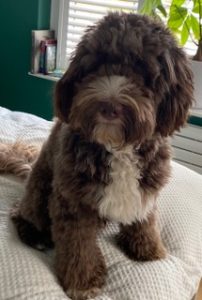
After losing our Cockerpoo two years ago, we decided we were ready to welcome another dog into our lives. What we hadn’t remembered was how completely puppies take over — especially one like ours. Joey is an Australian Labradoodle (a lively mix of Spaniel, Labrador and Poodle), and some days it’s as though he’s guzzled a couple of energy drinks, resulting him in zooming around the lounge or garden.
My time is now broken into fragments, snatched while he sleeps or carefully bargained-for with chews. He breezes through his so-called challenging dog puzzles and, as for filled frozen Kongs… gone in seconds. Writing still happens, but in shorter bursts now when he’s asleep, before he demands attention again.
The other day, he swiped my putty art rubber (it’s like Blu Tack) from my desk while I was engrossed in a drawing. By the time I realised, bits of chewed-up rubber were everywhere, including stuck to the bottom of my new slippers! I ended up spending ages snipping stubborn grey lumps out of his fur while he wriggled and loudly protested.
So, my time is no longer entirely my own. A brown and white ball of fluff has hijacked it with a particular fondness for stealing clothes from the linen basket, tearing up tissues and devouring any bits of litter he can grab from the street.
And yet, something has shifted rather than disappeared. His being here has given me something back, too. I take time for morning walks with Joey along our local beach, for chats with other dog walkers, and for noticing things I might once have hurried past, like the early birdsong while he snuffles in the grass. And because of his sociable nature, he wants to make friends with every dog and person, which usually brings a smile to people’s faces.
My free time may have shrunk, but I make sure what I have counts. The piano, however, has been a casualty, elbowed out for now. Ironically, the last piece of music I bought was The Way We Were!
Maybe ‘borrowed time’ is the right way to put it. I may not have the long, uninterrupted hours I once had and my time may look different now, but it isn’t lost.
Instead, it’s simply being lovingly shared.
© Claire Buckle, 2026
Connect with Claire on Instagram: @cloubuckle
*****
Thank you for spending your precious time with me over the last five weeks, exploring the different forms of borrowing from our surroundings. It’s been my pleasure to showcase work from many talented writers. As this is my last Showcase for April, I encourage you all to continue writing without bounds!
Cover Image Sourced From Canva
*****
Issue 28, featuring author and historian Alison Weir is out now. You will be able to find it in libraries and other outlets. Alternatively, all current and previous editions can be found on our magazines page here.

You can hear great new ideas, creative work and writing tips on Write On! Audio. Find us on all major podcast platforms, including Apple and Google Podcasts and Spotify. Type Pen to Print into your browser and look for our logo, or find us on Podcasters.Spotify.com.
*****
If you or someone you know has been affected by issues covered in our pages, please see the relevant link below for information, advice and support: https://pentoprint.org/about/advice-support/
Related News

Write On Interviews: Sisterhood And Storytelling – Diya Padiyar Explores Being Seen And Unseen With Jaspreet Kaur
- 18 December 2022
- News, WriteOn Interviews
