Write On! Features: The Cursed Novel
- 3 July 2026
- News, WriteOn Features
By Stuart Standing
It is said that locked away in the bowels of the Vatican is a book so dangerous it must remain hidden away for eternity. This book, The Grand Grimoire, cannot be looked at, handled or – God forbid – read. It is cursed. Across the globe are other such volumes: ancient texts that legend tells us will bring doom, despair and death to those who become intimate with them. These books, which include such horrors as The Book Of Soyga and Codex Gigas, have come down the ages to strike fear into the hearts of those who know their secret. They are damned books. Evil. The Devil’s work. And in 2025 they gained another member – my first novel.
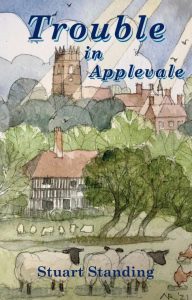 On the surface, my book looks innocent enough: country cover, light title. It’s exactly how I wanted it to look – inviting. And the text is the same – nothing threatening there: a wacky comedy full of eccentrics. All pretty safe stuff. But from the very beginning, as I wrote my innocent text and visualised my appealing cover, there were forces at work I was totally unaware of, dark forces that had made a decision: my book would never be read.
The power of this curse became apparent as soon as I began submitting the manuscript for consideration. Fifteen literary agents were so disturbed by the sample chapters they were struck dumb. Nor were publishers immune: a quick glance and they were petrified; stone Pompeii figures desperately reaching for the delete key. In the couple of responses I did get, the fear was tangible, trembling fingers making their way over the keyboard, the simple act of refusal a terrifying link to this lethal work.
At this point I should have shipped the manuscript off to the Vatican. But I didn’t. Or rather, the book wouldn’t let me. By now, I was fully under its spell, its power driving me, helpless, to the edge of the abyss. And over and in I went. Self publishing.
In forcing me to self publish, the book had pulled a masterstroke: this would guarantee it would never see the light of day! No Vatican vault needed; it would stay boxed away in my loft for all eternity. You see, the book knew things about self publishing I didn’t. For example, it knew that reviewers were wary of such titles: too many were below par. The book also knew that digital printing and print on demand had resulted in a tidal wave of self published books, countless desperately dog-paddling authors washing about desperate for reviews. And, most of all, it knew that in a world so totally plugged in to social media, my book was doomed to fail because it was shackled to The Man That Time Forgot, someone who didn’t own a mobile phone, hadn’t had a TV for over 20 years – and still favoured handwritten letters. The book gave out a shrieking, spine-tingling howl of delight: “I will never EVER be read!”
Oblivious to all this, I sent out my review copies, targeting all the big papers and magazines. Then I got busy opening my first Amazon seller’s account so as to be ready for the rush of orders.
We live in strange times, every day, consciously or otherwise, sidestepping corruption, deceit, hacking, money laundering and ID theft. So, although it all seemed a bit of a palaver, I submitted to Amazon’s grilling, clambering over the hurdles, pulling myself through the hoops, focused all the time on my end goal: all those sales. The final obstacle to my seller’s account was visual ID recognition. Which is a breeze for most applicants: your photo driving licence is compared with an image of your face transmitted via mobile phone. But remember, I’m The Man That Time Forgot who doesn’t own a mobile phone. So I had to move to plan B. Enter my wife.
If you’re going to live in the past it really helps if you have a partner who lives in the present. A partner who can take you by the hand and lead you through all that modern-world nonsense. My wife – ten years my junior – had supported the book idea from the start (even though the initial draft was so poor it brought her to tears) and was ready to help me negotiate this latest problem. We retired to her inner sanctum: a multi-screened, high-tech home office equipped with enough kit to launch a Mars mission. Positioned in her mission control seat, I was introduced to a little device staring at me from the top of one of the screens. “Right, we’ll do the photo recognition with the webcam.” And, as if by magic, there was my face staring back at me.
At 67, I don’t think my face has worn too badly. And yet there was something about it that Amazon didn’t like. Following the prompts, I moved this way; I moved that. We put more lights on; we put them off again. But no, Amazon weren’t happy about the face at all. Was it the short-shaved balding head? The scar on my upper lip? The stubble? All of which, I have to confess, did give me a slightly shifty look. Eventually, the convict face having been presented to them several times, Amazon had had enough and pulled the plug. More shrieks of delight from the book.
While I pondered what to do about Amazon, I decided to approach a nearby book shop. I’d make them an offer they couldn’t refuse. They refused it. Well, not exactly. They just didn’t reply to my email. Or the follow-up. So I tried again. And this time, my desperation obviously clear, I got a polite reply: A thanks, but no thanks. No thanks! I was offering them copies sale or return – no outlay at all. And they still didn’t want it!
What I was oblivious to was just how many begging emails independent book shops receive – all those new authors splashing about in their tidal wave: Please, please… Over here! So, oblivious as I was, I emailed back: Could I just send a copy in? I’m sure you’ll find it of interest. At which point, the manager started to sound desperate too: Dear Mr Standing. I mean this in the nicest possible way, but please don’t send me a copy! As I read the manager’s plea, I could feel my cheeks colouring with embarrassment.
It was about this time the bad dreams began. They were always the same: me a tiny Oliver figure facing a row of book critics seated at a huge table. They tap their pencils in irritation as I look at them, my arms stretching out, holding not an empty bowl but my novel. “Please read it.” And they all begin to laugh.
An artist friend suggested Instagram and Facebook, which I’d heard about but had no first-hand experience of. I joined Instagram first. And immediately realised just how out of touch I was with the modern world. I couldn’t get my head around all the stuff flying at me. It was mesmerising and terrifying at the same time. I deleted my account, fearing I might actually become addicted.
Facebook, although still shockingly alien, seemed slightly less bizarre and I quickly found somewhere authors could promote books. Bingo! But… I clicked on it and oh no, all those splashing-about authors again! It was complete madness, the volume of posts advertising books running completely wild. I threw my book into the mix and off it flew, lost forever.
The book had watched all of this, howling its howls, shrieking its shriek: “Never be read, never be read…” I kicked the lid of its box shut and forged on.
I arrived at Goodreads, the world’s largest community of book lovers. Anybody who’s anybody is on there – and so is anybody who’s nobody. I would join Goodreads, list my book, claim my author page and get busy promoting it to death. Joining was easy. Click. Done. Now all I had to do was list the book. I filled in the details and waited. Nothing. I waited some more. Still nothing. I sent a ‘help’ email. Nothing. Weeks passed. Nothing. The reason? Yes, all those new authors again. They were throwing out so many requests, the volunteers who list the books were buried under them.
But eventually, my book was listed. Now, time to grab my author page. Goodreads and Amazon are pretty chummy, so I can only guess that the reason for Goodreads refusing me my author page was that Amazon had sent them my mug shot: Strewth, look at that face! Whatever the reason, there was to be no rubbing shoulders with the famous for me. No rubbing shoulders with anyone. Poor sad Oliver.
From Goodreads, I shuffled down the street to LibraryThing and StoryGraph. Could I join? I could. Could I be an author? I could. Could I promote my book? I could. I almost burst into tears.
Immediately, I began to give books away, using a system where authors and publishers can donate books to madly enthusiastic readers in return for reviews. Wonderfully simple. Wonderfully effective.
As I finish this piece, the last of my review copies has been sent out and I’m waiting for feedback. It’s strange, but over the last few days the book has been quiet as a mouse.
I’ll take it as a good omen.
*****
Stuart Standing is the author of Trouble In Applevale, available on Amazon.
*****
Issue 29, featuring travel writer Tharik Hussain is out now. You will be able to find it in libraries and other outlets. Alternatively, all current and previous editions can be found on our magazines page here.

You can hear great new ideas, creative work and writing tips on Write On! Audio. Find us on all major podcast platforms, including Apple and Google Podcasts and Spotify. Type Pen to Print into your browser and look for our logo, or find us on Podcasters.Spotify.com.
*****
If you or someone you know has been affected by issues covered in our pages, please see the relevant link below for information, advice and support: https://pentoprint.org/about/advice-support/
Related News

Showcase: Music + Dark Blackberry Wine + The Ballad Borrower + I’ll Tell My Ma
- 10 June 2026
- News, WriteOn Showcase