
Showcase: To The Editor Who Rejected The Work Or Art + Dust In The Seams
- 1 July 2026
- News, WriteOn Showcase
Edited by Molly Ovenden
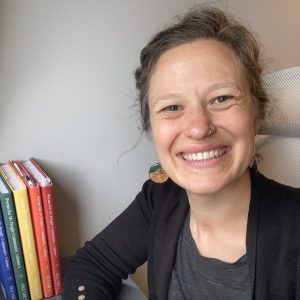
Welcome to July’s Showcase: Nostalgia!
I am Molly Ovenden, a contemplative poet. Vintage Smith-Corona typewriters in tow, I write poems for people in public. From silly to serious, poetic requests are commonly rooted in nostalgia.
Perched in pubs, cafes or food pantries, nostalgia is crucial to my regular practice. Requests could be with grief remembering a loved one, or joyous childhood recollections.
People approach, chatting about learning to touch type, their first typewriter. Smiling, their gazes drifting to imaginations past: their typing teacher, first secretarial job, Grandpa’s typewriter.
I am also part of London Writers’ Salon. Each week, we host Writers’ Hours, writerly companionship behind Zoom screens. The process itself emulates nostalgia. Thousands of writers have completed manuscripts and published work since we began in 2020.
Throughout July, I’m delighted to share various interpretations of Nostalgia. From travel memories to trips down memory lane, ancestral voices to stormy expanses of time, reflection conjures much for us to ponder. As we move through this month, I wonder what nostalgia each writer might provoke in you.
Our first piece comes from John Chinaka Onyeche. Something I love about this poem is how it points to the lasting strength and power of our written words and how they give voice to those whose voices we do not or cannot hear.
To The Editor Who Rejected The Work Of Art

Eburu ozu onye ọzọ, ọ dị ka ebu ụkwụ nkụ
Igbo Proverb
To the editor who rejected the work of art,
Say it’s a—written or otherwise,
Like this one, the poem in your hands.
Say you are a guest editor for a call,
Say you are a literary critic who goes about
Determining what endures and what dissolves
To be published: the taste that lingers or dies—on the tongue.
Listen, the taste of this poem is not to last;
It’s to goad your quiet over what is,
What was, and will not wait.
Yesterday we read it in journals, magazines—
That there was once a slaughter
In a country we couldn’t point to on a map.
And my grandmother would always say:
“Eburu ozu onye ọzọ, ọ dị ka ebu ụkwụ nkụ—
A dead body always looks like a log of wood
Until it belongs to your loved one.”
The world runs with wars around us,
And each of us will tell them—
To the next generation—how we helped
This generation to speak when others would not:
The little children packed in rubble
In Gaza,
In Ukraine,
In South Sudan,
In Palestine,
In Northern Nigeria,
In Somalia,
In Mali,
And then, in the silence between headlines.
In almost all parts of the world
Where sometimes we have no flights to go
But read them on the news or on poems
As this—yet we choose silence toward it
In the name of language and individual taste.
Today it is me, and tomorrow, yours,
And the same silent language and taste
Will silence you while you languish,
And we judge your outcry by the taste of your craft—
The grief in your art,
And the silence you once showed the world today.
(c) John Chinaka Onyeche, 2026
*****
Our second piece comes from Ashley Mangtani. I love the story’s remembering of life-changing experiences from teenage years. It nudged me to recall names and faces I have encountered and consider their profound impact on my life.
Dust In The Seams
The platform fills until the train arrives, and then it fills the train, and I go in with the rest of them, close enough that my shoulders stop being mine and I stop minding. Heat from the press comes up through the layers of wool, nylon and waxed canvas. Behind me, a woman promises someone a call from the house. Screens turn the faces above them on and off, one short-lived self and then another, and the carriage carries us north without a name passing between any of us. I have spent the day feeding an algorithm, putting words into the world that will be gone by morning, and the day still sits across the back of my neck. The train slows, the whole car leans, the doors part, and the crowd pushes me out before I have thought to move.
Beyond the steps, the evening is loose, untethered by a single destination or direction. The noise has room to spread now, footsteps coming apart from one another, the traffic at the junction soft, then louder as I approach. The route along the terrace runs straight ahead, the houses behind their railings holding their value and their quiet, flat brick cut by lines of iron, when I notice a lion’s-head doorknocker, worn bright by every hand but mine. The crowd thins across the junction into people aimed at rooms I will never see, and the green of the fields pulls at me the way it has since I was a boy. Nothing out here asks me for anything.
My feet take the turn before the rest of me, and warm air lifts off the grass and onto my arms, and for a moment it is the heat that met me when I stepped off the plane, the savannah waiting on the tarmac like a griddle, red dust thick in my mouth, the markets loud along the dirt roads, a boy who had never left with the whole of his life waiting at the end of a jet bridge. Before any of that, there was the airport, my dad pulling off into the traffic without looking back, me in the queue with my passport gripped in both hands. A horizon I couldn’t see beyond, waiting on the far side of the gate, one of 30, all 16, bound for a place that had only ever been a shape on a map, rattling through the reserve on buses called ‘Fat Cows.’
The fields open between the terraces, the path running beneath a neat row of plane trees, the lamps along it beginning to warm against a sky settling into its final blue. People sit out across the grass in rings, talking without hurry, the day’s decisions behind them. A laugh lifts off one of them and hangs in the air before it goes. The sound of it reaches a long way back, to Norman on the steps of the half-built schoolroom with a corrugated iron roof, teaching me a song, jambo, jambo bwana, habari gani, nzuri sana, his voice climbing and me missing, the two of us off to one side because I had questions and he had the patience for them. That night, I wrote it all down in my diary, every word, so I would not lose a bit of it.
He showed me things the others slept through. The bush turning grey, then gold, the Great Rift Valley opening behind it before the others woke. A day or so before we left, we put what money we had into a pot for him and the other guides, and they danced the Adumu for us, rising off the hard-packed earth as if it were spring-loaded beneath their feet, while we stood in the earth and clapped and could not come close, none of us saying the thing we were all holding back, that it was nearly over.
My footsteps lose their edge along the path, slowing to the gait of someone who has forgotten his front door. A dog crosses ahead of its owner and circles back and a runner goes by and is gone. A child bolts the length of the open green and turns and runs back, and there she is again, the girl who waited by the schoolroom each morning with her nose running and her hand already out for mine. Clare, though that was only the name I gave her, since we shared no language and she had no one of her own. She said my name in the one shape she could make of it and followed me across the Mara all day, six years old and sure of me the way no one has been since. On the last day, I emptied my bag into her arms: the pens, the notebooks, and the Polaroid of the school we had built together. She did not understand I was leaving. I’m not sure I did either.
Somewhere across the fields, a barbecue is burning down to its coals and the smoke comes over in a slow roll. It puts me back into the afternoon when the Maasai slaughtered a goat for us, because we had given them 42 days and they had given us everything. The blood they caught in a tin, mixed with milk, and drank down – and when the meat came off the fire, it was the softest thing I have ever put in my mouth. They put up a market the same afternoon, the sellers calling and laughing, holding out their carvings and cloth and forgotten wares of war. I spent what shillings I had left on a throwing stick and a small knife for my dad, who had driven me to the airport with the radio on and not much to say and for my mum, who had gone door-to-door with me for the three grand it took to get me there, two hand-painted elephants, something she could put on a wall.
The grass empties as the cold rises from it and the last few get to their feet. The windows along the far terrace come on one by one. A smell of cooking finds the path, onions, some kitchen at its ordinary evening work, and then it is pumpkin soup in a tin bowl and me, crying over it in the dark after a day on foot through the tall Kikuyu grass, sick for a home I had spent years wanting to leave. Each of us cracked at some point that month, after dinner, off on our own, and someone would come and sit close and say something or nothing, because everyone came in the end and, in the mornings, we walked out into the sun again and did not speak of it.
I pass the clock tower on the corner, cast iron and pink granite, Queen Victoria’s face pressed into the column looking out at all four points and do not look up to see what it has done with the hour. By the time the path runs out, the lamps have taken the last of the sky. The old feeling rises under my ribs, the one I first knew on the bus out of the Mara on the final morning, pulling away from people who had been strangers a month before and were the nearest thing I had to a life by the end, every face at the glass already a face I would not see again. I was too young to name it, but I felt it in my bones on the Fat Cow that morning, the heat pressing in, the savannah blurring past, everything fleeting, nothing to hold onto. Tonight, the same feeling comes and settles in me and weighs nothing, and I let it.
I built walls out there to stand longer than I will and left them to the heat. Somewhere, a girl I called Clare is a woman now and may still have a pen of mine in a drawer. These lamps will burn down the road long after I have stopped walking it. I keep going, carrying the evening home the way I once carried the savannah back in the seams of my coat, the red dust still working its way out years later, warm on my arms the whole way.
(c) Ashley Mangtani, 2026
*****
I wonder what ‘dust’ still works its way from the seams of your life from years ago. I wonder what works of art you have encountered which give you opportunities to witness voices of bygone eras. I look forward to our wistful examination of our pasts in Week Two of July’s Showcase as Nostalgia continues.
Keep in touch with Molly (here). Join Writers’ Hour (here).
*****
Issue 29 of Write On! is out now. Featuring an interview with travel author Tharik Hussain the theme is ‘ Borrowed’ and you can read it online here. Find it in libraries and other outlets. You can find previous editions of our magazines here.

You can hear great new ideas, creative work and writing tips on Write On! Audio. Find us on all major podcast platforms, including Apple and Google Podcasts and Spotify. Type Pen to Print into your browser and look for our logo, or find us on Podcasters.Spotify.com.
*****
If you or someone you know has been affected by issues covered in our pages, please see the relevant link below for information, advice and support: https://pentoprint.org/about/advice-support/
Related News

Write On! Features: Why Passion Produces Productivity by Paula Watson Gardner
- 3 February 2023
- News, WriteOn Features
