Write On! Features: Page Turners And Plot Twists: Unmissable Tips For Aspiring Crime Writers
- 15 May 2026
- News, WriteOn Features
By Roxie Key
If you’ve ever wondered whether you could write in the crime genre, then read on for advice from authors longlisted for the CWA (Crime Writers’ Association) 2026 Daggers, the most prestigious awards in crime writing – just in time for NCRM (National Crime Reading Month).
Crime fiction and thrillers are often cited as the ‘gateway’ to reading for those who haven’t read for pleasure in years, or maybe never have. But, without writers, there’d be no readers. Have you ever devoured a whodunnit or a spy novel and asked yourself: ‘Could I write one of these?’ If that thought has crossed your mind, you’re already closer than you think. And when better to start than during both National Crime Reading Month and The National Year Of Reading?
National Crime Reading Month: Turning readers into writers
This annual campaign has one aim – to encourage everyone to take a fresh look at the wide and wonderful range of crime fiction and non-fiction books, short stories and articles out there.
Across the UK and Ireland in June, there’ll be events in libraries, bookshops, online and other venues, with Q&A sessions, author talks, book discussions, workshops and book signings. These are perfect opportunities for sparking writing ideas or connecting you with other crime writers and readers.
“The breadth and depth of the crime genre ranges from ‘cosy crime’ where murder is solved over afternoon tea, to hard-hitting urban PIs. Maybe this is why it has always attracted quality writers who can tell great stories. This means there’s a space for you as a writer – and reader – so look out for National Crime Reading Month events and get involved in any way you can.”
Linda Mather, CWA lead on National Crime Reading Month
So, if you’re picking up a page-turner this June, why not pick up a pen, too — even if it’s just for ten minutes a day. If you love reading crime, you already understand suspense, stakes, and pacing and writing crime is the next step.
Why is crime fiction so hot right now?
It’s an exciting time to be a crime writer. The CWA have recently announced the shortlists for the Daggers. June is NCRM and both the CWA and The Reading Agency are encouraging everyone to #GoAllIn and #PickUpAPageTurner. And the NCRM launch event will be hosted by the CWA and Criminally Good Books on 30 May – where the winner of the Margery Allingham Short Mystery Competition will be announced.
During June, libraries, bookshops and authors across the UK and Ireland will be hosting NCRM events, and on 2 July, the CWA Daggers winners will be announced at the Daggers’ Dinner, which everyone is welcome to buy a ticket for. Plus, there are so many upcoming crime writing festivals that are happening over the next few months.
The barriers to writing crime fiction (and why you should ignore them)
Maybe you’re worried about writing in this genre because you think you might get it wrong. Perhaps you’ve dabbled but lack confidence or just don’t know where to start. Or, you want to write a police procedural, but the imposter syndrome is real, because you’ve never worked in the police or law. Well, you don’t need to be an ex-detective to write a crime novel. Many successful crime writers weren’t.
Ignore the ‘write what you know’ advice and instead, remember this: credibility comes from observation, research and honesty about what you don’t know. If you research widely – through memoirs, non-fiction, documentaries, podcasts, location visits, and conversations with professionals – you’ll gain all the insights you’ll need to write the book you want to write.
Top Tips from CWA Daggers Longlisted Authors
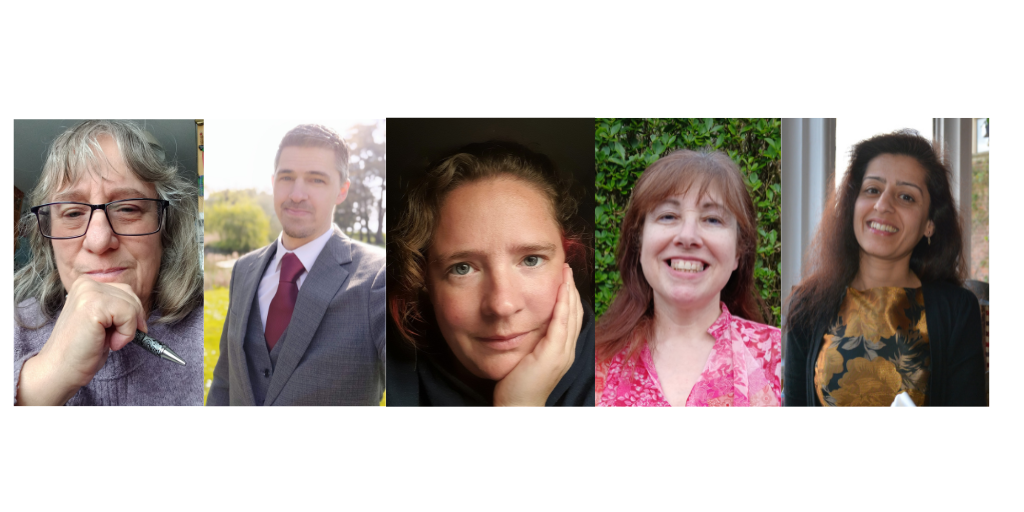
To inspire you to turn that kernel of an idea into your first crime novel, we reached out to the authors who were longlisted for the CWA 2026 Daggers for their best tips and advice so we could share them with you today.
Learn from what works
“Buy five books in your subgenre that won major awards or propelled an author to fame. Get a pen and analyse them to death. What gave these books star quality? Then see how your idea/plot/prose stacks up against them.”
Vaseem Khan, author of The Girl In Cell A, longlisted for the KAA Gold Dagger.
Remember: Even non-fiction tells a story
“When it comes to narrative non-fiction, storytelling is just as important as in fiction. People want to go on a journey with whomever the story is about, whether that be the detective or investigator working on the case, or the family of the victim. The power of non-fiction is that every line you read must be the truth. All the small details and observations must be as true to life as the author can make them through their research. And by bringing your characters to life on the page, this will make the reader care and engage with the story.”
David Collins, author of Saffie, longlisted for the ALCS Gold Dagger for Non-Fiction.
Make your description do more
“My favourite writing tip, one that transformed my own writing is as follows: Any description of a person or place should tell you as much about the person doing the describing, as it does about the person or place being described.”
Laura Shepherd-Robinson, author of The Art Of A Lie, longlisted for the KAA Gold Dagger and the Historical Dagger Sponsored in Honour of Dr. Marilyn Livingstone.
Give your amateur sleuth motivation
“When you’re writing a cosy crime, one of the most overlooked aspects of the amateur detective is their why. Miss Marple aside, being nosy isn’t enough – your sleuth needs a motivation. Why do they feel they have to step in rather than just leaving it to the police? Is it to avenge a friend or to clear their own name? Are they stranded in a snowed-in abandoned castle with a murderer who’s likely to kill again? It doesn’t have to be big, or even serious – in my first book, Happy Bloody Christmas, it’s because my heroine’s mother-in-law is arriving the next day for Christmas dinner – but giving them a believable incentive will help your reader believe in them.”
Jo Middleton, author of Not Another Bloody Christmas, longlisted for the Whodunnit Dagger.
Remember: Queer is normal
“I’ve spent a lot of my life being othered for being queer and this affected my writing. I downplayed it, I justified it, I caveated it. I did this because I’d internalised queerphobic voices. Over time, I addressed these voices and transformed them into supportive ones. Now writing queerly is my normal and I’m the one who gets to define what normal is. This was a long journey but every act of self-kindness was worth it, as was every effort to liberate my imagination. Over the years my writing has transformed.”
Robert Holtom, author of A Queer Case, longlisted for the Whodunnit Dagger.
Don’t limit yourself to your own ideas
“If you want to write specific genre fiction, that’s fine, but don’t limit yourself to that in your writing. Say, for example, you wish to write cosy crime: read books in all varieties of crime, whether that’s psychological, historical, police procedural, series or Nordic. It’s important to surround yourself with variety. You never know where your next idea is going to come from, so you need to open your mind and be receptive to everything around you.”
Michael Wood, author of Waiting, longlisted for the Short Story Dagger.
Think of your novel as a house
“You build it, fill it with a variety of people, then hide something in it. As you go on, if your story’s any good it will at some point come alive and start to head in unexpected directions. Don’t fight it, work with it. And finally, never kill your darlings, but attend to them.”
Robin Blake, author of Spoiler’s Prey, longlisted for the Historical Dagger Sponsored in Honour of Dr. Marilyn Livingstone.
Know when to speed up or slow down
“Make the boring parts fast and the juicy parts slow. In other words, skip predictable conversations and detailed accounts of movement, but take your time when you get to the sexy, meaty bits.”
Sue Hincenbergs, author of The Retirement Plan, longlisted for the ILP John Creasey First Novel Dagger.
Break it all down
“Rather than holding a full novel in your head, break it up into manageable chapter-or-scene-sized chunks. When I sit at my laptop, I don’t think about the whole story, I just work on the next 1000-1500 words. With each of those chunks, I focus on two things. Firstly, revealing something new to the reader. Secondly, leaving the reader with a new question or breadcrumb. So, each chapter is like a step. Take one at a time, rather than worrying about the seemingly endless winding staircase.”
Zoë Rankin, author of The Vanishing Place, longlisted for the ILP John Creasey First Novel Dagger.
Invest in the right areas when you’re self-publishing
“If you’re self-publishing, treat your book as if it has a publisher (you!). Your book should be able to sit comfortably on any shelf alongside traditionally-published books. Invest in an experienced structural editor, copyeditor, proofreader and cover designer, just as a publisher would do. Choose a name for your fictional publisher and even create a publisher logo for your book cover and spine, if possible. Become your own advocate and search for industry opportunities open to self-published authors. Above all, believe in yourself – because if you don’t, no one else will.”
Victoria Goldman, author of Little Secrets, longlisted for the Whodunnit Dagger.
Reimagine the past
“I want my writing to be a sensory experience, and one where seemingly unimportant, intimate objects speak to character. In historical fiction, I must re-imagine the facts. To do that, it’s important to me to give context and texture through small, seemingly insignificant details. How a character inhabits her space, what she prizes, how her environment smells, sounds and feels, all help to tell her story. For this reason, knowing the names of shops and businesses in a particular street (the Post Office Directories for particular years are brilliant for this), or the colour or material of a dress (old newspaper adverts) are important, even if they’re not major plot points.”
Donna Moore, author of The Devil’s Draper, longlisted for the Historical Dagger Sponsored in Honour of Dr. Marilyn Livingstone.
Find unexpected sources of material
“Whenever I meet someone who has an unfamiliar job, I ask them two things: what’s the worst thing that has ever happened in your job, and what is the best? The answers can be illuminating and surprising, and provide you with funny or exciting incidents for your plot.”
Mark Ezra, author of A Sting In Her Tale, longlisted for the Ian Fleming Steel Dagger.
Think of your manuscript in layers
“Writing for me is an act of creative archaeology, going deeper with each version of the story. The first draft can be about finding the surface of the narrative and characters, marking the location before you start digging. The next part is always about unearthing layers, getting rid of the mess, finding a direction. And then there will come a point with the next few drafts where all that digging starts to pay off, and where the story reveals itself to you, in all its glory, and even better if it’s not the story you expected to find, but something far more interesting.”
Fflur Dafydd, author of The House Of Water, longlisted for the Twisted Dagger.
Save your editing until the end
“On your first draft, write to the end. Don’t edit or critique yourself. Let the muse speak to you and just transcribe the story as it is being told to you. When you critique or edit, you stifle creativity. There’s plenty of time for editing once the story is down on paper.”
Robert Dugoni, author of A Dead Draw, longlisted for the Ian Fleming Steel Dagger.
Invoke emotional and mental responses
“When writing a scene involving characters interacting, show the protagonist’s emotional and mental response to the action and dialogue, to draw the reader in to their character, motivation, and feelings. It almost becomes a dance, the characters reacting to each other’s moves and actions, a flow of cause and effect: action, emotional response, mental response.”
Richard Hooton, author of The Margaret Code, longlisted for the Whodunnit Dagger.
Be careful with your Googling
“Avoid getting put on a government watchlist after researching ‘blood splatter types’ or ‘how to make a weapon from common household items’ by adding ‘for a novel’ to the end of every query.”
Laura McCluskey, author of The Wolf Tree, longlisted for the ILP John Creasey First Novel Dagger.
I hope you’re feeling inspired and raring to go! And, if you want support at any stage of your crime writing journey – whether you’re writing your first novel, or you’re a household name – then consider becoming a member of the CWA. Benefits include being part of a large crime writing community with the option of local author meet-ups, access to resources and discounts, book promotion opportunities and the chance to enter competitions and the chance to be published in exclusive anthologies.
*****
Issue 28, featuring author and historian Alison Weir is out now. You will be able to find it in libraries and other outlets. Alternatively, all current and previous editions can be found on our magazines page here.

You can hear great new ideas, creative work and writing tips on Write On! Audio. Find us on all major podcast platforms, including Apple and Google Podcasts and Spotify. Type Pen to Print into your browser and look for our logo, or find us on Podcasters.Spotify.com.
*****
If you or someone you know has been affected by issues covered in our pages, please see the relevant link below for information, advice and support: https://pentoprint.org/about/advice-support/