By Sarah Frideswide
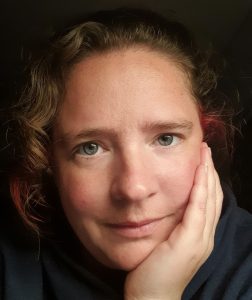
This month in Thursday Connectors we’re thinking about Remembrance. How fragments of collective memory are passed down, how they influence us in the present day so that the lives of those who have served us in the armed forces are still relevant, still vibrant, now.
We start with a piece by author TJ Windwood reflecting on how her grandparents’ service has influenced her and how memory is something that carries us forward into the future.
Remembrance
Remembrance has always been personal to me. My great-grandfather Winwood served in the Army during WWI, and my grandparents volunteered for the Women’s Land Army and the Army towards the end of WWII.
My nan told me about spending her days in the fields picking crops, while my grandad worked in the kitchens peeling potatoes. Their roles were different, but both contributed to a wider effort. In a way, they carried that partnership into the life they built together. At dinner time, I could see that same quiet rhythm of each contributing something to the other.
Through them, I came to understand that service takes many forms. It can be found in the tasks people do every day, in working together and in being part of something bigger than yourself. The discipline and structure woven into their lives helped shape my own path.
I joined the Air Training Corps and spent a short time at 2497 (Cosford) Squadron, where I served as a band major and took part in shooting, drill and night exercises. I then moved to 1046 (Fordhouses) Squadron, known for its drill skills, and helped out at Shrewsbury Air Show.
Both squadrons gave me discipline, community and a sense of structure I needed during my childhood. In a world where those things didn’t always feel easy to find, I found comfort in them.
My family’s connection to service inspired me to become the first woman in my family to serve my country in the Royal Air Force. I felt excited by the unknown when I joined. I was beginning an adventure of my own, following a path inspired by my family but making it mine.
During my first tour at RAF Brize Norton, I experienced the repatriation of service personnel. My understanding of Remembrance changed. What had once felt like something belonging to the past became part of my present, and it remains so today. We should never forget those who paid the ultimate price so that we may live the way we choose.
I have always kept a journal. As a cadet, I wrote about group exercises and the funny things other cadets did. During my military service, journalling became a way to manage my emotions. Through it, I discovered a love of creative writing.
I wanted to carry that sense of discipline, structure and community into my writing life. My pen name, T.J. Windwood, was inspired by my great-grandfather’s family name, Winwood, my nan Dorothy’s name and my middle name, Jane. It keeps their influence close to everything I create.
Through Moon Poppy Press, I hope to honour both those we remember and those who continue to serve in different ways, publishing stories forged in the quiet hours of sacrifice.
When my own service comes to an end, I hope to take everything I have learned and endured with me. Remembrance, for me, is not only about looking back. It is also about carrying forward the lessons, strength and sense of belonging that those who came before us helped to give us.
© T.J. Windwood, 2026
Connect with T.J. Windwood on Instagram: @tjw_creatingworlds or via their website: moonpoppypress.co.uk
*****
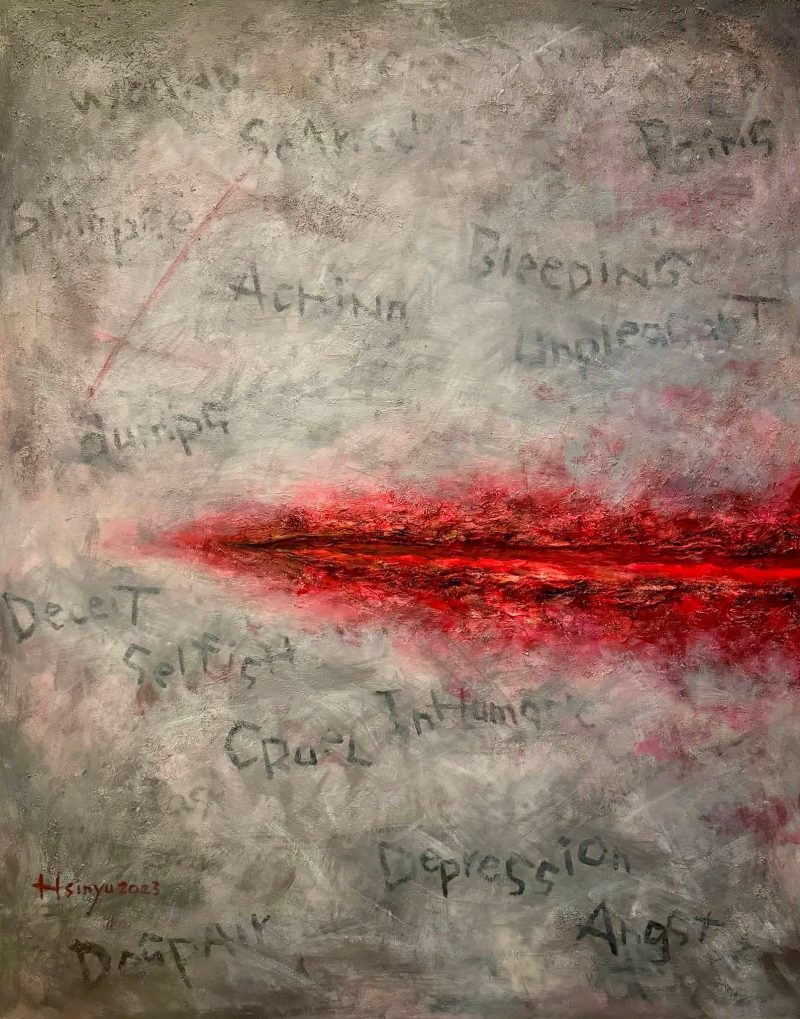
Next, a poem by Stephen Geggus which reminds us of the very real cost of serving in a war, while the artwork Glimpse by Hsinyu Lu depicts what memories can do to someone’s mind.
They Told Me
They told me I would be a hero
that’s what they said to me
with tales of glory
they would take care of me
they told me I would be a hero
with glorious stories of battle
but nothing but pain and suffer
treated like cattle
they told me I would be a hero
this they made me believe
but I’m just another young man
too hasty and naive
they told me I would be a hero
that I should do my duty
yet all I see is other young men
get cut down next to me
they told me I would be a hero
they’d be right behind me
yet as I lay here dying
I have no officers comfort me
they told me I would be a hero
and make the country proud
how foolish it now sounds
when said aloud
© Stephen Geggus, 2024
*****
Now we have a piece by army cadet Sam Cowling, who shows us what it’s like to be in the process of learning from the collective memory of war and how that influences a present day sense of identity.
We Will Remember Them
I’m writing this a few days before Armistice Day, when we focus on all the soldiers and military personnel who have fought and died for us. As a member of the ACF (Army Cadet Force) this is a very busy time with going out on parades. It’s also a time of getting to know what the wars would’ve been like, and the harsh conditions all soldiers faced.
Recently, I’ve been on a trip to France and Belgium where I learned more about World War 1 and it was fascinating. I got to go to a last post ceremony, Langemarck Crater and the preserved trenches. These harsh conditions made me realise just how difficult the war was.
Something that’s often forgotten about the First World War is the role that the women played as, back then, only the men could fight. The women during the war had a major role in factories and as medics to help all the wounded and they saved the lives of a lot of soldiers. They were very important to the war effort.
After all this, I have started to think of all the soldiers, loved ones, family members and friends of others who suffered and may have died in wars.
We won’t forget them, because they died for us and the places where we live.
We will remember them.
© Lance-Corporal Sam Cowling, age 14.
*****
We finish with a poem by Tony Aston, who shows us that treasure can be found in the midst of a fractured situation and that the treasure can be the thing that lasts, not the loss.
Leaving Home
Our house was safe, my world, my life,
my friends all living nearby.
We played marbles, cricket and hopscotch outside,
No matter the weather, wet or dry.
My Dad had left us months ago,
to fight for our freedom, Mum said
But little had changed for me or my pals,
apart from the rations of sweets, meat and bread
We still went to school down the road every day,
and walked off to church Sunday morning.
But change was afoot that would affect us all,
and it happened without much warning.
Mum talked to me, said I’d have to leave,
but not for very long, she stressed.
My safety was far more important, she said.
But my heart thumped hard in my chest.
I didn’t understand what she was talking about.
Where would I go, when, how, and why?
Did she no longer love me or want me?
I clung to her skirt, and I cried.
For several days I sobbed and wept,
and my friends were feeling the same.
We would all be sent off for an unwelcome trip,
tied-on brown labels with our name.
The day arrived and my case was packed.
I screamed and got dragged through the door.
A train awaiting the hundreds of kids,
To whisk them away from the war.
Mum waved a hanky to say goodbye
before wiping the tears from her eyes.
As the engine began to pull us away,
her feelings she couldn’t disguise.
Then she was gone, and the town turned to fields.
I felt lonely, cheerless and scary.
Then a nearby voice, small and trembling, spoke up,
“Hello, my name is Mary.”
Her eyes were rubbed red, the same as mine.
I’d seen her before at school.
We started chatting, and her fears mirrored mine.
We both thought that life was so cruel.
Several hours passed by before we arrived
at the station where our journey ended.
A lady and clipboard walked smartly across,
towards me and the girl I’d befriended.
To the Village Hall in line we were marched
The air smelt fresh, just like heaven.
But it would be several strange and long days later
before I accepted I’d arrived in Devon.
I’d never been to the country before.
I’d never even seen a cow.
The farmer’s wife who took me in
said she’d teach me how to plough!
I was lucky with the place that became my home.
I was looked after and treated well.
But I missed my house and especially my Mum.
In my letters to her I would tell.
Mary was housed a few roads away
and we went to the same school together
We ended up as the best of chums
And pledged our friendship forever.
After several long years, the war was over
and back to our homes we returned.
The bombings had taken so much of the town,
so many old buildings upturned.
Mum looked older and greyer than before.
The conflict had taken its toll.
But Dad would be coming back home again soon.
The family once more would be whole.
Sixty years later, I look back and recall
those days that fashioned my life.
Then I gaze across to the chair next to mine
And thank God I have Mary… my wife.
© Tony Aston, 2026
Connect with Tony on Instagram: @tonyaston65 and via their website: www.tonyastonauthor.com
*****
Connect with Sarah on Instagram: @sarahfrideswide
*****
Issue 30, featuring author Gillian McAllister is out now. You will be able to find it in libraries and other outlets. Alternatively, all current and previous editions can be found on our magazines page here.

You can hear great new ideas, creative work and writing tips on Write On! Audio. Find us on all major podcast platforms, including Apple and Google Podcasts and Spotify. Type Pen to Print into your browser and look for our logo, or find us on Podcasters.Spotify.com.
*****
If you or someone you know has been affected by issues covered in our pages, please see the relevant link below for information, advice and support: pentoprint.org/about/advice-support