Edited by A E Deakin

I’m A E Deakin, a board member of the British Horror Authors Guild, a writer of comedy horror and strange fiction, and your Showcase editor this week.
Our theme is ‘Fractured.’ Fractured bodies. Fractured minds. Divided attention spans. Alienation and separation and loneliness. Fractured often means broken beyond repair.
But what is fractured could be interesting… Even, dare I say it, fun?
When things break, we can try to make it just how it was, or we make something new, or find things we’d never have considered otherwise in the pieces.
The pieces I’ve chosen take fractured in directions I wouldn’t have personally considered. In my writing, I enjoy taking the normal, the whole and making it absurd and strange, and these pieces do just that.
First up, Eithne Cullen’s poem Fractured leads us in an expected direction – before, very literally, breaking apart.
Fractured
I wanted to write a poem
full of images and pain
about the rifts that form
about the cause of pain.
I wanted to call it call it
fract – tured
it seemed the perfect name…
but the words kept breaking
shattering, cutting across the page.
Broken, hyphenated, cutting…impossible to
explain
© Eithne Cullen, 2026
Connect with Eithne on Instagram: @eithnecullen57
*****
Wilco Van Kleef Bolton’s Questionable At Best plays with us as readers, throwing us straight into a funny, absurd world that takes apart fantasy stereotypes. The humour stood out to me, and I was left wanting to read more about these characters, which is always a huge plus. The ending works brilliantly, but I won’t spoil it any more than that.
Questionable At Best
“A few more turns and we’re nearly home, Barnard.”
“Can’t wait. I can already taste the mead.”
The sun was creeping towards the horizon. The last bend took them round a majestic oak tree, at least 200 years old, so I’m told. It was one of those trees that is an ecosystem on its own, which is to say it was already home to several hundred things that would have objected to being walked past.
“Oh.”
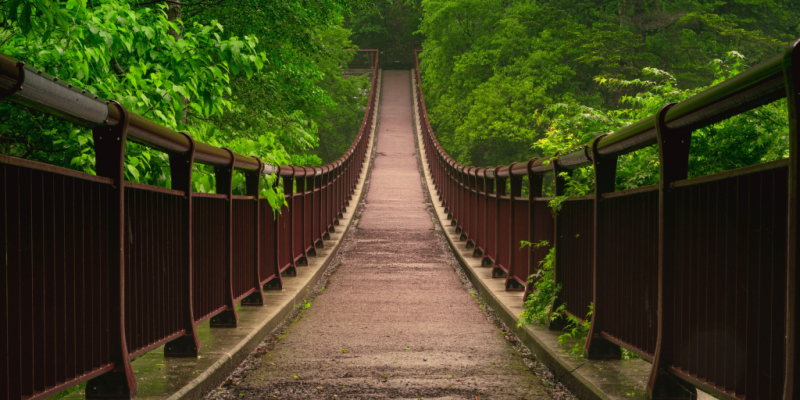
“That wasn’t on the map.” Larry unfolded the map, which was folded wrong in the first place, so that he could complain at it properly.
“Are we supposed to cross that?”
“Unless you want to walk the 20 miles back again.”
“This looks questionable at best,” Barnard said. “Three missing boards and the slope is all wrong. I’m sure there are at least a dozen violations right here.”
“Ah, yes,” Larry said, shoving the map back into his backpack since he’d given up on trying to fold it properly. “The hand ropes are not at regulation height and they don’t have the correct fastenings either. That’s what you get when you hire goblins to do a dwarf’s job.”
They were having a whale of a time bickering over which regulations the bridge was in violation of. By Barnard’s account, and I have no reason to doubt it, they had reached the sixth.
Barnard’s face dropped, eyes fixed on the road behind them. “Did you see that?”
“See what?”
“A dark shape. It was just there.”
“As I was saying…”
It is a peculiar feature of dwarves that the louder the danger, the finer the points of order.
“There! See it now?”
“Right, get a move on. I don’t fancy being its dinner.”
“Come on then, you first.”
“No no, after you, I insist.”
The dark shape moved towards them, growing in size as it came nearer, a slow rhythmic clank.
“It’s armed!”
“Sod it,” Larry muttered. The planks groaned under the weight of his foot.
“Go faster!” Barnard shouted.
“I’m going as fast as I dare go, you idiot, don’t rush me!”
The shape was close enough that they could hear its breathing and clanging. Barnard grabbed the ropes and heaved himself onto the bridge. It had been groaning before. Now it was complaining.
“What are you doing?” Larry shouted.
“It’s on my heels, breathing down my neck. Eyes forward, make haste!”
Larry scrambled on to the end. Barnard’s foot went through a rotten plank. It was a good thing he was, let’s say, stout. His belly saved him from falling through into the ravine.
“Barnard!”
“Keep going, Larry. Save yourself!” he cried. “Wait, what’s on the other side of the bridge?”
“It’s a sign!”
“Well, what does it say?”
“Dead end, please turn back.”
The shape reached the foot of the bridge and looked at them with the incurious calm of a cow. The bell around her neck clanged once, which was the closest thing to a weapon she had ever owned.
© Wilco Van Kleef Bolton, 2026
*****
Coffee On The Window Sill by Andrea Cunha takes childhood memories and tales told by a grandmother, where strong Catholic faith blends with beliefs and practices from African religions in Brazil. She makes us readers feel as though we’re sat down on a comfy chair and listening to tales; feeling cosy but also a little off-kilter by these experiences with the supernatural. I was left wanting to know even more, and hopefully Andrea will write a book about it, as she promises.
Coffee On The Window Sill: Memories And Mysteries From My Grandmother’s House
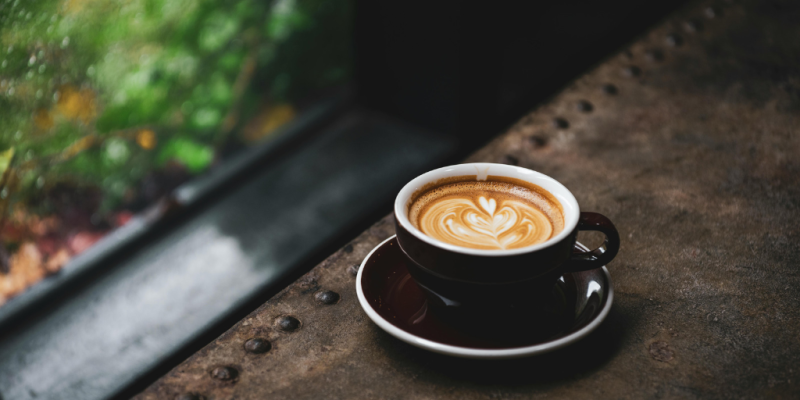
When I was a child, I witnessed certain things I found completely impossible to make sense of. For instance, whenever I saw my grandmother making coffee in the morning, before anyone else had even taken a sip, she’d pour a cup and place it on the window sill. In my innocent curiosity, I used to ask: “Grandma, what’s that for?” And she’d reply: “For the Preto Velho.” For those unfamiliar with the term, the Preto Velho is a spiritual entity in religions of African origin, such as Umbanda and Candomblé in Brazil.
At times, she’d light a candle, place a glass of water somewhere high up, and ask me to do the same. When I asked her why, she’d say: “It’s for your guardian angel to protect you.”
Entire families would turn up at her doorstep with sick children, asking her to bless them. My grandmother would send me out into the back garden to fetch rue and guiné, and she’d pray over the children with those sprigs in her hands until the leaves withered away. I watched everything attentively, finding it all as fascinating as it was strange. My family was Catholic, yet they practised this religious syncretism so typical of the majority of the Brazilian population: a living heritage of our cultural mixture.
One day, I plucked up the courage to ask why she did all of those things. She simply looked at me and answered: “Because there are more things in this world than our eyes can see, and we must protect ourselves.”
She then sat down beside me and began telling stories she swore had actually happened to her and her family. The one that terrified me the most was about her mother. My grandmother told me her mother had just moved into a new house. Deeply devoted to the saints, particularly to Our Lady, she was getting ready for bed one evening. Before sleeping, while praying with the baby, who would grow up to be my grandmother’s eldest brother in her arms, she suddenly heard a sweet voice amidst the silence: “Watch out, here comes the headless woman.”
Out of nowhere, a female figure appeared from behind the door, twirling and moving straight towards her. My grandmother’s mother barely had time to cry out: “Lord help me, Blessed Virgin!” She remembered nothing after that. She collapsed and fell fast asleep right there, only waking up the next morning. Wanting to get to the bottom of it, she asked the neighbours about the previous tenants – to which one neighbour replied: “If I were you, ma’am, I wouldn’t spend another night in that house. It’s haunted.” That very day, she decided she’d never sleep there again.
I heard many other stories just like that one. But the one I’m about to tell you, I experienced first-hand and I swear, to this day, I still cannot fully comprehend it.
I was around 13 years old and had a habit of waking up and heading straight to the bookcase to grab a book about the meaning of dreams. As I was reaching for it, I saw the handle of the living room door moving very slowly. I chuckled softly to myself, thinking: ‘It must be the caretaker trying to scare me, but I’m the one who’s going to startle him.’ I crept along, crouching beneath the glass window, which had no curtains. When I suddenly stood up to give him a fright, I saw a person leaning forward with his hands resting under his chin, looking out towards the veranda.
I only saw him from the side, but I realised immediately that it wasn’t the caretaker: he looked remarkably like my grandfather, whom I had only ever seen in photographs and who had passed away exactly 13 years earlier.
I let out a scream so terrifying even the neighbours came running to see what had happened. I tried to run, but it felt as though my legs were rooted to the spot. Between the hallway and the kitchen, I tripped and got my foot stuck under the leg of the fridge, one of those old-fashioned fridges with tall feet. Weakened and in pure panic, I scrambled to crawl the rest of the way to the veranda, where the rest of the family were having breakfast and chatting away.
Everyone rushed over to help me and ask what was wrong. I told them, but my grandmother was the only one who believed me. She asked what the man was wearing, and when I described his clothes, she confirmed with a grave look that he indeed owned a shirt of that exact colour. Finally, she concluded: “He came back because he isn’t happy with the things that have been going on in this family.”
That episode terrified me for years, and it took time for me to grow into a brave person. But the truth is, after that day, many other strange things still happened. If I were to tell them all, it would truly be enough to write a book.
© Andrea Cunha, 2026
Connect with Andrea on LinkedIn: linkedin.com/in/andrea-souza-da-cunha/
*****
Connect on Instagram: @aedeakin and TikTok: @a.e.deakin and visit A E Deakin’s website: aedeakin.substack.com/ You can also visit the British Horror Authors Guild’s Discord and Substack.
Images from Canva
*****

You can hear great new ideas, creative work and writing tips on Write On! Audio. Find us on all major podcast platforms, including Apple and Google Podcasts and Spotify. Type Pen to Print into your browser and look for our logo, or find us on Podcasters.Spotify.com.
*****
If you or someone you know has been affected by issues covered in our pages, please see the relevant link below for information, advice and support: https://pentoprint.org/about/advice-support/