
Showcase: The Broken Cycle + Gannin’ Hyem, Mate
- 29 July 2026
- News, WriteOn Showcase
Edited By Molly Ovenden

Welcome to the fifth and final week of July’s Showcase: Nostalgia!
Over the course of this month, we’ve paged through nostalgia like a photo album holding generations of family and younger selves, telling stories and reminiscing. Sometimes facts of our pasts have been clear, while at other times our memories have gaps with significant details missing. Some days gone by might forever remain a mystery.
Each piece offers us an opportunity to look through a window, observing what might have been for us and what has been for others. Each writer has also given us mirrors to examine our own lives in the present from various angles. I wonder what you’ve noticed as you’ve peered through these nostalgic lenses?
For our first piece this week, we have an excerpt in which we observe a woman making a series of potentially life-changing decisions. The author invites us to consider the role of our choices as well as the role of fate.
The Broken Cycle, an excerpt
Dona Mocinha had no formal profession and could neither read nor write, but she was incredibly wise and sharp, well-known throughout the neighbourhood. She took in laundry to help her husband finish his studies and become a nurse.
One day, while washing clothes, she found a note in her husband’s trouser pocket. Consumed by curiosity, she wanted to know what was written but, being illiterate, couldn’t understand the message. She asked her relatives to read it, but no one had the courage, so they all refused.
She immediately sensed something was wrong and decided to ask strangers passing by on the street. To her dismay, she discovered her husband’s betrayal.
Before taking any action, and despite being deeply hurt – after all, she’d worked hard to help him become a nurse – she devised a plan to catch him ‘red-handed.’
Though the betrayal was unacceptable, being a wise woman she hired a private detective to tail her husband and his mistress to gather evidence.
One day, when her husband arrived home late from work, she sat him down to have ‘the conversation’, evidence in hand.
“From this day forward, you may continue to live in this house, but I’m no longer your wife. We shall sleep in separate rooms and maintain appearances, but you will not speak to me.”
It must be explained that, back then, divorce was a taboo, something shameful for women. Thus, Dona Mocinha preferred to keep up a front rather than rid herself of the husband who’d betrayed her trust. But she never forgot. Even after many years had passed, she’d react while washing dishes in the kitchen; slamming his plate down in front of him or, when serving his food, say: “It isn’t Marina serving your dinner, it’s Mocinha.”
Years later, when she passed away, he felt it particularly deeply and perhaps even repenting, for he’d always repeat: “Mocinha was a proper woman.”
They say family stories repeat themselves, perhaps as ‘fate’, because that very same story happened again, albeit in a different context with modern touches in the 21st century.
© Andrea Cunha, 2026
*****
There’s a line in the sand that prevents us from carrying past legacies forward when we don’t want to. History can repeat itself but awareness and intention means it doesn’t have to. I wonder how your life and family’s history relates to this story?
For our final piece meditating on nostalgia, we return to a character’s home alongside her. As you read, I wonder if there’s a place for you that holds big emotions, grief or ‘ghosts’? Donna Fisher, the author, was named the winner of the inaugural Libraro Prize in 2026, and was shortlisted for the 2025 Bridport Short Story Prize.
Gannin’ Hyem, Mate
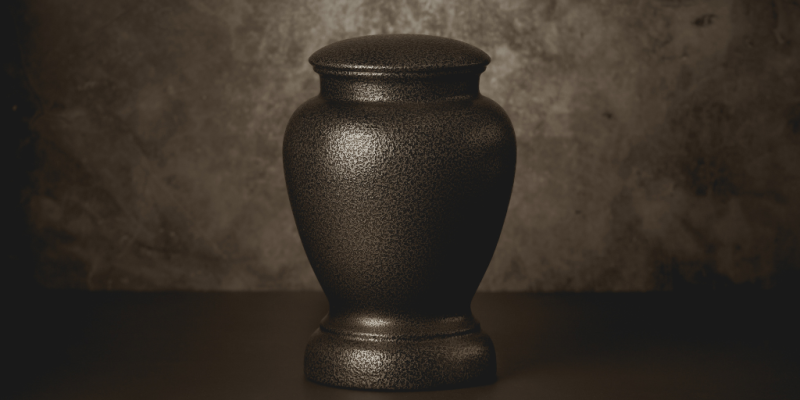
She stepped off the plane and felt it: the wet-dog weight of the low, clouded sky slumping its sodden mass onto her shoulders. Years ago, she’d boarded a plane to escape this oppression. Now she nestled into it, letting it wrap around her like a favourite winter coat.
“The bairn’ll be wantin’ some scran, mind,” a voice said behind her in arrivals.
For a moment, she scanned the crowd, half-expecting to see her dad’s face. But, of course, the voice belonged to someone else. A grandad, guiding his daughter and grandson towards Greggs.
“Dad, man. I divvn’t want to queue up. The little ‘un’s knackered.”
“Don’t be daft, it’ll only take a few minutes,” the grandad replied, smiling. Wide and toothy, like her father’s had been.
Samantha made for the exit, hoping the ghost wouldn’t follow.
“Where ye gannin’?” the taxi driver shouted from the passenger window.
“12 Colliery Road—Oh, no, I mean, The Centurion Inn, in Cramlington. Do you know it?”
“Aye, no bother. Forgot ye not gannin’ hyem, like?” He laughed. “Need a hand with yer bags?”
“No, no. I’m fine, thanks.”
“So where ye from, like?” the taxi driver asked.
“Here,” Samantha said.
“Well, ye divvn’t sound like it.”
“Yes, I suppose I’ve lost my accent a little, living overseas.”
“Well, you know what they say — ye can take the girl outta Newcastle…” he said.
She knew the saying. Her dad had said it to her, and she’d taken it as a challenge. Now she closed her eyes and held on to it tight, like a birthday wish.
***
The next day, seagulls cawed overhead, their cries sharp against the soft hush that blanketed the land, as the wind bit at her through the seams of her denim jacket.
“It’s nowt but a bit o’ weather, man. Stop ye moanin’. Ye won’t shrink.”
The clouds came over quickly, as if they’d been mopped up and then squeezed – bucket-loads of water coming down all at once. She ran to the path leading back to the village towards the nearby cafe, its lights already on, even though it was only mid-afternoon.
“Eee, Samantha Garside, is that really you?” The woman stepped from behind the counter, arms outstretched.
At first, she didn’t answer. Unsure who Samantha Garside even was any more.
“Hello, Tracey. Nice to see you.” Samantha squeezed the words out as she was hugged by the woman.
“She’s all fur coat and no knickers, that Tracey Hindmarch,” her dad had whispered when Tracey had walked down the aisle just before her mam’s funeral started.
“Dad, keep your voice down.”
“Haddaway, man, yer mam’ll be laughin’ up there un’all.” He’d chuckled. “She’ll be saying, Look at that hat she’s wearin. Thinkin’ it’s the Queen’s funeral or summit.” Samantha cringed at the thought of her hat, forgotten on the hotel bed.
“She’s always walkin’ round with her nose in the air, all hoity-toity since she moved into one of them big houses o’er town. Her dad worked down the pit, same as me. Her face got mucky from the soot when he give her a hug, same as you.”
Sam hated the dirty soot on her face. She hated that, no matter how much she scrubbed, it was still there, in the pores of her skin. Where everyone could see.
“I haven’t seen you since your mam’s funeral,” Tracey said. “What was that, five years ago?”
“Haven’t been back since,” Samantha replied. “I didn’t know you were working in your mam’s cafe.”
“Been about three years now. Moved back to the village when Mam got sick. You know, got to help out, haven’t you?”
There was a silence, the type that follows the sound of a dropped plate. “I was really sorry to hear about your dad.”
“Oh, thanks. I mean, he’d been quite ill, so it wasn’t totally unexpected.”
“Still. Must’ve been awful, missing the funeral. He got a good turnout, though.”
Samantha didn’t answer. Grief had settled across her chest, curling up beside the guilt and regret that had been steadily gathering weight for years.
“Let us fetch you a proper cuppa.” Tracey bustled back behind the counter. “Ye soaked through, lass.”
“I went walkin’ on the moors,” Samantha said, as the hot tea warmed her hands and evaporated the g’s from her speech. She stiffened her spine, determined to firm up her words, too. But as she and Tracey talked, each story about old teachers and misplaced friends buffeted Samantha’s sharp edges, like the North Sea reshaping a broken bit of glass on the shore. Breaking it down and changing its shape. Eventually blending it into its surroundings, despite its foreignness.
***
“Whey ye beggar, look what the daft sods have done! All the bloody gnomes have gone!” her dad would’ve said if he’d looked at the house.
Sam peered down the narrow space between the house and the neighbour’s fence. The sale sign was still there, next to a stack of flattened moving boxes.
“And they’ve dug up yer mam’s hydrangeas. She’d be bloody livid, I tell ye.”
Samantha saw a curtain twitch in her old bedroom window. The one she’d stare out of, willing the sky to expand and wings to sprout from her back, as she watched her parents put yet another gnome in the rockery. Her dad’s flat cap in one hand, tin cup of tea in the other. He’d loved this tiny patch of garden. She touched the top of the urn poking out of her bag, then noticed the curtain twitch again. She hurried down the street.
“Divvn’t worry, pet. Yer a smart lass, you’ll think of summit,” he’d have said. And she would’ve got angry and told him not to call her that – it made her sound like someone’s dog. Now it landed gently, like a dad’s hand stroking his wild daughter’s head.
Back on the moors some seagulls waddled over, hopeful, then dispersed when they saw she was pulling an urn, not a pie, from her bag. She stood it next to her, twisting it a little so it was secure in the peaty soil.
“It’s brass-monkey weather,” her dad would’ve joked, then laughed when he realised he was surrounded by brass himself.
When she was 16, she’d sat here, looking down over the village, the dry-stone walls feeling like prison bars. The distant smokestacks guarding her every move. She had wanted so badly to escape to somewhere perfect, with big blue skies. Shiny new buildings. A place where her history didn’t exist. Somewhere it was always tomorrow and yesterday couldn’t catch up.
She reached for the urn. It was stuck, its base nestled deep, as though it had put down roots while Samantha wasn’t looking. She gave it a tug. It resisted, but then sprang free like a startled rabbit, dislodging the lid and letting the wind puff a cloud of her dad’s ashes all over her face.
“Welcome home, wor lass,” her dad said, the way he always did when he jumped out of his old banger of a car, parked in the no stopping area. Then he’d hug her tight, smearing her in grease or oil, whatever it was he’d used to persuade the car to make the journey. She’d stand there mortified, silently correct him – it wasn’t home – wiping away the dirt as soon as his back was turned.
“Thanks, pet,” she laughed, her tears turning the sooty ashes into a strange mixture of herself and her dad. She gently wiped her face, then transferred the precious liquid onto the tufts of grass beside her, making him a permanent part of the landscape. Then, with a laugh, she stopped, allowing the drizzle to soak the rest of him into her skin, making him a permanent part of her. “It’s good to be back.”
© Donna Fisher, 2026
*****
Fraught with vivid stories from present moments, everyday life is fodder for our future selves. I wonder how you might reflect further upon people and places of your past with renewed perspectives. Writing, reading and remembering go hand-in-hand with community. Thank you for joining me for Nostalgia this month. May we capture it all through poems, fictional stories and personal anecdotes, continuing to share our writing with each other.
*****
Keep in touch with Molly (here). Join Writers’ Hour (here).
*****
Images from Canva
Issue 29, featuring author Tharik Hussain is out now. You will be able to find Write On! magazine in libraries and other outlets. Alternatively, all current and previous editions can be found on our magazines page here.

You can hear great new ideas, creative work and writing tips on Write On! Audio. Find us on all major podcast platforms, including Apple and Google Podcasts and Spotify. Type Pen to Print into your browser and look for our logo, or find us on Podcasters.Spotify.com.
*****
If you or someone you know has been affected by issues covered in our pages, please see the relevant link below for information, advice and support: https://pentoprint.org/about/advice-support/
Related News

Thursday Connectors: Personal Circumstance And Difference
- 21 November 2024
- News, Thursday Connectors

Showcase: Get Writing Fit For ’26! + An Architecture Of A Life + Eat The Frog
- 28 January 2026
- News, WriteOn Showcase
