
Showcase: Juicebox + To Venture + The Healing Power Of Art + Choose Life
- 11 February 2026
- News, WriteOn Showcase
Edited by Sarah Frideswide
To continue February’s Showcases, we’re staying with the theme of choices that lead to unexpected healing. This week’s pieces are all located in educational or institutional settings, focussing on the healing that can be found in connection with ourselves, other people and with art in those settings.
Kicking us off is Alexis Elves with some flash fiction about the empowerment that comes from choosing not to accept another’s low opinion of us.
Juicebox
Lorikeets squark and squabble out of sight. The air feels heavy, makes cheeks flushed and the blue cotton shirts stick to backs. A bell rings, three short sharp shocks that signal break-time. Through open windows, the sounds of chair legs scraping on classroom floors, voices rise, fall, as doors pop open and out spill the students. Hands flop blue hats over heads, to shade young faces from the bright, high sun. It beats down such a heat that waves lift in mirage from the basketball court and iron roofs.
“No hat, no play,” adult voices call out. “No hat, no play.” It rings against walls and follows bare heads down covered walkways where the heat and sun get in. “No hat, no play.”
The metal lockers are warm to the touch but the lunch bags inside are cool. Chilled by the still half-frozen juice boxes, packed hours ago.  Sandwiches pressed against apples, crinkling packets and the sweet smell of bananas that always lingers around children’s school bags.
Over the last months, long since abandoned by the buddy assigned to me, I’ve progressed from the new kid group to the crew who sit in the middle of the hierarchy. Some are friends, whose houses I’ve seen inside, whose parents I’ve met, mixed in with those few cooler girls. The ones frustrated with the stagnation of their press upward to the higher echelons of school yard rankings. One, with long dark hair, straightened each day and worn loose, her gold hoops glinting. She, who does not like me. Makes clear with the puckered skin at the top of her nose whenever I speak.
Today, we all sit cross-legged in a circle. Lunch bags in front of our shins. The grass under us is lush; thick blades that absent fingers pluck.
“Ew.” She points at my lunch. Laughs. “Who eats that. No wonder you’re…” The pause lingers. Her eyes roll, dark chocolate buttons that glimmer in the shadows her hat casts.
Under my shirt, my skin prickles. My shoulders have pressed upwards. When I look at her, I see the smudge of make-up on her collar at her neck. The broken fingernail that picks at the bread of her sandwich.
I say nothing.
In the nothing I pack my lunch up, and stand. I look at her. From here, the circle of girls crane their necks, waiting, eyes wide. I steady myself and compel myself over the grass, in full view of other groups who turn to see me pass, to the table of the motley group. The long-haired boys, the sports queens, the D&D boy, the horse-mad girl. I take my seat. My hands shake. The skin of my neck burns with the pressure of all those eyes, my ears itch with the whispers. But when the bell rings, something has loosened in my chest, made me more myself. I’m brought closer into focus: me.
I scoop frozen juice, orange and sweet, to my lips.
© Alexis Elves, 2026
Connect with Alexis on Instagram: @alexiscoward
*****
Continuing with the sense of bravery and vulnerability in daring to stand up and walk into new connections is Tavinder Kaur New, who shows us the healing that can come from bonding with others who’ve experienced similar griefs.
To Venture
To venture out into the world again
in the hope of meeting others like me,
ageing without children. Storyhouse childless
no more to feel alienated.
Not to be asked, do I have a child?
Unexpected healing to finally belong,
helping others to relate,
Sharing poems on Fertility UK,
Prompts on grief to release,
no more to feel I am the only one.
Others give me the hope that there is life beyond.
Finding another way of healing,
sharing my story on healing after infant loss.
Robert Nurden sharing his story and Empty the Play,
no more to feel alienated.
Jody Day and Jessica Hepburn, showing the way,
unexpected sharing and caring,
that everyone has their own story about childlessness
no more to feel I am the only one,
that there is hope and life beyond childlessness.
© Tavinder Kaur New, 2026
Connect with Tavinder on Instagram: @tavi_nderknew
*****
From the healing of support groups, we move on to the life-giving physical and emotional healing that shared art practice can provide, as Dr Afsana Elanko relates her experiences of working with those who have aphasia.
The Healing Power Of Art
My love of life has always been with the connections we make in the world, the stories we tell and the people we meet on the journey of life. So, when I was asked to write a piece on the topic of ‘unexpected healing,’ there were so many examples I could share from my own experience. This is one such piece.
Despite over a decade’s experience of art practice that engages the most vulnerable in society, I never realised the great depth of the healing power of art until Aphasia Reconnect (Charity) and the National Portrait Gallery (National Collection) decided to do a focus group study in 2018 to capture the results and effects of my art and program, as they were receiving so many positive comments and recommendations. The art I create provides a vehicle for communication, allowing individuals with aphasia to express their feelings and learn in a supportive environment, created by myself and the surroundings of the collection. The continuity of regular contact and familiarity of surroundings provided a safe environment for exploration and development that improved the individual’s confidence and allowed participants to fully engage in sessions. One quote says it all: “Now I can talk to other people with similar problems and I can share my knowledge… and I can talk, I can really talk. That is tremendous for me!”
The group provided an opportunity for people to meet those with similar interests and challenges, providing a sense of belonging through the special power of art. The co-creation of art allowed a better understanding within the group of each person’s strengths in creativity and encouraged mutual respect and growth.
The real nurturing power of the group and sense of belonging became apparent when the individuals were able to use the skills learned to communicate better in other settings and express their needs. The improved invigoration of healthy living and lifestyle changes was very powerful – where different group members would try something new and share the new experiences in this collective safe space of the program.
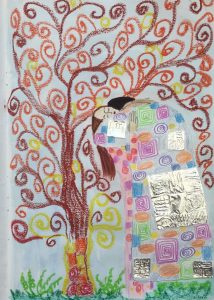
The art I created had a message towards a healthy living goal and the discussion and enquiry allowed further growth of ideas and how these could be incorporated in our own individual lifestyles. The anchor of art provided the backdrop for the power of healing. Through art practice, each individual was able to reinforce their learning from the session. Over time the participants developed a skill which then fed into the continuation of the group’s development, changing and moulding as time changed, just as art changes over time. The program and my art practice showed the power of creativity as a tool for language, growth, development and calming of the mind. So – live life engaging with art, making connections and exploring the unknown, until we meet again!
© Dr Afsana Elanko, 2026
*****
Finally, for this week, we move onto the institutional setting of prison and how a nurturing relationship with nature can help an individual find themselves again, in this piece of flash fiction from Saskia Van Der Zee. After Afsana’s suggestion to live life engaging with art, we progress to an even simpler idea: ‘choose life.’
Choose Life
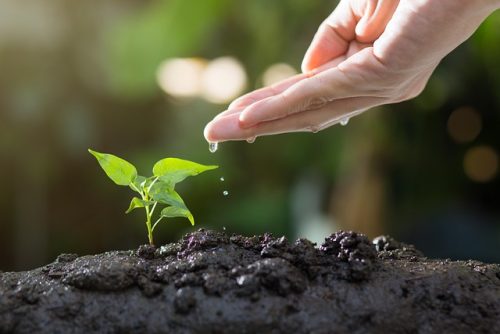
Marianne turned the earth. Placing her foot on the fork, pushing down, sometimes standing on it with her full weight, levering, lifting, re-distributing; all gave her such pleasure that she alternately wept and sang.
When the door of HMP Longacre had clanged behind her, there had been no such sense of freedom.
“On you go then, love,” the woman at the gate had said. “Good luck.”
Luck. Her grandmother had always said you made your own.
There had been no one to meet her. The clothes donated by the welfare – her own had been 15 years out of date and too tight – had done their best to keep out the rain, but the short walk to the bus stop had been too much for them. Waiting for her first probation meeting the next day, the cuffs of her fawn raincoat — not something she would have chosen herself — had still been still damp.
Waiting. She’d become accustomed to waiting. No control over how she spent her time. Grateful for any disruption to the monotony so long as it didn’t adversely affect her. Head-down survival had become her way.
There were, according to her probation officer, plenty of opportunities for a woman like her. She must have her head up if she were to see them.
Cleaner. Supermarket staff. Care-worker. Zero hours contract.
“Live-in,” she had said. Anything to avoid another halfway house like the one where she’d spent the night. Somewhere she could hunker down.
“This might do,” the probation officer had said, turning the screen to show her one last post. Scraping the bottom of the barrel.
Elderly couple seek cook/housekeeper for home/garden help. Live-in. Quiet, non-smoker, must like animals.
Marianne was so quiet as to be largely silent. And she far preferred animals to humans.
The top of the barrel. Manna that had floated to the surface of a swill of dregs.
Unadulterated freedom might have been too much. Life in the Coates’ old manor house had just enough regimentation to keep her from drowning in panic. Regular tasks, regular mealtimes, regular interaction; everything rational and polite.
And a garden. A garden to dig and nurture. A garden where she could grow.
Cooking for others, cleaning and laundering, was nothing new; in prison, she’d kept herself busy to help the days pass. How much easier it was to cater for two than two hundred. Either side of her tasks, was time to use as she chose. Fifteen years without choice took a lot of unlearning.
At Longacre, she’d worked in the garden and dreamed of a patch of soil all her own. Of dirt beneath her nails and bodily exhaustion, and clean air. Of bird song. Of the hop of a robin as it watched her dig.
Stamping the fork down with her heel, she turned another chunk of earth. A worm squirmed pinkly against crumbling brown loam and Marianne sheltered it from the robin’s view with a hand. It, too, had the right to live.
© Saskia Van Der Zee, 2026
Connect with Saskia on Instagram: @svanderzeeauthor
*****
More from me next week! And, of course, don’t forget to submit your work if you’d like to see yourself on the page.
*****
Issue 27, featuring eco-poet Sarah Westcott is out now. You will be able to find it in libraries and other outlets. Alternatively, all current and previous editions can be found on our magazines page here.

You can hear great new ideas, creative work and writing tips on Write On! Audio. Find us on all major podcast platforms, including Apple and Google Podcasts and Spotify. Type Pen to Print into your browser and look for our logo, or find us on Podcasters.Spotify.com.
*****
If you or someone you know has been affected by issues covered in our pages, please see the relevant link below for information, advice and support: https://pentoprint.org/about/advice-support/
Related News
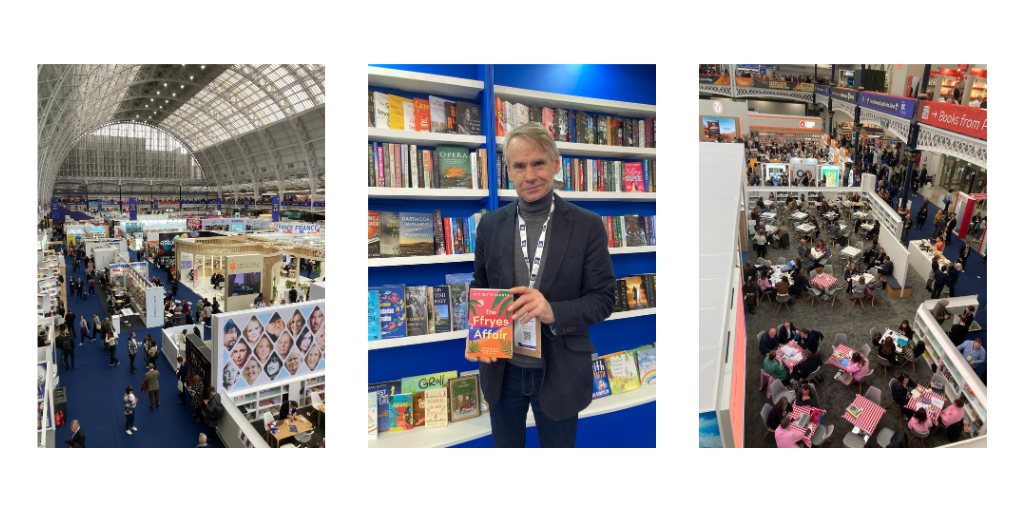
Write On! Features: A Day At The London Book Fair by Mark Butterworth
- 2 May 2025
- News, WriteOn Features
