Showcase: Money Could Buy Me All These Things + The Slow Welcoming Of We + Borrowed Light
- 27 May 2026
- News, WriteOn Showcase
Edited by Vrushali Khadilkar
Hello, this is Vrushali Khadilkar and you’re reading my fourth and final May Showcase.
My peers at school often borrowed my notebooks to complete their daily homework. One day, a classmate returned a notebook in such poor condition that the pages were dishevelled and carelessly handled. It felt as though what they’d borrowed wasn’t respected or treated with care. After that experience and on my mother’s advice, I stopped lending my notebooks altogether.
Similarly, today’s featured submissions ask a quiet but urgent question: if so much of what we feel, know and become is borrowed, how do we honour it while it’s with us?
As we wrap up the first quarter of 2026, let us honour the resources we borrow from each other in different forms, regardless of where we happen to live in the world.
*****
Our first piece is by Arthur, who wonders whether we’re no longer living but borrowing fragments of experience such as touch, taste and memory without ever holding the real thing.
Money Could Buy Me All These Things
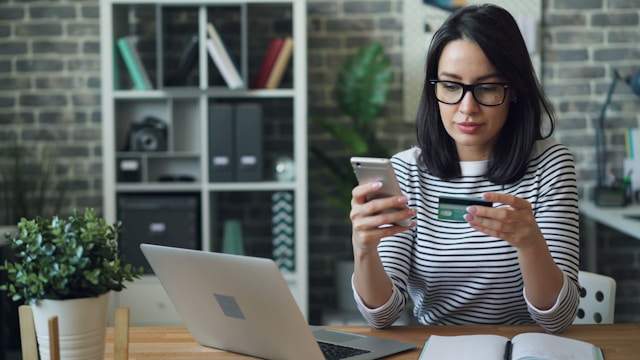
deliver them to my doorstep
yet I still could not smell
all the wealth the world has to offer
without touching them first
I could not buy smell
I could not buy touch and taste
I need to buy the whole package
Own them, to sense them
No amount of high-speed internet
will convey the experience
Only visual
The smell of curry, fragrant and spicy
Basil, peppermint, eucalyptus, invigorating
The outdoor grass and rain
Delivered via lightspeed fibreoptic
transmission
Or more
Somehow smell seems to trump touch
One day, can I purchase
touch and smell and taste
without the actual thing?
To buy experience without leaving my room
Perhaps that is the ultimate
end goal of consumption
To buy living
Perhaps from there
we could move on to life
Life on tap
with the right resource
But unless there is something better
we might yearn to purchase
our old life back
It gets lonely without the real thing
alive or non-living
Taking the long way or a different way
to achieve the same outcome
is perfectly acceptable
After all they say life is not about the destination
It’s the journey
© Arthur Neong, 2026
*****
Next up, a poem by John that moves from ‘I’ to ‘we,’ suggesting our existence is borrowed from the earth, from each other and from space. For me, it’s a reflection on how identity, language and even peace are not entirely our own, but shaped in relation to others.
The Slow Welcoming Of We
One way to begin a new life is to be miserable in the current
Sara J. Burge
Are we not miserable enough to begin a shift in everything for the peace of the world?
Now, let’s pretend to make the world a better place for all of us to live in.
First, there must be a mirror and pretense.
There must be denial of mine and the slow welcoming of we—
because we have occupied ourselves in mine more than the space meant for both to cohabitate.
There must be a necessary shift:
a shift of the mind,
a shift of the eyes,
a shift toward the fact that we humans originate from the substance of the earth,
a shift toward the fact that we make a whole of mankind on earth—
no ibeings but human beings—
a shift toward the fact that I make a little and you make a little,
and we all contribute to the wholeness of the world.
For it is better said: we than I, me, and mine in a world full of mankind.
It is better said—
the alphabets that form our words are inseparable, so are all humankind—
we are to look at each other to behold the goodness of creation in its evolving.
The peace that’s broker within us—
should it not be the peace that we join our thoughts together to form,
rather than what one—I, me, mine—seeks alone?
When next we think of the war ruining our world,
let us see where we have let down we and placed the I.
If we want to make the world a better place,
let each man think of his next man, and each woman of her next woman, as we—
and first be the change,
and so our world will be saved.
© John Chinaka Onyeche, 2026
*****
Finally, Prachi reflects on her crossing paths with a stranger on a winter’s night, after which she felt how, in some moments, we borrow hope from others and various art forms.
Borrowed Light
There is something strange about the word borrowed.
When we borrow something, we know it doesn’t fully belong to us. A book from a library, a jacket from a friend, a pen from a colleague. We hold it carefully, because somewhere in our mind we know that, one day, we will have to return it.
But nobody ever talks about the things we borrow without realising: Dreams, courage and hope.
Years ago, when I first arrived in the UK, winter greeted me before people did. The air was cold in a way I’d never known before. The streets were quiet, the sky often grey and the silence sometimes felt louder than noise.
On one such evening, after work, I stepped into a small café near the bus stop. It wasn’t fancy, just a warm place with yellow lights and the comforting smell of coffee. I sat near the window, watching people hurry past with scarves wrapped tightly around their necks.
Across from me sat an elderly man. His hair was completely white, his hands slightly trembling as he held a cup of tea. Yet his eyes… they carried a softness that felt like an untold story.
After a few minutes he smiled politely and asked, “Long day?”
I nodded. “Yes… still learning how to survive the cold.”
He laughed gently. “Ah, the British winter. It tests everyone.”
We started talking. Small conversations at first – weather, work, how busy the city had become. But slowly things turned deeper, the way conversations sometimes do with strangers who have no expectations from you.
He told me that many years ago he had been a painter.
“Not famous,” he said with a humble shrug. “Just someone who loved colours.”
But life, as it often does, interrupted his dreams. Responsibilities came, bills came and the brushes were quietly packed away. He spent most of his life working in an office.
“Did you regret it?” I asked him.
He looked out of the window for a long moment before answering.
“Not regret,” he said softly. “But sometimes I wondered if my colours missed me.”
That sentence stayed with me. If my colours missed me.
Before leaving, he pulled a small folded paper from his coat pocket. It was a simple sketch: a quiet street under a glowing lamp post, snow falling gently.
“I draw sometimes,” he said with a shy smile. “Old habits don’t disappear.”
He handed the sketch to me.
“No, I can’t take this,” I protested.
“It’s all right,” he said. “Think of it as borrowed light for your darker days.”
I walked home that night holding the paper carefully, afraid the cold wind might steal it away. The drawing wasn’t perfect, but it carried warmth — the kind that only comes from someone who still loves what they once had to leave behind.
Since that evening, whenever life feels uncertain or heavy, I remember that old man and his quiet words.
Sometimes we borrow strength from strangers. Sometimes we borrow hope from small moments. And sometimes, a simple sketch under a winter lamp can remind us that, even if life takes us away from our dreams, those dreams never truly stop waiting for us.
They simply sit quietly somewhere… holding a little light for when we return.
© Prachi Verma, 2026
Connect with Prachi on Instagram: @__prachiverma__
*****
Dear Reader, thanks for reading and being with me all this month. Doing this was refreshing and calming in the scorching heat and humid weather!
*****
Issue 28, featuring author and historian Alison Weir is out now. You will be able to find it in libraries and other outlets. Alternatively, all current and previous editions can be found on our magazines page here.

You can hear great new ideas, creative work and writing tips on Write On! Audio. Find us on all major podcast platforms, including Apple and Google Podcasts and Spotify. Type Pen to Print into your browser and look for our logo, or find us on Podcasters.Spotify.com.
*****
If you or someone you know has been affected by issues covered in our pages, please see the relevant link below for information, advice and support: https://pentoprint.org/about/advice-support/