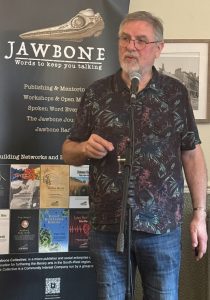
 I am thrilled with the response to my first week on the theme of Nostalgia. Mary Ann Sellen’s piece The Last Of Things was a perfect example of how we as writers can turn back our mental clock and tap into our memories to share a moment we have experienced.
Our experiences, our truth is a theme I return to often. Ten thousand witnesses to an event will give entirely different views of the same event because their perspective is different. Not just their physical standpoint, but also their social, familial and societal standpoint. We should always respect the perspective or ‘truth’ of others because it is their ‘truth’ and from their point of view it is correct.
When researching for a piece it is always good to find primary sources. Items, ephemera, documentation… Corroborating evidence that supports perspective. As promised, I will share with you my own poem The Sweet Shop Van.
The Sweet Shop Van
Growing up in rural Derbyshire
we didn’t have the joy of a second car
Getting from A to B, going near or far
was done on shanks’s pony
The supermarket giants
were nothing more than toddlers
Local shopkeepers would trade
from the back of a van
A Butcher… With a hand-cranked slicing machine
cutting impossibly thin slices
of tongue and ham that fell into meaty curls
on the grease proof paper below
A Fishmonger… With a van full of ice
We could feel the wave of cold fall out
when he opened the door
We were fascinated by the flat fish
the multitude of strange creatures
looking up from beds of ice in unblinking silence
A Haberdasher…Who we thought
had stepped off the pages of the Arabian nights
A turbaned Sikh who opened his doors on an Aladdin’s Cave
of colourful fabrics, silks, ribbons and buttons
But nothing could compare
with the magic of the sweet shop van…
We saw only the little red Bedford as it came over the hill
“The Sweetshop Van!… The Sweetshop Van!”
In the back a set of grocers scales
With shiny brass weights
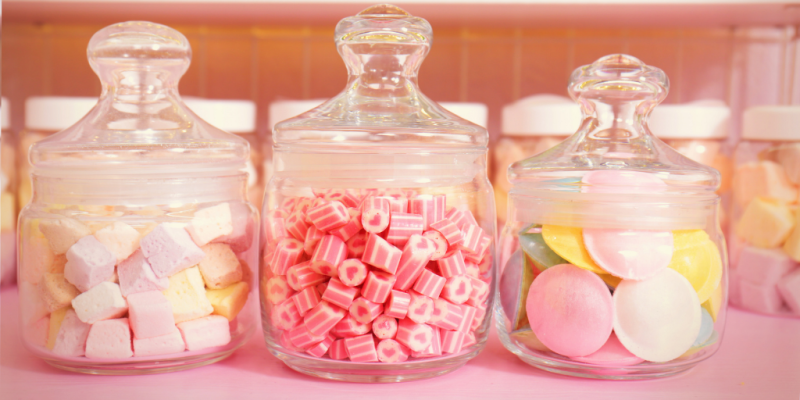
A shelf with big jars of sweets
Chocolate Limes, Liquorice Torpedos, Humbugs
Everton Mints, Aniseed Balls and Winter Candy
Jars of sugary delights dispensed in little paper bags
A weekly treat to silence the children
whilst jam and spam was selected
The budgets were balanced
and the week ahead was weighed
(c) Peter Roe, 2021
Connect with Peter on Instagram: @mediachap
The sweet shop van belongs to my childhood and I would not suggest we replace supermarkets with travelling grocers and hand-cranked meat slicers. I am glad, though, that I remember it. Memory allows us to carry something forward without pretending we can recreate the world exactly as it was. There are things we would not wish to recreate: Vesta Dehydrated Curries, Izal Toilet Paper.
We restore old buildings, revive customs, rediscover folklore and return to ways of describing ourselves previous generations allowed to fade. But is that nostalgia? Perhaps. Nostalgia suggests looking backwards, whereas the most interesting revivals seem to look in both directions at once. They ask what something meant then, what it might mean now, and whether it has anything useful to offer the future.
*****
Where my poem is full of things that have disappeared from everyday life – mobile shopkeepers, brass weights, paper bags, Bedford vans – I’m not really arguing that life was better. Instead, I’m recording a particular ecology of community before it vanishes completely. G R Bartlett’s Last Street In London does something similar, but with a much darker and more complicated set of memories: haystacks and nettles alongside school fear, riots, Thatcher, Scargill, terrorism and an abandoned Woolworths. The past isn’t uniformly golden.
Last Street In London
the last street in london, where grey
gives way to trees and fields –
a short walk to the pigs –
the weald invites, excites the child
inside that i once was;
jackdaws nesting
in giant oaks, a young boy’s hide;
abandoned bikes, a dumping ground
for burnt-out cars.
Playing in haystacks and falling
in nettles;
cool calamine lotion.
the evergreen tree in
the woods and the ghost
of the storm in october
that took you away, before
our roof collapsed, and the man
with the volkswagen beetle died.
blue lights along the twisty road;
austin princess police car parked
at the accident outside our house;
seatbelt hanging from door, the radio
crackling.
walking to school and hiding
in the library from smokers,
in toilets,
and staff room;
the corridor of death; blue goldfish
and cigarette burns; tales of smilers
outside the school gates –
a fate worse than homework.
police with batons and
molten shields, striking workers,
city riots, terror
bombs and margaret thatcher;
arthur scargill, ronald reagan;
gorbachev.
the avocado bathroom suite.
the last street in london, with
the old, haunted farmhouse at
the end of the lane, where games
were played in tractor tracks
through growing crops;
all reflected
in the window
of an abandoned
f w woolworths.
(c) G R Bartlett, 2026
Connect with G R Bartlett on Facebook: @GarethBartlett, Instagram: @RollrightPoet and LinkedIn: @GarethBartlett
*****
Perhaps nostalgia is not always a desire to go back. Sometimes it is simply the recognition that something has disappeared, or is disappearing, and a desire not to lose it completely. Gareth’s piece reminds us that nostalgia doesn’t necessarily come dressed in rose-tinted spectacles. Childhood memory can contain haystacks, tree houses and games in tractor tracks alongside cigarette burns, police batons, riots and fear.
Our remembered landscapes hold all of it. Places change. Shops disappear. Traditions disappear too. Sometimes they survive only because somebody remembers them; occasionally somebody decides they are worth bringing back. There seems to be a growing appetite for heritage. We restore old buildings, revive customs, rediscover folklore and return to ways of describing ourselves that previous generations allowed to fade. But is that nostalgia?
I am probably an unlikely person to argue that we should recreate the past. I have spent much of my life working with technology and looking towards whatever comes next. Yet I now find myself wearing the title of Grand Bard and helping to establish Bardic Seats in the county. There is an apparent contradiction there. Why, in 2026, should anyone need a Bard?
Perhaps the answer lies somewhere between nostalgia and belonging. It’s a human thing to be a part of a group, a team, a community. The recreation of Bardic Seats started in the 1990s in Bath. Tim Sebastian set things in motion to create Bardic Seats that could exist within the contemporary literary landscape: contemporary poets, contemporary communities, contemporary concerns using an older cultural framework.
The things that give us a sense of belonging are not always grand traditions, ceremonies or titles. Sometimes they are much smaller and more personal. A place, an object, a smell or a few bars of music can connect us just as powerfully with the people and moments that shaped us. Traditions survive because they are repeated. Stories survive because they are retold. Songs survive because somebody keeps singing them.
*****
In this next piece by James Cox, we move from collective memory to something intensely personal, as a familiar song collapses the distance between past and present.
Dance
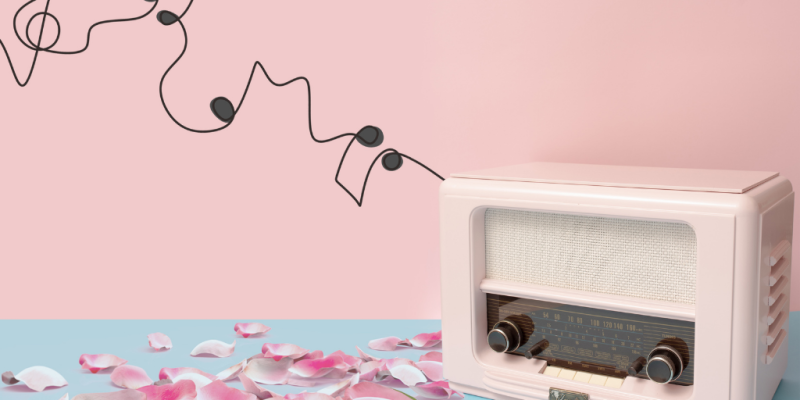
“It plays the song, the radio does,
And as it plays she sings along.
She learnt the words when she was young.”
The song started playing on her tatty brown kitchen radio and de-railed her morning. And as the melody bounced off the tiles, she squeezed shut her eyes, already wet with nostalgia, and beamed a smile that could boil water. Without consent, her body swayed and her thin, grey arms extended around the space where he no longer was. If Jim were to fall out the sky at that moment, he would have slotted perfectly into the gap between her cheek and flattened palms, just as he had done all those years ago.
The snare tapped out a sassy shower. A trumpet blew a trill. She was 20 years old and swaying on the sidelines at the Corn Exchange home guard dance. Jim was a taut 23-year-old cutting a fine figure in his de-mob suit, with his thick tanned wrists and perfect nose.
When she first saw him he was already watching her from a dark corner of the hall. As a needle scratched the empty revolutions between songs, he approached and extended his hand towards her. And she took it with a flushed smile. He led her to the shiny wooden floor as the song, that was yet to become their own, started to play. The same tippy-tappy snare, the same liquid trumpet trill. The pair of them stayed on that floor until the MC raised the lights.
When she opened her eyes she was 78 and, catching herself in the kitchen mirror, realised she showed every year. She wiped away the swell of a tear. No one to see her except her kettle, the sugar pot and that tatty radio. “You old fool,” she said aloud.
“This is a dedication,” read the announcer, “from Jim to Matilda. He says thanks for the memories and being you, even when I was barely myself.”
The music played on and a nasal crooner began to sing.
For a moment the tune was drowned out by applause as Jim span her into his arms and kissed her. The claps were from the swathes of well-wishers at their wedding, sealing their whirlwind affair after just three months of courtship. A dizzy, giddy love that became official at a petrol station on a boiling hot day, when Jim leant through the window, kissed her forehead and asked her: “Should we do it then?”
Had the song been on the radio?
The man they’d hired to sing with the wedding band wasn’t quite as good as the man on the record – she had never cared for singers’ names – but the instruments played as close as the August heat. As they slow-danced chest to breast, she could hear Jim whispering each word to her. Each sibilance growing inside her. Every face that swirled into view over his shoulder, the beaming bridesmaids, her teary mother, vanished into insignificance and, at that moment, she wished she could trade all the elation for privacy. A moment with him and their song. But still he whispered and still they danced, under the parasol of that tune.
Matilda caught herself grinning and shook it away. “Old fool,” she repeated and filled the kettle.
As she turned to switch off the wireless, she caught sight of the cracked, matt photograph on the shelf. The one of her and Jim suspending their boy between them as he shrieked with laughter. Harry fell asleep faster whenever Jim sang to him. She’d listen through the door, humming the melody along with him. Without that sassy shower of snare and slippery trumpet melody, the words were raw and aching. He meant every one. When Jim’s volume tapered off, she knew Harry had fallen asleep and it was time to creep off into the front room.
‘It’s funny,’ she thought, looking at that photograph, ‘how something as simple as a song can crop up like this time and time again.’
The image was bleached from years of sitting by the window and the colour had faded, apart from the flash of Harry’s red wellingtons and Jim’s navy suit. He loved that suit. He even looked dapper in that stubborn, double-breasted one when they buried him in it. There he was, laying terminally still and looking calm and grey. The same song played over a poorly amplified sound system and the snare was lost to the sniffles from the chapel.
Harry didn’t blink, not even once during the service. She stood beside Jim and said goodbye, kissed her finger tips, lowered them onto his perfect nose. Circled his thick wrists with her fingers. Mutely, she mouthed the last few lines of the song and prayed he would do the same. But, of course, he refused. It was the first time since they’d met that she had cried and he had not come to her.
Matilda didn’t break down that day. She saved that for the moment the door was closed and sat alone in their house. The song finished on the radio and she found herself sitting at the table in her yellow kitchen, staring at her thin hands. She wondered how many times she would hear that song between now and her own passing. The empty, muted grooves between one life and the next.
“Wasn’t that just lovely,” said the announcer. “Something nice and breezy to start the show. Now for something altogether more serious…”
(c) James Cox, 2026
*****
So perhaps nostalgia is not about trying to live in the past at all. Perhaps it’s about noticing which parts of the past have travelled with us in our memories, music, stories, traditions and belonging.
Come back next week and we’ll turn the mental clock backwards again, rummage through a few more drawers of memory and see what we can find amongst the odd socks and mothballs.
Thank you for joining me again this week. I hope something here has stirred a memory of your own. Keep writing, keep remembering, keep sharing your stories. Tell us about your moments. Our next theme is ‘Fractured,’ so if that resonates, do submit here.
*****

You can hear great new ideas, creative work and writing tips on Write On! Audio. Find us on all major podcast platforms, including Apple and Google Podcasts and Spotify. Type Pen to Print into your browser and look for our logo, or find us on Podcasters.Spotify.com.
*****
If you or someone you know has been affected by issues covered in our pages, please see the relevant link below for information, advice and support: https://pentoprint.org/about/advice-support/