By Farzana Hakim
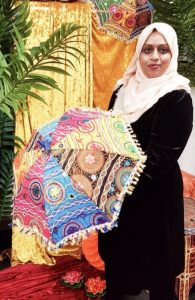
Hello all. It’s Farzana, with my final Thursday Connectors as your host and editor.
Yes, sadly the time has come where I’m bidding farewell and saying my best wishes for the future to all my lovely readers and superb Connectors. With new things on the horizon, I’ve had to make the hard decision to end my time on this page.
It’s been a big decision for me. I’m truly sad because, over the years, Thursday Connectors has become a big part of my life. Connecting with you, going through the submissions and then editing and presenting my page on a monthly basis has been the cycle of my life routine for the last five years. So, I’m sure you can imagine how tough it is to say goodbye to my beloved page!
Not to worry, though; the page will continue. Looking into 2026, there will be several hosts, not just one. I’m sure this new format– a new host every quarter – will remain enjoyable, popular and easy to submit to and connect with. So, promise me you will keep the submissions coming and keep supporting Thursday Connectors. 
So, to mark my final page, I’m doing something a bit different. I wanted to look back over the years and share two of my most sentimental introductions. Reading back over some of the ‘Connectors’ I’ve shared with you has been fun, and my intros read like blogs that could still be applied to my life now.
I can’t believe how much I’ve actually shared with you: from sickness and struggles and happiness to successes and setbacks, I’ve written about anything and everything – almost like a diary. Since 2020, Thursday Connectors has been one long series of my life’s stories and experiences, reminding me off stuff I’ve done and emotions I’d once felt; turning into a bit of a personal education for me.
I’m so glad the magazine has given me the opportunity to share because, along the way, while telling my stories and finding my own voice, I’ve empowered others to do the same. It warms my heart!
So here they are, my two favourite pieces, both of which totally moved me and affected me the most.
So, for one last time… Let’s all connect with me, your Farzana!
The Gender Agenda – As Soon As She Is Born, 27 August 2020
I have the sense that, if I voice some of my own thoughts on the subject, perhaps this could act as a means of giving a voice to other women sailing in the same bouncy tugboat as me. An important voice.
 So, let’s begin with my story. It’s not as juicy or exciting as some of the eventful dramas and family sagas I write. In fact, it’s probably heard all too often. I am a British-born daughter belonging to the Muslim faith and the Pakistani culture. My grandad came to east London in the ’50s; one of the first to migrate here from Pakistan. My father was a toddler when he followed with my grandma a few years later. Although Dad was schooled and grew up in the UK, his parents arranged his marriage to my mum in his early twenties. Mum was also from Pakistan. My dad was the only child and my mum became the dutiful daughter-in-law, looking after my dad’s needs, as well as those of his parents.
My brother was born first and a-year-and-a-half later, I arrived. Mum always tells me how overjoyed the family was at my arrival and, just as they did when my brother was born, my grandparents distributed sweetmeats to all of their friends and relatives.
Now, let me tell you why I mention the sweetmeats. Over the years, as I was growing up (till this day, to be honest), I still hear the story of my family gifting the sweetmeats. In 1978 British Pakistani culture, it wasn’t the norm to celebrate a daughter’s birth. An uncle reprimanded Grandad for acting over the top; the money could have been useful spent elsewhere. The women in Grandma’s social circle turned their noses up and gossiped about my family’s weird behaviour. Why celebrate a girl’s birth?
A girl is a burden. A girl doesn’t grow up to bring riches into the family; a boy does. A girl doesn’t grow up to take care of her ageing parents; a boy does. A girl goes off with her husband. She must tend to his family instead. A girl’s character and behaviour needs to be scrutinised at all times, in case she grows up to dishonour her family: unlike a boy, whose taboo antics don’t really matter. They don’t stain a family’s honour. A girl’s birth isn’t one to be celebrated!
Until I was ten, I was the only sister to three brothers in our busy household. Everything was good in my eyes. I had a fun and healthy childhood. The four elders doted on me. I was especially close to my grandad, my personal bank for sweets and toys. I fondly remember our regular trips to the corner shop. He bought his fags, and I got a paper bag full of cola pips, pear drops or sherbet lemons and a bag of those five-pence crisps us kids so loved in the ’80s. On the way back home, we’d always, I mean always, pop into the film shop on the corner of Katherine Road, to pick up another videotape of the latest Bollywood movie. After dinner, regardless of the fact I had school the next day, me and my grandparents and sometimes my mum as well, depending on whether she could fit in a respite from her never-ending chores, would sit and watch the movie from Indian cinema. My brothers didn’t really care much for the movies, but I loved them.
One day, an uncle saw me at the film shop. Grandad was standing near the zebra crossing at the end of the road waiting for me. His health had started to deteriorate and he’d quickly get out of breath, so he’d send me to exchange the tapes while he waited halfway. Anyway, this uncle decided it was OK to tell me off for being in a shop which always had older boys and men in it. He grabbed my arm and marched me outside the shop, chanting how I was going to be in big trouble from my grandma when he took me home. (Grandma was the strict one in my house; seriously, she was the boss.) When the uncle saw my grandad waiting for me, he let go of my arm and began to explain to him why I should never enter the film shop again. He said, “It isn’t a place for a girl to go.” He added that I shouldn’t be watching the movies anyway. I was growing up; I’d only become corrupted like the awful characters and songs they featured. My grandad was made to feel guilty, his parenting skills questioned. When we arrived home, my grandma had a go also, for dragging me everywhere with him.
I never went to the film shop again and my movie-watching was limited to Friday and Saturday nights instead.
As time went on, I noticed Grandma becoming stricter with me. She never let me cut my hair short, or wear jeans or dresses any more. She’d force me to cover my head whenever our male relatives came to visit and make me dress in traditional clothes all the time. Often, she’d moan to my parents about how I didn’t know how to do any housework. And every sentence would be followed by: “What will she do when she gets married? What will her in-laws say?”
I was only 13! Yet I was beginning to hate that I was a girl and couldn’t be that careless child any more. My grandma always made me feel conscious of the values and rules I had to follow, so different to those of my brothers. Although my happy times definitely outweighed any gloominess I’d feel during these random incidents, I now realise these outbursts only occurred when a relative or a friend had been round, triggering my grandma’s mood, for some reason. They were all gossipmongers; people who had nothing better to do than to spend time at other people’s houses, making judgements and interfering in matters that didn’t concern them. Society and culture can really suck, sometimes!
However, by the time I was 16, my grandma had relaxed, becoming more laid-back in her attitude towards me. Perhaps she was satisfied with my good GCSE results and excited I was going to do A-Levels at a new college. I remember how, on the day I got my results, she took me to Green Street and bought me a fancy gold necklace set. She let me wear the ring but told my mum to put the necklace and earrings away for my wedding. She was obsessed with the idea of me getting married.
These days, I can laugh about those times of growing up within an extended family with my grandparents who, sadly, are no longer with us. My poor mum, though! I wonder why she was never allowed a say or a voice in my family dynamics? As a child, I probably had a louder voice than hers. I guess my mum’s story is a familiar story for most women of her generation. But just think about my grandma, too: although she came from the generation before my mum’s, she had all the power and the fiercest roar! How did that happen?
© Farzana Hakim, 2020
*****
Reading the above made my tears run. I couldn’t believe I’d written it, as it’s extremely personal and questioned whether I’d be able to write such a thing about my childhood today. However, sharing this story opened up so many avenues for me in the years to come. In fact, it was introductions such as this which made the Connectors relatable and motivational to so many. And now, on the eve of 2026, I’m ready to set up my own company. ‘Hear My Voice Projects’ is geared towards empowering women’s stories, especially those from women belonging to the South Asian diaspora.
Here’s another personal one. Equally heavy and equally emotional, I share it as my final Connector, because our journeys as mothers will stay with us until our final breath. With my son’s wedding being planned for next August, I’ll be a mother-in-law soon and can’t wait. (I’ll probably write a feature for the magazine about how that goes, as I don’t think we’ve featured one about a wedding before!)
The Other Side Of Motherhood – 21 April 2022
Today’s Connectors has definitely affected me, going straight to my heart!
I’ve already told you many times, I’m a sentimental, emotional kind of lady. In my early 40’s, with two out of three of my kids now adults and off doing their own thing in the world, I have much more time on my hands to reflect and do the things I didn’t get a chance to do when they were little and needed me, their mummy, 24/7.
Who am I kidding here? My boys may be adults, gearing towards their final exams for their degrees at Uni, and applying for the next steps, but I’m still Mummy, and I’m forever putting their needs and desires first!
It’s the nature of all us mums, isn’t it?
Actually, today’s Connectors comes with a trigger warning. Please be aware the writing may be upsetting for some. Running the ‘Hear My Voice’ Workshops for women, I get to hear and explore different aspects of motherhood and women’s stories and many don’t make for easy listening.
Just the other day, my friend told me her friend’s 19-year-old son had died in a car crash. I cried for her friend’s loss. I was transported back three years, when I was sitting in an emergency ward, being told my son had sepsis and that the next few hours would be crucial. I didn’t know what to do. I was numbed, yet couldn’t stop my tears from falling. My hands wouldn’t unfold, because I was begging Allah to save my boy. I was glued to his side for weeks afterwards while he recovered, making him comfortable and just being Mum. I was lucky, my boy came home and is well, MashAllah. But I can’t imagine the pain of that other mum; going through every day having lost a part of her world.
Not just this. We mums go through so much in life, don’t we? And often, it’s our own mothers who we end up playing the role of a mother to! My children nursed me through surgery last August, helping me in and out of bed, taking me to the bathroom and the rest. I cry when I think back to how helpless I was and how vulnerable my children were, as they watched me suffer. I feel guilty, but on the other hand, that’s part of life, isn’t it?
© Farzana Hakim, 2022
*****
And that’s all from me, folks. It’s been so special being able to share my story with you over the years and it’s honestly been awesome that I got to hear yours too. A big massive hug to my colleagues here at Write On and Pen To Print. You are all in my heart forever. See you around real soon for more adventures!
Keep Connecting!
Alvida my friends.
*****
Issue 27, featuring eco-poet Sarah Westcott is out now. You will be able to find it in libraries and other outlets. Alternatively, all current and previous editions can be found on our magazines page here.

You can hear great new ideas, creative work and writing tips on Write On! Audio. Find us on all major podcast platforms, including Apple and Google Podcasts and Spotify. Type Pen to Print into your browser and look for our logo, or find us on Podcasters.Spotify.com.
*****
If you or someone you know has been affected by issues covered in our pages, please see the relevant link below for information, advice and support: pentoprint.org/about/advice-support