By Mirabel Lavelle
Welcome. We’re coming to the end of the theme of ‘Nostalgia’ and I find myself spoilt for choice with each captivating submission. Thank you. Your voice is unique, your writing matters and we want to connect with it!
This month is back to school month and this year is The National Year Of Reading. ‘A full year dedicated to (re)connecting people of all ages with reading and reimagining what it looks like to be a nation of readers.’ 5 Things You Need To Know About The National Year Of Reading 2026 | National Literacy Trust
The following pieces resonate with me in different ways. The first is from Afsana Elanko. It touched me because I was born in British Colonial Malta, a few months before Independence Day. Although we were taught English in school, it was my hunger for reading that gave me the power to master the language.
Present Day
Yaathavi attended the refugee support group every month for the last three years and didn’t fully understand why people were not keen for their children to be educated. The speaker had said libraries gave free books. Her eyes lit up. She wanted her daughter to read. The rest of the group said it wasn’t necessary for children to read at home – they do that at school. Most of the group were uneducated and did not understand the importance of books. But she was different; to her, books were mysterious objects that opened new worlds.
“Books are magical,” she said. Oh no, why had the words escaped from her lips? Everyone started laughing.
Twenty years earlier
Yaathavi sat listening to the village elder reading a story about Sinbad and his adventures. As she couldn’t read, she held on to every word with delight. There was no school in the vicinity and her father was too poor to send her to the village school five miles away. How she longed to read!
Present day
Someone nudged her.“What do you think?”
Yaathavi blurted out, “Books are good. I want my daughter to read.”
More laughter followed. “They get educated at school, not through reading at home.”
Her voice wasn’t being heard; she was a minority. She kept quiet and the laughter died down. She vowed her daughter would read. But how? She had broken English, so how would she get the information?
Yaathavi asked, “Free book?”
The speaker nodded. “Yes, you have to be a member of the library.”
Yaathavi had no idea what that meant and gave a pen and paper: “Address?” The speaker wrote something down.
She gave the paper to her neighbour. “Free book, please.”
Sam read the paper and understood. “Shall we go with Priya to get some books?”
“Free book, please.”
Sam replied, “Tomorrow.”
**
Yaathavi held Priya’s hand as they followed Sam into the library. There were shelves full of books, big and small ones, thick and thin ones, full of pictures and pop-up ones. So many books. Amazing books.
Yaathavi wished her daughter to be educated. Something she’d never had. Books were the gateway to that education, to a new world. Her daughter was going to have access to it. She was so happy. She hugged Sam with delight.
Priya looked at her mum. “Mum, we have to become members and then I can get books.”
Yaathavi picked up her daughter and gave her a kiss.
Later that evening
There was no one to read with Priya. So Priya read and Yaathavi listened. That was enough. They were happy.
Priya thought books were magical. She’d never seen her mother so happy since her father had been killed.
© Dr Afsana Elanko, 2026
*****
This poem by Mary Walsh transported me to my childhood.
Forest Walk
Along the path our walk we’d take
The one that led us to the lake
Beyond it trees of every colour
Bent and conversed with each other
Leafy shadows dappled our heads
Berries stained our mouths bright red
We jumped in puddles, climbed trees and fences
Hid from the dog
Drove her demented
Watched out for squirrels, rabbits, birds.
Wondered at strange sounds we heard
Then at the pub our Dad would stop
A beer for him, for us some pop
And water for the dog.
Then home for tea
My sisters, Mum, dog and me
Into the car we would fall
Happy, hot, exhausted all
(c) Mary L Walsh, 2026
Connect with Mary on Instagram: @Marelwa60
*****
Next, a piece by Eithne Cullen – looking at the importance of fables and stories in firing the imagination.
Just then flew down a monstrous crow (Lewis Carroll)
According to The Literacy Trust: Nursery rhymes are extremely valuable to support early language and communication development, build confidence and prepare children for reading and writing as they get older. They add that they help with vocabulary, sentence building, bonding, practising motor skills and more besides.
All this is good for me as I love nursery rhymes and sing them with my grandchildren all the time.
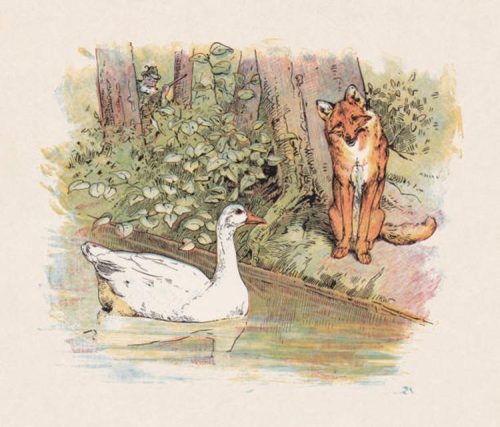
I find it easy to dip into the treasure trove of nursery rhymes inside my head. They’re evocative, nostalgic and fun. I can see the pictures from my Mother Goose book from childhood: a sailing boat, little girls in Edwardian dresses, birds, fish and a scary image of a fox with a goose in its mouth – John, John the grey goose is gone, and the fox is off to its den-o, den-o.
And there are many times when I spot a crow and call it Monstrous Crow… like the one in Tweedledum and Tweedledee.
I’m not just about the Jack and Jills and the Little Bow Peeps of these worlds; there are some dark and scary tales, too. There are rhymes about plague, executions and death – and I even feel nostalgic for those! It’s no wonder I’m a poet and drawn to poetry. Who says nostalgia isn’t good for us?
© Eithne Cullen, 2026.
*****
Next up, a poem from Jilly. Her verses really resonate with me as I’ve treasured books all my life.
Ode To Readers
Today I bequeath you the greatest of treasure,
may it bring you for always, an unending pleasure,
for your whole life long, I hope it will last,
to enrich your future and reveal the past.
May it bring you such magic all through the years,
perhaps move you to laughter and maybe to tears,
where you’ll find adventures and questions to ponder,
a life full of hope that will fill you with wonder.
I give you this freely with love and with heart.
It will show the way forward right from the start.
For the key to this treasure, you only need look,
inside the cover of every book.
© Jilly Henderson-Long, 2026
*****
Andrea Cunha’s memories connect us to childhood reading once more.
The Spice Of Madness: A Quixotic Journey Through Reading
Reading deeply marked my childhood. I remember it as though it were today. I was six years old, in the car with my aunts, when I picked up a newspaper and started reading aloud. I hadn’t even realised I knew how to read yet! They were so surprised and happy that they rushed home to share the news.
As the daughter of a journalist, I loved accompanying my father to his office from a very young age. While he worked, I would sift through the archives, searching for interesting topics to take home. Later, during my teens, he started buying me books through the Círculo do Livro. We would choose my next reads together from the catalogue.
It wasn’t just the stories that left a mark on me; the authors themselves shaped my life. They had a distinct voice that felt like chatting over a cup of coffee: advising, warning, making me smile, and sometimes cry. Because of them, today I enjoy writing exactly like that – as though someone is inviting you for an informal chat between friends.
I fell in love with chronicles/memoirs. My favourites were Arthur da Távola and the actor Miguel Falabella. During my adolescence, I would even hang around places people said he frequented, hoping to bump into him. I never met him, but someone who read one of my chronicles once said my style reminded them of his. I replied that it was likely, because he’s always been my greatest inspiration. I must also mention Érico Veríssimo: he had a unique ability to transport us right into the scenes of his books. The sum of all these voices explains my great passion for writing.
But the story that marked my life the most, one I have read multiple times, is Don Quixote by Miguel de Cervantes.
To me, Quixote didn’t want to face a harsh reality and preferred to live in his own fantasy world. He taught me that taking life too rigidly only makes us sad and grumpy. I’ve always believed that a dose of madness is the true spice of life. After all, a little bit of quixotism hurts no one. Locking myself into patterns just to please society has never been my thing.
The ability to detach from what makes us miserable is rewarding. Quixote taught me to live life my way. If I want to quit a well-paid job that makes me unhappy, I leave. If I want to pause my life for a year to experience new cultures, I go.
He left disciples all over the world and I’m one of them. His story gave me the courage to live my own dreams. That is how the girl who lived in the city ended up in an indigenous village and now lives in England. The quixotism planted in me gave me the audacity to break away from patterns. Thank you, Don Quixote, for teaching me that life can be light, and the world giant, when we have the courage to believe in it.
© Andrea Cunha, 2026
*****
I would like to end with a reflection from Gabrielle, a student at The University Of Sunderland.
Time For Bed
“Time for bed” – the words I despised as a child. I was always a night owl, sitting deadly still as to not alert my parents that bedtime had actually passed several hours ago. In fact, the one bribe that trawled me upstairs was the promise of my dad reading from the only book I would let him touch: The Many Adventures Of Winnie The Pooh.
After reading hundreds of pages, my dad began to sneak away under the presumption my eyes being closed meant I was asleep. However, just as he crossed the threshold, my eyes shot open and I asked the question I knew would keep him in the room for another hour: “Where do you think you’re going?”
“Nowhere,” he would reply, before settling himself back on the pillow and falling asleep. My plan had worked for another night.
After losing Dad suddenly last year, I found myself frequently reminiscing back to this childhood bedtime reading routine, as it summed up our relationship perfectly. We knew how to wind the other up but ultimately were best friends.
There was a similar game with my grandad Derek. I climbed upstairs to choose another Famous Five book for him to read. Tracing my fingers along the crinkled lines of the series that lay stacked behind the white shutters, I picked a random number and raced into the bedroom. I’d find him there in his blue dressing-gown and slippers, waiting at the end of the bed, ready to transport us both to the world of Enid Blyton.
Begrudgingly, I offered him the privilege I didn’t bestow upon my Dad, closing the book and whispering, “Goodnight, God Bless.”
Books still transport me to another world. Not to The Adventures Of Winnie The Pooh or the Famous Five, but to my childhood memories with my dad and grandad. Little did they know, they were creating a comforting habit I’d use a decade later when they were no longer here to read to me.
(c) Gabrielle Wilkinson, 2026
Connect with Gabrielle on Instagram: @gabriellewilkinsonjournalist
*****
Issue 30, featuring author Gillian McAllister is out now. You will be able to find it in libraries and other outlets. Alternatively, all current and previous editions can be found on our magazines page here.

You can hear great new ideas, creative work and writing tips on Write On! Audio. Find us on all major podcast platforms, including Apple and Google Podcasts and Spotify. Type Pen to Print into your browser and look for our logo, or find us on Podcasters.Spotify.com.
*****
If you or someone you know has been affected by issues covered in our pages, please see the relevant link below for information, advice and support: pentoprint.org/about/advice-support