Showcase: What If It All Works Out? + Women Clothe The Space + Fork In The Road
- 18 March 2026
- News, WriteOn Showcase
Edited by Nick Burdett
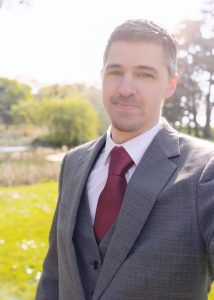
Hi, Nick Burdett here for the third of my March Showcase pages.
This week, I’ve been thinking about how each choice we make leads to a change. Whether they are the big life-altering events, or something as simple as which book to read next. The interconnectivity of everything means all choices make changes at some level.
At the point of making the choice, we don’t know if this will be a positive or a negative, or, more likely in this world, a little bit of both. Without knowing all the repercussions of a choice, it takes a certain level of bravery to make any. Whether you’re deliberating over one for months, or making a snap decision in the moment, we should be proud of each one. Sometimes the simplest ones have the biggest effect. Now… what to have for dinner tonight?
*****
Our first piece is a short poem that perfectly captures the unknowns around choices and how you’ll feel when you’ve made them.
What If It All Works Out?
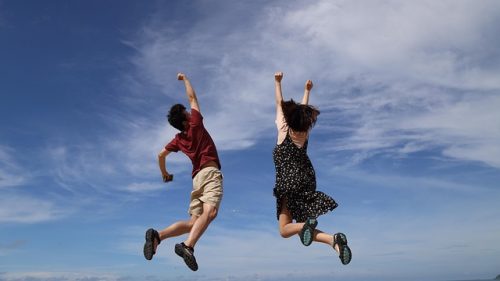
What if I stand here and
prepare for there?
What if there arrives here?
Am I able to receive
with curiosity, grace, and humility?
Can I conjure the courage to
stand my ground,
and welcome possibility?
What I want to know
of all unknowns,
is what my soul requires
to accept my heart’s desires.
© J.Catherine Tetrault, 2026
*****
Next, a memoir. The writer’s choice to step from one life to another has long-reaching effects. It’s an interesting read and ties in nicely with the ongoing Women’s Empowerment Month slogan: ‘Give To Gain.’
Women Clothe The Space: My Fourteen Years In The Heart Of The Forest
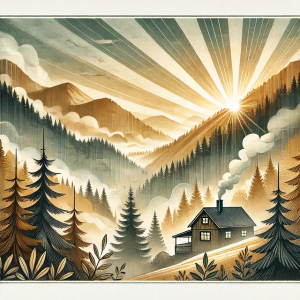 In 1996, I was a 19-year-old journalism student, driven by the frantic pace of the city. I was one of the most dedicated students in my year, always immersed in projects, until the day I met a Guarani man. That encounter changed the course of my life: we married, and I followed him into the heart of his village.
I would remain there for the next 14 years.
The transition was a shock for a city girl. I swapped university textbooks for a life without electricity, running water, a stove, or a fridge. My bed was made of wooden slats and bamboo, covered with bundles of straw. I had to learn how to live in the rainforest — I, who’d never even handled a machete or built a fire to cook my food. Breakfast? Forget the local bakery. I had to set traps and pray that something would be caught. And yet, I’d never been so happy. In that simplicity, I discovered that happiness is not a commodity, but a way of being. I abandoned journalism to become an educator, filling a gap in a community that lacked teachers and, in the process, gaining a vast family and a new soul.
To understand my journey, one must understand the Guarani people. They are resilient, divided between the Kaiowá, Mbyá and Chiripá, yet united by a language belonging to the Tupi linguistic branch. They are unique for having maintained their traditions, religion and mother tongue, despite centuries of contact with Portuguese and Spanish colonisers.
In this culture, names are sacred. Every Guarani has two: a ‘civilised’ name for official Brazilian documents and a spiritual name. According to tradition, a child only receives their true name once they begin to walk. They believe that, until then, the spirit merely hovers over the body; it only truly enters when the child takes their first steps.
This baptism ritual takes place once or twice a year in the Casa de Reza (Prayer House) and lasts for several days. It’s a marathon of faith, where seeds are blessed for the harvest and children receive names that reveal where their spirits originated. The ceremony usually begins at dusk and stretches until five or six o’clock in the morning: a continuous cycle of silence, prayers, chants and dances.
When I arrived in the village, I heard much of Maria Candelária, better known by her baptismal name, Tatatin Ywa Rete. She had already passed away, but her memory lived on in the mind of the entire community, as did her teachings.
Tatatin was a woman far ahead of her time. In the 1940s, moved by revelations in her dreams, she led a small group on a pilgrimage in search of Yvy Marãe’ỹ: ‘The Land Without Evil.’ For the Guarani, this is a place beyond the sea where there is no pain, illness or death; a place where people do not die, but “become enchanted” into a higher state.
Their journey lasted 30 years. They travelled on foot from the south of Brazil to the southeast, making strategic stops so the elderly could rest and pregnant women could give birth. Interestingly, every place where Tatatin paused later became a recognised indigenous village, legitimising the Guarani presence throughout the territory.
At the height of the Brazilian military dictatorship, when she finally reached her destination, she found a group of indigenous people suffering under pressure to leave their lands, stripped of their language. They were pejoratively called “caboclos.” Through Tatatin’s arrival and the subsequent attention from researchers and organisations, a great discovery was made: those people were the last remnants of the Tupinikim; the first people to have contact with European colonisers in the 15th century. Tatatin’s presence helped restore their identity and secure their territory.
Her wisdom still echoes in my mind. One of her phrases, which I carry with me to this day, is: “Women clothe the space.” It’s a poetic summary of female importance; the belief that women possess the power to beautify and give meaning to a place simply by existing within it.
Today, living under the grey skies of England, I feel deeply honoured to be part of this family. I may be far from the tropical rainforest, but I carry the lessons of those 14 years with me. I learned that, in the simplest pulse of life, we find the greatest inspiration to keep walking.
© Andrea Cunha, 2026
*****
This next poem is one of mine. I hadn’t been much of a poet before becoming involved in Write On! but am starting to see the appeal! You can certainly get an idea down with a very few choice words, and the joy in forming patterns and meaning with words is wonderful. I will have to get better, learn the rules and such, but it’s always good to try.
Fork In The Road
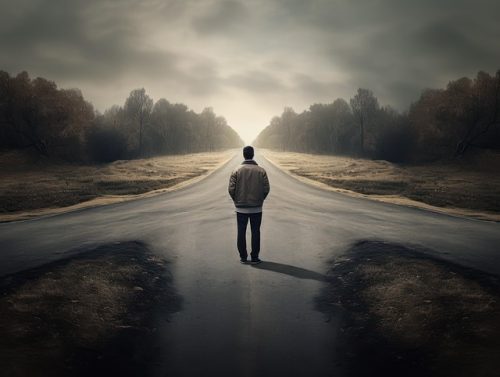
Taking one way or the other,
A fork in the road, splits out,
Need a choice, uncover,
Sure footed onwards, in doubt.
The next steps are unknown,
But forwards you must drive,
Brave a choice, backbone,
Overcome fear to survive.
The path on the left feels right,
So the right path must be left,
Make a choice, just might,
Enlist mind-making deft.
Going past the hill now,
The path you took around,
Made a choice, somehow,
Let’s see what can be found.
This was, it seems, the right way,
It took me here from there,
Trust a choice, into the fray,
The path unwalked, the spare.
Left or right, the world is seen,
The path would get me through,
Live a choice, evergreen,
The worry was undue.
© Nick Burdett, 2026
Connect with me on Instagram: @nickoburdett and on BlueSky / X: @nickburdett
*****
Issue 27, featuring eco-poet Sarah Westcott is out now. You will be able to find it in libraries and other outlets. Alternatively, all current and previous editions can be found on our magazines page here.

You can hear great new ideas, creative work and writing tips on Write On! Audio. Find us on all major podcast platforms, including Apple and Google Podcasts and Spotify. Type Pen to Print into your browser and look for our logo, or find us on Podcasters.Spotify.com.
*****
If you or someone you know has been affected by issues covered in our pages, please see the relevant link below for information, advice and support: https://pentoprint.org/about/advice-support/
Related News
Write On! Features: I Started Writing By Accident by Lulu Allison
- 14 January 2022
- News, WriteOn Features