By Mirabel Lavelle
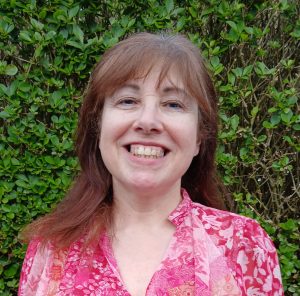
Welcome to Thursday Connectors for this quarter. I’m excited to be your editor taking you into September and the new school year.
Over the coming months, I’ll introduce you to writers I connected with in my writing journey, both in-person and online. My writing enables me to connect with people from all over the world, people I probably would have never discovered otherwise. It enables me to forge friendships, share stories and to open my mind and heart to the experiences of those I meet and to be touched by the writing they share with me.
The pieces I’m sharing with you are of trips down memory lane.
To start, I’d like to introduce Sabrina Elouardi, who I met via the writing platform LWS, London Writers’ Salon. Sabrina is a Moroccan-American novelist and coach. Writing from a 16th century Amsterdam canal house, she coaches writers back to their page through her practice, The Akhira Atelier, while weaving her debut fantasy novel.
On Living In A 16th Century Canal House
It’s a quiet hour when my canal house whispers to me.
The arch at its throat was open, as if waiting to speak, the way a mouth stays open after its last words.
The white keystones above every window were turned away like closed eyelids, with porcelain cherubs catching plaster tears.
The house never finished mourning, I think. Instead, she whispers:
You can sink, like Vermeer’s pearl of the sea, just don’t sink…without…me.
The stairs are of iron. Black iron, with the insignia of two regal lions, their coats worn soft by three hundred Amsterdam winters.
I climbed those stairs alone five years ago, my whole life in my arms, while he whispered white lies about the life we’d build together at the bottom.
The Dutch trader’s wife, from those three hundred Amsterdam winters, knew this too, I think.
Knew when her husband fell from heaven’s grace. Knew when she fell out of love with him, falling, falling, into a darkness where the moon is lost and never found, whispering:
You can sink, my dear, like Vermeer’s pearl of the sea, just don’t sink…without…me.
The master slaapkamer bedroom and the mistress’ pronkkamer living room smelled of old wood and opportunity, back then. Dark with age and water-stained wide plank oaks.
I didn’t know yet that they were the same thing.
Where Dutch merchants once pressed flowers between ledger pages, and my Moroccan ancestors once took Delft tiles and created Zellij mosaics between tulip buds, I built a golden cage.
A golden cage that was heaven, or hell, or a Protestant purgatory in-between, built from a corporate career that would break me.
You can sink, like Vermeer’s pearl of the sea, just don’t sink…without…me.
The ghosts don’t find me on the balcony. Where only angels tread, the women-in-white lay out their linen along the railing, whitening the fabric underneath summer’s sun.
The white of the linen, the white of the balcony’s empty garden chairs, I try to make it clean again.
But the balcony, the balcony’s lungs gasp with ragged breath, and so too do I gasp, writing furiously:
A man who once lived in this city took his fury and wrote the first Dutch story I fell in love with. Wrote in exile, alone, bankrupted by beauty.
Signed his name not as the writer he was born as but the thing he had become —Multatuli— in Latin: “I have suffered much.”
I know him, Amsterdam. I am him.
I climbed those stairs alone with my whole life in my arms. I built a golden cage from a corporate career that was to be poverty’s salvation.
I held three degrees like three dead flowers and watched the city demand more I couldn’t afford.
I lost my everything to loneliness, writing penny dreadfuls on a white balcony to buy my way out one page at a time.
I have suffered much, Amsterdam.
So you can sink, like Vermeer’s pearl of the sea.
But don’t sink without me.
© Sabrina Elouardi, 2026
You an connect with Sabrina on Instagram: @starlight.sabrina/ and via Substack: sabrinasscriptorium.substack.com
*****
Next up, a poem by Andrew Mears, a published poet with a trilogy collection of poetry books which help raises money for Northern charities.
Time Flies
Minutes, they fall like leaves in Autumn
Scattering wherever they please
Once vibrant, fresh, now limp, lost
Each second, they danced
Their tune, a whisper
In youth lasted
Forever
But now
Gone
© Andrew Mears, 2026
Words on a N E Street is available on amzn.eu/d/03WhbCr3
*****
We move on to a poem by Elaine Gardner who won third prize in the 2025 Pen to Print poetry competition with Threads. Elaine’s latest poem Wash Day takes us to a time in the not-so-distant past.
Wash Day
In the small kitchen
I’m hidden
From Suzie Wong’s knowing eyes
That follow my every move from the chimney breast
Nanna’s gnarled hands
Scrubbing collars and cuffs
With hard green Fairy soap
Show me how to feed
The Snapping Dragon
That spits out sheets
Hard as steel from the clink-clank foundry
Then she carries the basket, straight backed
To the rainbow flower-garden up the lane
I skip alongside her
Stopping to say hello
To the giant dray horse
Snickering behind rusty railings
As Nanna pegs
I thread pink-tipped daisies
Into Princess swathes
While sheets billow
Whiter than clouds in a forever sky
I lie back on a green carpet
That prickles and tickles
Close my eyes
Step aboard a junk
And sail the South China seas
With Suzie.
© Elaine Gardner, 2026
Elaine’s poetry collection, Pieces Of My Heart, is available on Amazon.
*****
Next, I’d like to share a piece from Andrea Cunha with you. A Portuguese teacher in the United Kingdom, Andrea carries Brazil in her soul and in writing. We first met through Pen to Print and the Write On! group chat. I hope you enjoy this excerpt from her submission as much as I did.
No One Is Merely Shadow
June mornings are no longer as cold as in previous months, bringing with them a warmth that feels typically Brazilian. I realise, once again that, though I left Brazil, Brazil never left me. This Brazilian-like weather here in the UK makes memories of the past blossom within me of someone I once knew, but who, due to life’s surprises, is no longer part of my social circle. Nevertheless, memories remain etched and are immortalised by time.
Amidst this scenery, the memory takes shape. It’s curious how some connections seem so intense at the start, almost effortless and perfect. But time… time always reveals the truth.
When we’re overcome by disappointment, we tend to erase the good qualities and shine a light only on the flaw, as though the other person has ceased to be whole. No one is just light or just shadow. We all carry both sides. And it makes me wonder: do we choose who we are? Or is it life, with its absences, its aches, and its crooked paths, that chooses for us?
I remember my father’s words: “Happiness is not a constant; it’s merely a state of mind. It’s here today; tomorrow, perhaps not.”
We all carry something. A void. An old hurt. A frustration that can shape who we become. But what truly defines us is what we do with it.
There are those who become bitter. There are those who wound the world, trying to give back what they received. There are those who fall silent and carry it all in secret. And there are those who, despite being weary, still try.
Perhaps not everyone deserves endless chances. But I believe every human being deserves, at the very least, to be seen as a whole.
In the end, I choose to move on. Forgive? Perhaps. But judge? Not any more.
© Andrea Cunha, 2026
Connect on Linked in: .linkedin.com/in/andrea-souza-da-cunha
*****
Of course, it’s the World Cup summer. With the final just having just been played and won by Spain, I think it’s worth remembering Bobby Moore, who captained the England team to win the World Cup in 1966, 60 years ago.
Lucy Kaufman, the author of the following extract, tells us: “Bobby Moore, who captained the England team to glory, was my Mum’s old classmate. Ten years ago, I wrote Pretty Bubbles about my mum and Bobby’s schooldays at Tom Hood School. In the prologue, I begin at the end.”
Pretty Bubbles: Prologue
30th July 1966
In the shadows of Wembley’s twin towers, a young golden man inspects his hands for mud, wipes them on the back of his shorts, on the chest of his red number six shirt and one after the other on the velvet balustrade before shaking the outstretched, white gloved hand of the Queen of England. Flashing a shy smile, Bobby takes from Her Majesty the award she is holding out to him: the solid gold Jules Rimet Trophy. A trophy that was dramatically stolen from a display cabinet in March and discovered some time later by Pickles the dog, wrapped in newspaper, tied with string and concealed beneath a garden hedge; the coveted gold trophy that Bobby has, just moments before, led his team to snatch — in precious extra minutes — from eager West German fingers.
‘Perfect,’ he says, ‘thank you’, and with another of those coy smiles, to himself more than to the Queen, or to the gaggle of team-mates lining up alongside him, thrusts the gleaming Jules Rimet high above his golden head into the late afternoon air.
The moment is captured for decades to come by a blur of photographers, television and film cameras. It is a moment Bobby will be asked to recall by everyone he meets for the rest of his life. He will swelter under interrogative lights in television studios and attempt to cobble words together for countless newspaper hacks, the story gradually embellished over time, in retrospect, with hindsight, but right now Bobby knows nothing of that. He hovers on the very pinnacle of this moment, as if all the moments that had ever been before were merely queuing up to lead to this. Everything has come to this. There are no tears in his eyes, no lump in his throat. No words that can tumble to the fore quick enough to stick. There is only the squeeze in his chest, the breadth of his grin, the precious weight of the trophy, the crackle of electricity in the air.
‘Bloody hell we’ve done it!’ Geoff Hurst says, as Bobby lifts the trophy.
The 93,000-strong crowd erupts in euphoria; the golden hairs on the back of Bobby’s damp neck curl at the deafening roar. The sound reverberates around the stadium for what seems like forever.
Bobby and the Wembley crowd swell and meld together into a dizzy whole, united in their communal delight and shared disbelief.
They have done it. Actually done it!
England have won the World Cup.
© Lucy Kaufman, 2026
Connect on Instagram: @kaufmanlucy
*****
Finally, a touch of Maltese Nostalgia.
A Gathering Of Dolphins
I come from the small Mediterranean Island of Malta.
One fond childhood memory is of a particular school trip during the 1960s. We took a ferry ride across the sparkling blue waters surrounding the island in order to visit the sister island Gozo, or Calypso Island as some would call it. The highlight of the trip was the sight of playful dolphins somersaulting close to the ferry. We’d wave at them and imitate their clicks and squeals. Once back in school, we drew pictures of the dolphins and wrote stories inspired by their playfulness.
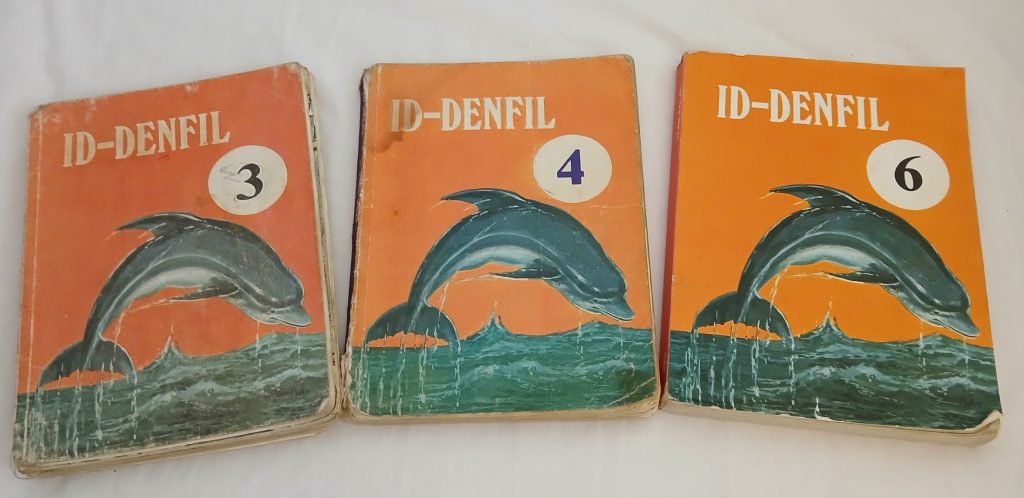
We used a Maltese reading textbook called Id-Denfil. Six books in total, from Year One to Year Six. These books were my introduction to the world of literature. I found them spellbinding. I especially loved the cover with the picture of a dolphin jumping out of the water. Each book was packed with all types of stories and poems, from legends and fables to historical and cultural events of our country and of neighbouring peoples.
Id-Denfil presented historical fact in an exciting language that connected with our imagination, introducing me to short stories and poems. My favourite were nature poems written by the Gozitan/Maltese poet Mary Meilak, the first recognised national female poet. I never tired of flicking through the pages, all illustrated with plain, childlike drawings. Each page a vignette within a collection of genres that fired me up to read greedily.
When I came to live in England in 1984, I had just one suitcase and one holdall. The first thing I packed was my jacket. Well, it was November and I was coming to the North East! Then I packed my ‘Treasure,’ Id-Denfil. My childhood memories of school trips, dolphins and beautiful stories. A tangible keepsake I could hold on to when I needed a hug.
These days, I read those treasured stories to my grandchildren and I tell them to keep an eye out for dolphins every time we go for walks along the North East coastline, my home of 42 years.
© Mirabel Lavelle, 2026
Thank you for connecting with me. I look forward to seeing you again soon. Do submit your work and you could see it on this page!
*****
Issue 29, featuring travel writer Tharik Hussain is out now. You will be able to find it in libraries and other outlets. Alternatively, all current and previous editions can be found on our magazines page here.

You can hear great new ideas, creative work and writing tips on Write On! Audio. Find us on all major podcast platforms, including Apple and Google Podcasts and Spotify. Type Pen to Print into your browser and look for our logo, or find us on Podcasters.Spotify.com.
*****
If you or someone you know has been affected by issues covered in our pages, please see the relevant link below for information, advice and support: pentoprint.org/about/advice-support