
Write On! interviews author Sadie Davidson

Sadie is a writer from Essex. Her writing focuses on the lower-working-class lived experience, exploring themes of class and resilience. She has published two poetry collections (Tales From The Estate, 2019, and The Poverty Guide Handbook, 2020, Whisky And Beards Publishing), and produced the spoken word album (Life Behind Bards, 2019), winning a Saboteur Award for Best Collaborative Work. She has written and co-written several plays and worked on multiple Arts Council England-funded projects. Sadie facilitates creative writing workshops, working with communities including schools, women in prison, children in temporary accommodation and people in addiction recovery.
WO: How would you describe your writing/work to someone new to it?
SD: My writing has always been firmly rooted in lower-working-class perspectives. I do my best to share those experiences accurately for those that haven’t had them, and also to try to find the beauty in those experiences, however difficult they are. For people familiar with my poetry – which is often quite angry and a bit sweary – a fantasy novel probably seems a bit of a departure. It isn’t, though. It’s just me taking a look at those experiences through a different lens.
WO: Can you tell us a bit about your latest book, Where Dragons Lay?
SD: Where Dragons Lay is a fantasy novel in the epic quest genre, with castles and quests and battles and found family and swords… and, of course, Dragons. Like the rest of my writing, it’s quite dark in places, but is looking for the light. It’s strongly influenced by traditional British folklore: imps, goblins and fairies, spooky washerwomen who dwell by the rivers and so on. The underlying theme is really about trauma: how we process it, what that looks like, and what can happen to us if we don’t.
WO: What inspired you to write in the first place, and what inspires you now?
SD: Unseen struggle. I began my writing career by writing poetry, and I wrote about my life: homelessness, abuse, poverty. People who’ve experienced these things know the devil is so often in the detail; it can be difficult to describe to another person just why those experiences are so hard. I think it’s because their effects are incremental, they build over time. I’m most interested in the resilience it takes to overcome the effects of such difficulties, where that resilience comes from and how we can access it. So far, writing is the best way I’ve found to explore this.
WO: Recently Write On! explored the theme of ‘Borrowed,’ reflecting on how writers inevitably draw on stories, structures and voices that have come before them. How do you navigate influence while maintaining a distinct creative voice?
SD: While writing Where Dragons Lay, I tried to first go back to the source: looking up the earliest examples of British folklore I could find and asking myself what those stories would look like now, in my life. An imp wouldn’t steal a bowl of cream from me, but he might well spray paint on my wall, or steal my bike. With regard to structure, I took a lot from Joseph Campbell’s Hero’s Journey – a template that’s been used in storytelling for thousands of years and in some of my favourite stories. I think it’s about looking at those inspirations and interrogating them. Explore your own interpretations and the meanings you take from those sources. Then put them aside, writing from your own perspective with the benefit of that additional knowledge.
WO: What one piece of advice would you give an aspiring writer?
SD: Write as much as you can without subjecting yourself to punishing schedule… and always follow your nose with regard to your interests. For example, if you’re planning to write a novel, but wake up one day with the urge to write an essay on mechanics, or a short story about a medieval monk, do it. This is your inner writing genie guiding you. Also remember, genies are notoriously tricky! Essays might not be for you, but you’ll have tried it out and strengthened your writing arm.
WO: Question from Instagram user @lisalovesbooksx – How did you get started with your workshops and what tips can you give others thinking about doing similar?
SD: Great question, thank you! I was invited to give a talk on performing slam poetry to a support group for young carers. I thought a straightforward talk might be a bit dry for teenagers, so I added in a few poetry writing prompts and exercises. I really enjoyed the experience – being able to help people produce art, especially for the first time, is a genuine privilege and very fulfilling. Afterwards, I wrote and planned a few full-length workshops before reaching out to a few organisations I thought might be interested. My advice would be to offer either introductory level sessions or to really focus on your niche, but either way, stay where you are confident and can speak passionately. Combine your skills to offer a new perspective to participants. You might be a romance author who also writes great essays, in which case ‘Using essay writing skills to create romantic fiction’ is a really unique and interesting take.
WO: Can you tell us anything about future projects?
SD: I mentioned genies earlier, didn’t I? Lamps, bottles, cursed objects… I have them on the mind. Where Dragons Lay takes place in a classic fantasy space, but my next novel stays where I’m better acquainted – among a group of low-level criminals on a council estate. The protagonist is a common thief who comes into possession of something strange.
WO: Lastly, if you could choose one fictional animal/creature to be a pet or companion, who would it be and why?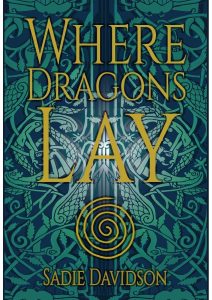
SD: I’d really like a vampire buddy – someone who can teach me how to explode into a thousand bats in order to exit boring meetings and awkward social situations. Failing that, a very organised fairy who can just magic away admin, laundry and all low-dopamine household tasks. Or maybe a dragon…
You can find out more about Sadie Davidson here: www.sadiedavidsonauthor.com and connect with her on TikTok: @sadiem328
Where Dragons Lay is available to buy from Amazon.
*****
Issue 30, featuring Gillian McAllister is out on Friday 11 September. You will find it in libraries and other outlets. Alternatively, all current and previous editions can be found on our magazines page here.

You can hear great new ideas, creative work and writing tips on Write On! Audio. Find us on all major podcast platforms, including Apple and Google Podcasts and Spotify. Type Pen to Print into your browser and look for our logo, or find us on Podcasters.Spotify.com.
*****
If you or someone you know has been affected by issues covered in our pages, please see the relevant link below for information, advice and support: https://pentoprint.org/about/advice-support/