
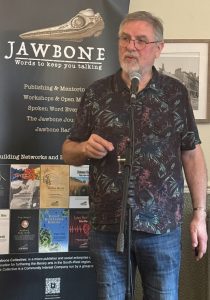
 Landscape, Language And The Ghosts We Carry
Hello and welcome to week five of my rummage through the drawers of memory and nostalgia. In the previous weeks I’ve been reflecting on the marks that we leave behind: Barrows on hillsides. Photographs in boxes. Words in books. Trees planted along verges. The things that remain when the people who made them have gone.
There are landscapes that seem to accumulate memory. A road becomes more than a road because of the journeys we have made along it. A house changes because somebody we loved once lived there. A particular hill, beach, railway station or street can contain an entire period of our lives.
We can leave a place. The place does not necessarily leave us. This relationship between people, memory and landscape runs deeply through the history and poetry of Dorset.
William Barnes wrote about a Dorset that was changing around him. His poems still preserve landscape, rural life, language and ways of speaking that might otherwise have disappeared. He did not simply write about Dorset. He frequently wrote in Dorset dialect, spoken by the people around him. The language itself becomes part of the landscape.
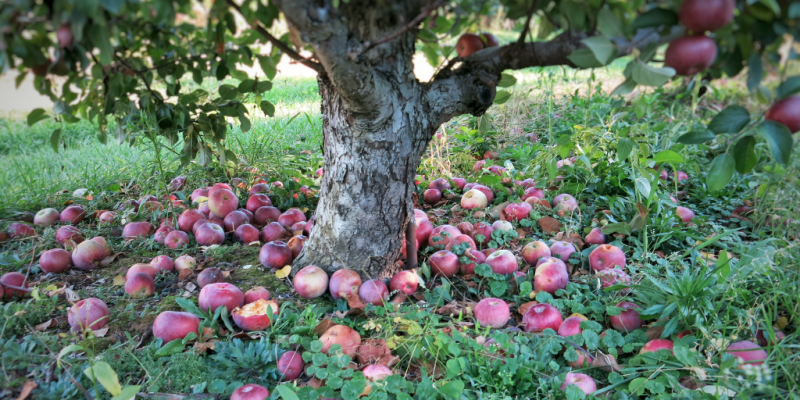
In My Orcha’d In Lindèn Lea, Barnes gives us a place of retreat and belonging. The contrast is between the wider world and somewhere that offers simplicity, familiarity and freedom.
My Orcha’d In Linden Lea
Ithin the woodlands,flow’ry gleaded,
By the woak tree’s mossy moot,
The sheenen grass-bleades, timber-sheaded,
Now do quiver under voot ;
An’ birds do whissle over head,
An’ water’s bubblen in its bed,
An’ there vor me the apple tree
Do lean down low in Linden Lea.
When leaves that leately wer a-springen
Now do feade ‘ithin the copse,
An’ painted birds do hush their zingen
Up upon the timber’s tops;
An’ brown-leav’d fruit’s a turnen red,
In cloudless zunsheen, over head,
Wi’ fruit vor me, the apple tree
Do lean down low in Linden Lea.
Let other vo’k meake money vaster
In the air o’ dark-room’d towns,
I don’t dread a peevish measter;
Though noo man do heed my frowns,
I be free to goo abrode,
Or teake agean my hwomeward road
To where, vor me, the apple tree
Do lean down low in Linden Lea.
(c) William Barnes, 1859
*****
Reading Barnes involves an element of nostalgia. We know that the world he describes has changed. Yet for Barnes it was not nostalgia. It was his present.
Barnes didn’t wake up thinking he was living in “Historic Dorset.” Hardy did not walk through “Hardy Country.” They were simply living their lives in their ‘normal’ day, surrounded by all the uncertainty, change and irritation that accompanies any present.
Hardy understood particularly well the way landscape can become populated by memory. In Wessex Heights he moves through the high places of Dorset attempting, in some sense, to find somewhere free of the people and experiences attached to particular places.
Yet they followed him. His Wessex is populated by ghosts. Not supernatural ghosts, but remembered presences. People encountered. Conversations remembered. Earlier versions of himself attached to locations.
We can go somewhere beautiful and still take everything with us. We imagine retreat as escape. We climb hills, walk beaches, enter woods, perhaps turn our phones off and hope that silence will somehow reset us. But wherever we go, we bring ourselves.
Hardy carried his ghosts. We carry ours. It sits in our pocket, vibrates against our leg and waits for us to look. Nostalgia becomes questionable when it persuades us that the past was somehow simpler, purer or better.
The world of Hardy and Barnes had its own restrictions, expectations, technologies, anxieties and social pressures. When our world becomes too loud, human beings still seem to look for somewhere quieter.
Sometimes that is a physical place. Sometimes it is language. Language can be one of the most extraordinary repositories of memory that we possess.
Words travel through time. They migrate, mutate, disappear, reappear and leave fragments of themselves behind in other languages. I explored this in a poem called Lexical Substratum, after becoming fascinated by the survival of an Old English word in Dorset dialect and Dutch.
Lexical Substratum
Echoes of past days
letters caught
in language of spoken word
Old English
Dorset dialect
and an entry
in Dutch dictionaries
Bibberen
to shiver
a cognate echo
printed on pressed lignum
A linguistic etymon
from record keepers
about distant days
under a different sky
when chill seeped into bones
causing teeth to chatter
A litany
an autonomic beat
to remembered cold
(c) Peter Roe, 2025
Connect with me on Instagram/Facebook: @mediachap or via my website: www.jawbonecollective.org.uk
*****
There is something extraordinary about a word surviving for hundreds of years. Somebody once experienced cold. They shivered. A sound was associated with that physical experience. The people disappeared and the sound travelled on. Perhaps language has its own form of memory.
Stories survive because somebody retells them.
Words survive because somebody keeps speaking them.
Perhaps landscapes work in much the same way. In this piece John Chinyaka Onyeche draws upon landscape to reflect on war and peace.
One Time At A Time
The earth yields enough grain, fat with cattle—
why do we still name countries
by their hunger and their hunger?
We call ourselves family around conference tables
while men in rooms draw lines on maps
that become famines, that become flags.
They carve the world into yes and no,
into deserves to live and deserves to go.
From Somalia’s dust to Syria’s rubble,
from Myanmar’s forests to Gaza’s streets—
the pattern repeats:
in Ukraine, in Iran, in South Sudan, in Nigeria,
in Palestine, in Mali.
And the wound spreads—
map bleeding into map.
What are we reaching for
if not small things?
A morning without sirens.
Markets where the only shouts
are merchants calling prices.
A grandmother dying in her bed
and not in a ditch
on the road to somewhere else.
A city that remembers its name
for reasons other than rubble.
A child walking to school
and walking home again.
Let them keep their gods and borders.
Let them argue scriptures in halls of stone,
polish their ideologies behind closed doors.
But when their creeds knock on my door
with a sword in one hand and a flag in the other—
I have no faith left for that.
Show me the flag that flies
over full bellies and closed graves.
Not the one that rises
on smoke from the next town over.
Not the one that needs orphans
to prove it is strong.
They call it peace when the guns point outward.
They call it goodness when the dying
happens far enough away
not to stain their shoes.
not to wake their children,
not to ask their names.
We could have built tables long enough
for everyone to sit.
Instead, we built walls
and called it architecture.
We could have made a world
where human was enough.
Instead, we asked for papers,
for proof of birth,
for the right god,
for anything but each other.
When you next wrap your child in blankets,
think of the children running
through streets that used to be homes,
with nothing but smoke in their lungs.
Remember the mothers who count their children
not by who sleeps beside them
but by who made it to sunset.
They are not headlines.
They are not statistics.
They are your mirror.
And the families left in starvation’s slow
hands to die—
one time at a time.
(c) John Chinaka Onyeche, 2026
*****
We leave ourselves in places. Places leave themselves in us.
Perhaps that is why certain places keep calling us back.
Perhaps there is a piece of folklore, family language or local dialect that connects you with where you came from.
Write it down.
Because landscapes change. Languages change.
People disappear.
But sometimes, if we listen carefully enough, the echoes remain. What marks do words leave on us?
I have been writing this week from the Budleigh Salterton Literary Festival where Poet and Stand-Up Comedian Kev Mud gave a unique perspective on books. “Words in books are the thoughts of people that will often outlive the writer. When we read a book we are inhabiting the thoughts of a writer.”
So are all readers just time travellers? Constantly hopping from place to place inhabiting the worlds of others? This piece by Pearl Fane will be the final words on Nostalgia – For now!
Thank you for joining me on this journey.
What Does Nostalgia Mean To You?
People often assume that, because I wear 1950s clothes every day and collect objects from that period, I’m nostalgic. But nostalgia isn’t quite the right word. If nostalgia means longing for a lost golden age, then no. I don’t want to recreate the past or escape into it. I’m far more interested in poking it, questioning it. Perhaps nostalgia is where I begin, but it’s never where I end. I use it as a way of troubling nostalgia itself.
Since childhood, I’ve never experienced time as something neatly divided into past, present and future. Those boundaries have always felt porous. The past has never seemed finished to me; it continues to exist in dialogue with the present, shaping who we are and how we imagine ourselves. That’s why I collect objects. They aren’t simply decorative; I don’t perceive them to be sentimental. Rather, they are fragments of lives. A shop display, a mannequin, a doll, an old photograph or a reel of silent 8mm film carries semblances- traces of the people who once inhabited that world. They are tiny portals, asking for my time, requesting to be read.
Again and again, I find myself drawn not to the objects themselves but to the women connected with them. I watch 1950s ‘cheesecake’ reels not because they represent a glamorous past, but because they contain women who survive as images, always silent and largely anonymised. They are seen, but not heard. Those commoditised silent women became the catalyst for my fiction. In The Archivist’s Mistress, my protagonist Pearl, is ‘known’ almost entirely through photographs and written fragments. Her image reaches across time to exert an obsessive pull on a contemporary woman, who begins to negotiate her own identity through the imagined life of Pearl, from 1957.
Nostalgia becomes something far more unstable: not a longing for the past, but an imagined, seductive encounter between the past and present that serves to exhilarate, trouble and disrupt.
That same conversation continues in my second novel, iPhone Therefore I Am. Once again, Pearl from the 1950s becomes the pivot around which the story turns, this time entering into an unexpected relationship with a contemporary woman who loses her iPhone. The novel asks how identity is performed through the technologies of our own time, just as image-making shaped female identity in the 1950s. Across both novels, I’m interested in the intersections of shame, sexuality, agency and performance, and in the surprising ways women separated by decades can illuminate one another.
Perhaps that’s why I feel restless around nostalgia. Nostalgia has a tendency to smooth away contradiction and uncertainty, presenting the past as coherent, beautiful and complete. As a novelist, I’m interested in doing the opposite. I want to revisit accepted narratives, disturb familiar images and ask who has been left outside the frame. I think one of the responsibilities of fiction is not simply to reflect the past but to refract it. Like a mirror that bends light, fiction allows us to see history differently. It invites us to imagine the hidden lives behind the remaining image and to hear the voices that didn’t get to speak- to shout- at the time of taking.
Although my novels stand alone, they are organised around Pearl, whose life in 1957 becomes a prism through which contemporary questions of identity, shame, sexuality, agency and performance can be explored. How do these issues echo across different generations and different technologies? I mirror this. My relationship with the past is never static. I embody a physical engagement with the past while remaining wholly contemporary. The clothes I wear and the objects I live with are not attempts to live in another era. They are reminders that time is never linear. The past isn’t behind us; it is constantly being chanced upon, reinterpreted and written about.
For me, nostalgia is not my safe place nor my destination. Beyond its comforting surface, lies something far more interesting: the women who peer out demanding my attention, inviting a dialogue between then and now.
(c) Pearl Fane, 2026
Connect with Pearl on Facebook: Pearl Fane Author and on Instagram: @pearlfaneauthor
*****

You can hear great new ideas, creative work and writing tips on Write On! Audio. Find us on all major podcast platforms, including Apple and Google Podcasts and Spotify. Type Pen to Print into your browser and look for our logo, or find us on Podcasters.Spotify.com.
*****
If you or someone you know has been affected by issues covered in our pages, please see the relevant link below for information, advice and support: https://pentoprint.org/about/advice-support/