Write On! Features: Mini Masterclass On Genre – Historical Fiction and Eco-Thriller
- 28 August 2026
- News, WriteOn Features
Edited by Charlotte Maddox
It’s often the journey at the heart of a novel that allows us to call it adventure, but it’s rarely just an adventure. You’ll find great adventure novels nestled in the sci-fi and fantasy section at your library, or on the historical fiction and literary fiction shelves at your bookshop.
In this Mini Masterclass on genre, two authors shortlisted for the 2026 Wilbur Smith Adventure Writing Prize share their insights on blending distinct genres with an adventure story. Elodie Harper explores the balance between historical fiction and adventure, discussing how research and emotion can reach readers in the present and transport them into the distant past, while Harry Whitehead examines the eco-thriller, considering how to layer crime, thriller and ecological elements into an adventure narrative without falling into pastiche or cliché genre tropes.
Whether you’re building ancient worlds or charting a modern adventure, we hope you’ll find these insights and practical tips helpful for your own writing.
Elodie Harper: Historical Adventure
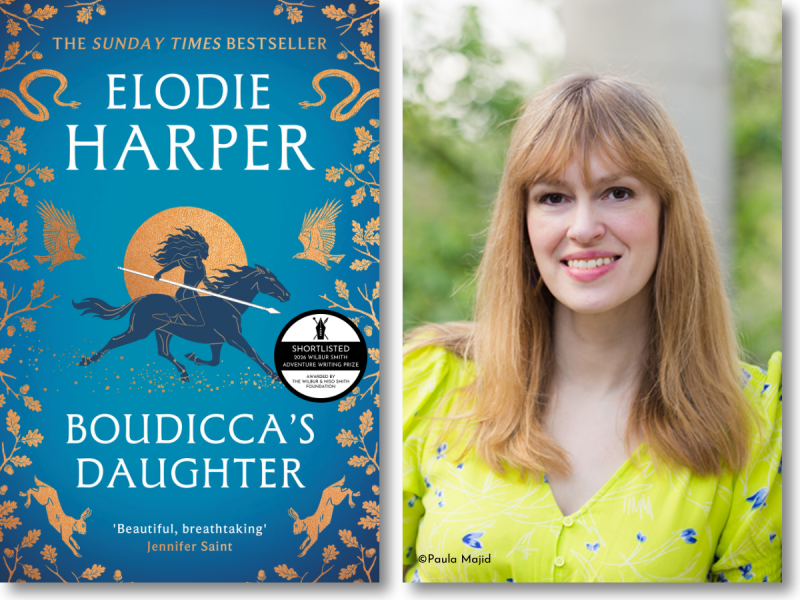
Writing a book set in the distant past is an adventure in itself, as it involves reimagining a time that’s radically different to ours.
I’d already written The Wolf Den trilogy when I began Boudicca’s Daughter and so had been reading about ancient Rome for many years, but I knew very little about the world of the ancient Britons. I was surprised to learn this was a society in which Boudicca was not an isolated leader; women could wield military and political power, something unthinkable in ancient Rome! This became the heart of the book. I think it’s helpful if you can find something that truly excites you in your historical research and use that as a jumping-off point for your story. It then becomes a journey of discovery for you, the reader and your characters. In Boudicca’s Daughter, the central character Solina is raised in a society where women are expected to rule, only to be forced to come to terms with one where the opposite is true.
Historical fiction is a very visual genre. It involves painting a picture of a different world, and it helps to include objects or places you found particularly exciting or evocative in your book. In Boudicca’s Daughter I used the firedogs sitting over the hearth in roundhouses I’d seen in Colchester Museum and the Iceni hoard of golden torcs in the British Museum. You don’t have to travel for this… I also used images from books, such as the incredible Gundestrup Cauldron from the National Museum of Denmark. Again, this is all to help you take your reader on an adventure into the past.
The one pitfall to avoid, though, is letting your research swamp the story. I’m a massive nerd for historical detail and authenticity, but ultimately if you’re writing an adventure story, the plot has to be exciting. You need your characters to face moral, emotional or physical jeopardy. This is true whatever genre you write. In the Author’s Note at the end of Boudicca’s Daughter, I set out all the ways in which I diverged from the historical record. This included compressing timelines, eliminating some historical characters for clarity and having my main characters present at big historical events even when this was not recorded. Personally, my priority in historical fiction is to keep the mindset as authentic as possible, so my characters cannot have access to ways of thinking (such as Feminism) which might be dear to me but were not known at the time. Other writers might have different preferences. The balance between accuracy and imagination won’t look the same for everyone – but that’s all part of the adventure!
Harry Whitehead: Thrilling Adventures
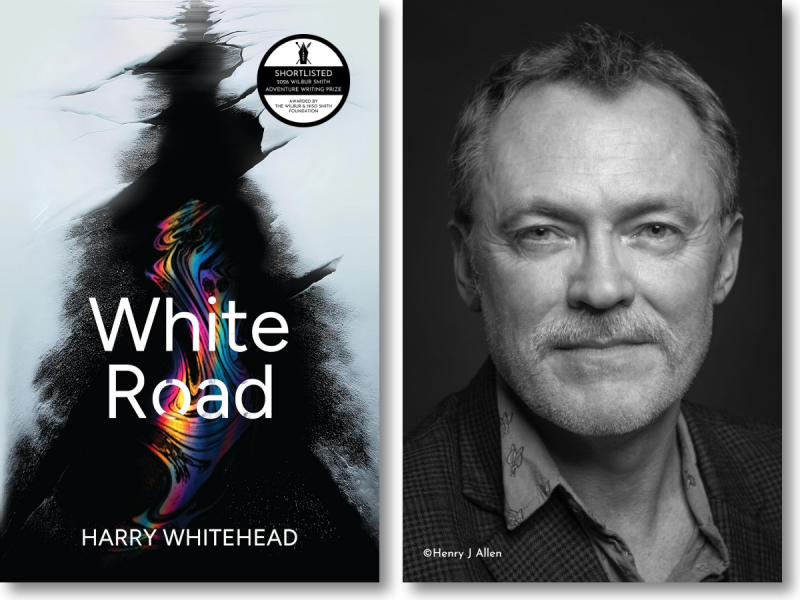
Like any artist, a writer uses craft tools to make a work of art. Genre is an aspect of that craft. And like a good cook, a writer should know their onions. Back when I worked in film, we sometimes talked about genres and ‘super-genres.’ My publisher describes my novel White Road as an ‘eco-thriller.’ My fellow short-listee Clare Whitfield’s marvellous Poor Girls deals with a 1920s Brighton woman’s adventure into the London criminal underworld. Her publisher describes it as a ‘historical thriller.’ Here, ‘historical’ and ‘eco-(logical/environmental)’ are super-genres. They’re the play-area, if you like, within which you then apply the craft storytelling specifics of genres such as crime, thriller or romance. They’re broader, more generic themes with less to say about how a story is structured in craft terms.
So how about adventure? Dictionary definitions suggest exciting journeys through previously unknown places. White Road, in my own genre-telling, is an adventure and a thriller. An adventure through the polar wilderness, in which super-genre play-area I used the thriller genre’s high-stakes sense of immediate threat and rapidly unfolding drama. At the same time, it’s a crime whodunnit after the mysterious explosion on an oil rig that sets the story going. All of which is to say it’s an ‘adventure crime thriller.’
A good story that uses genre conventions should do something innovative with them. Just staying faithful to what’s gone before makes for pastiche or pulp fiction – and why not, if that’s your thing. But publishers generally want to know your genre plus how it’s excitingly innovative. So if your fantasy novel has a medieval setting, wizards, elves and dwarves off on a quest, then how do you make it new in some way? Recent fantasy writers like N.K. Jemisin, of course, have blown open the fortress gates to queer protagonists, people of colour and innovative styles of magic. White Road has no simple moustache-twirling antagonist, but offers a more nuanced idea of who’s at fault. It flouts the standard conventions of good guy/bad guy crime/thriller narratives. I guess that’s why my literary agent calls it a ‘literary’ thriller.
Must a writer know all this stuff before they set out? I think most professional writers – certainly of genre fiction – do, not least given we must explain how our work can be marketed to interested agents or publishers (just check out the forms they often ask you to complete on submission of a manuscript). Writing process messes it all up, of course. No book I’ve written ended where I thought it would when I started. Writing, for me, is like being a nomad: I know I’m heading for an oasis (my next plot point), but I have to walk the desert to get there (put words on page). And all sorts can happen in a desert… For instance, White Road’s crime-genre ‘whodunnit’ only became obviously necessary as I wrote. Writing a story is an adventure. Once you have a first draft, the work of crafting it into something lucid begins. Genre, and mucking around with it, is an aspect of that craft.
*****
Elodie Harper is the award-winning author of the bestselling Wolf Den trilogy, set in ancient Pompeii. The first book in the series, The Wolf Den, was a Waterstones Book of the Month, and the second, The House With The Golden Door, was a Sunday Times bestseller. Alongside her career as a writer, Elodie has worked as a reporter at ITV News and producer at Channel 4.
Author Photo (c) Paula Majid
Harry Whitehead is a novelist and teaches creative writing at the University of Leicester, where he directs the annual free literature festival, Literary Leicester. Before this, he lived in the Far East and then worked in the UK film business. His debut novel, The Cannibal Spirit (Penguin Canada) was reviewed as powerful, brave, ambitious (The Globe and Mail), a thriller with a Joseph Conradian plot (The Walrus), and a unique work, compelling, complex, thought-provoking and impressive (Quill and Quire). His latest novel, White Road, is a gritty eco-thriller set in the High Arctic. It’s available in paperback, ebook and audiobook formats.
Author Photo (c) Henry J Allen
*****
Issue 29, featuring travel writer Tharik Hussain, is out now. You will be able to find it in libraries and other outlets. Alternatively, all current and previous editions can be found on our magazines page here.

You can hear great new ideas, creative work and writing tips on Write On! Audio. Find us on all major podcast platforms, including Apple and Google Podcasts and Spotify. Type Pen to Print into your browser and look for our logo, or find us on Podcasters.Spotify.com.
*****
If you or someone you know has been affected by issues covered in our pages, please see the relevant link below for information, advice and support: https://pentoprint.org/about/advice-support/