
Monday Moments: Summer Nostalgia
- 7 September 2026
- Monday Moments, News

Welcome back readers! This month, our theme continues to be ‘Nostalgia’. As autumn approaches, I wanted to explore the feeling of nostalgia we have for summertime and reflect on summer’s end.
This time of the year is, at least in my mind, forever linked to school holidays. Those six weeks off in childhood felt endless, free, and full of possibility. I still remember that horrible sense of things finishing when September came around. Even now, August bookends my year. September always feels like the beginning of a new chapter, even though my day-to-day life in adulthood looks the same as the seasons change.
There’s something about summer and childhood, and the sense of saying goodbye to these things, that is inherently linked. In my last Monday Moments page, I looked at places of nostalgia, and it struck me that so many of these were connected to childhood. It makes sense, of course, because the memories of our youth are so potent. Those early experiences are the things that shape us.
The pieces I’ve chosen for my page this month are again steeped in childhood. This time, though, each is tinged with memories of hazy, lazy summer days.
First, we have a prose piece by Lesley Anne Armour. There’s real tenderness here, as we’re given a snapshot of family time spent by the sea. I love the way the past rolls into the present, like a tide upon the shore.
Building Sandcastles
Erin embraced the end of the day, the journey up the stairs to her bed – her haven – as she wished for sleep to embrace her weary bones. Tiredness had arrived in her body, but her brain was still reluctant to sleep. It was like this most nights: stuck between longing to sleep to forget and innately replaying the day. She closed her eyes, but visions of the past played like a song on repeat. She was stuck in a moment in time. Her Mam sang of old regrets and present-day complaints. Her Dad sang of rebellion against old age.
Erin felt she was wandering lost and invisible. She was at good at bathing, cleaning and shopping. She wasn’t so good at hand holding and giving reassurance. These things took patience and empathy, and sometimes she had to search her heart to find them she was so tired.
Today she had packed the car with a flask and some warm clothes. Her parents were another form of packing. Load them into the car with wheelchair and hand ups, fasten their seat belts and finally off they went to Whitley Bay.
“There’s too much salt and not enough vinegar and this fish is the size of a minnow,” her Mam protested as they sat looking out to sea.
“Clever buggers them gulls,” her Dad declared as they watched a bird pull a discarded pizza box out of the bin and open it.
Mam turned to Erin, pushing stray strands of grey out of her eyes and said, “We brought you here when you were two you know, it was your first visit to the seaside. Oh, how you giggled when the sand tickled your toes! You built a sandcastle with your Dad – you didn’t want to go home.”
Mam reached for Erin’s hand. They sat together watching the rolling sea and listening to the waves rushing in and out like their memories. In and out like breathing. In and out in time with sleep.
© Lesley Anne Armour, 2026
Connect with Lesley on Instagram: @seasand_lesleyanne.
*****
Next, Pen to Print’s Library Project Manager, Lena Smith, writes about her August birthday and the imminent – and dreaded – return to school in September.
August Birthday
Whilst most people would agree a birthday is a time for celebration for children, for many years I always approached mine with trepidation. Not that I didn’t like celebrating my birthday as I always had a lovely time; it was just the timing.
Being born in late August, the arrival of my birthday always preceded the arrival of the new school year! For much of my school career, I didn’t really have a great time. I was intensely shy and had not made any close friends, so spent most of my time alone. I also struggled academically. I have since realised that I am dyslexic, so writing was hard. It also affected reading and writing numbers, so I struggled with completing schoolwork, which took me longer than most other children. I suffered all through primary school, as I always felt stupid and lonely.
My birthday heralded the end of the glorious six-week summer holiday and the start of the new school year, and for the younger me a week of intense dread of the approaching torture.
© Lena Smith, 2026
*****
Finally, I have an old prose piece of my own that I dug out of my Google Drive. I was inspired, I’m sure, by my great grandma, who used to darn my holy socks and mend and wash my clothes. I stayed with her a lot over the summer holidays and have many memories of this time with her.
Patches
My nan had the mentality of a rationer, something she never managed to shake off since girlhood. She darned our socks and mended our clothes, stitching patches into holes that were made in the fields and farmland that surrounded us.
In the summertime, I wore dungarees that had been patched with three different types of fabric: a floral cotton, a burgundy corduroy, and a heavy, buttery yellow twill. Nan covered holes upon holes, carefully layering the mismatched pieces of fabric, one on top of the other. By the time she’d finished, the knees were so padded that they felt like armour.
We were forever climbing trees. Once, my brother George got stuck in a huge oak, and it took hours to get him down. He’d been stoic the whole time he was up there, slightly camouflaged by leaves that spread themselves wide, like outstretched hands. But the minute that his feet touched the ground, he let out a cry and crumpled in a heap on the ground, tears streaming down his face. He was twelve at the time, but he seemed younger in that moment. It was as though he let it all out then and there – all that grief – until it pooled around him, to be mopped up by…who? She’d been dead three years by then, our nan. But we still wore the clothes with the patches, even though they had become worn and threadbare. Nan gave us the armour we needed, before we knew we’d need it at all.
© Amber Hall, 2023
*****
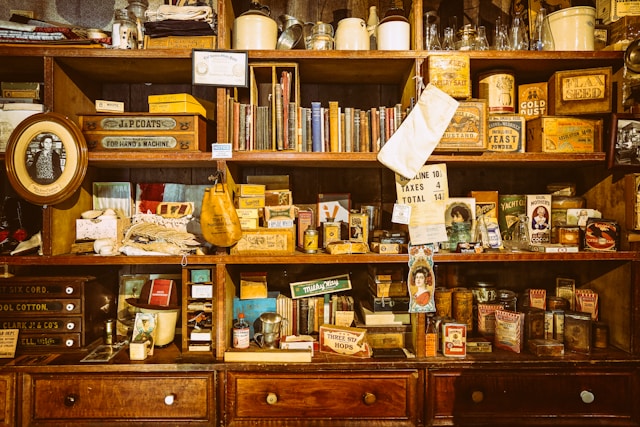
Header image from Unsplash (c) Patrick Pahlke
*****
Issue 30, featuring Gillian McAllister is out on Friday 11 September. You will find it in libraries and other outlets. Alternatively, all current and previous editions can be found on our magazines page here.

You can hear great new ideas, creative work and writing tips on Write On! Audio. Find us on all major podcast platforms, including Apple and Google Podcasts and Spotify. Type Pen to Print into your browser and look for our logo, or find us on Podcasters.Spotify.com.
*****
If you or someone you know has been affected by issues covered in our pages, please see the relevant link below for information, advice and support:
“People are wonderful and surprising, and I question how useful ‘must-haves’ are when it comes to matters of the heart.”
Related News

Showcase: The Win + Still A Lost Girl + The Gentleman + Illusion
- 22 November 2023
- News, WriteOn Showcase
