
Write On! Features: Mini Masterclass On Genre – Science Fiction, Crime And Magical Realism
- 4 September 2026
- News, WriteOn Features
Edited by Charlotte Maddox
Adventure rarely colours neatly inside the lines. Instead, it tends to sweep across the entire literary canvas, whether that’s blending with science fiction in Adam Oyebanji’s Esperance, magical realism with Anya Bergman’s The Tarot Reader Of Versailles or crime with Clare Whitfield’s Poor Girls.
In this second Mini Masterclass on genre, three authors shortlisted for the 2026 Wilbur Smith Adventure Writing Prize reflect on how they fuse adventure with distinct storytelling traditions. Adam Oyebanji explores the craft of science fiction, showing how relatable characters, flawed technology and high emotional stakes keep sci-fi adventure grounded in humanity. Anya Bergman delves into historical magical realism, discussing how a subtle thread of the extraordinary can capture a reader’s imagination while maintaining credibility. Finally, Clare Whitfield investigates crime and adventure, exploring how breaking social boundaries and embracing morally complex, rebellious protagonists forces readers to question the line between rebel and criminal.
Whether your own characters are testing scientific frontiers, brushing up against the uncanny or dancing at the edges of the law, we hope these insights and practical tips inspire your next storytelling adventure!
Adam Oyebanji: Sci-Fi Adventures
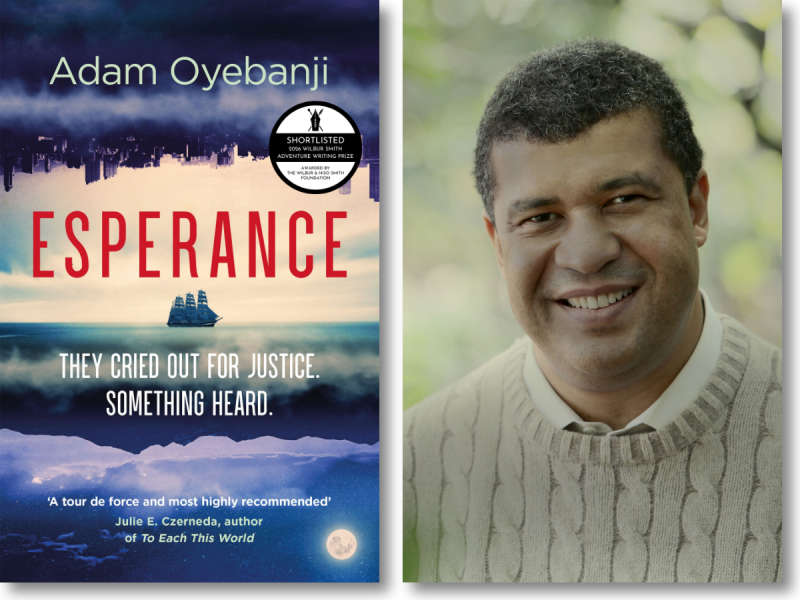
Science fiction explores the impact of science and technology – real or imagined – on people. It can take place aboard a spaceship in the distant future but that’s not a requirement. Mary Shelley’s Frankenstein is firmly set on Planet Earth, but the technology in question, creating life from dead body parts (eww!), definitely impacts people. While not as gross as that, my sci-fi novel, Esperance, takes place entirely in the here and now. It’s the use of technology that makes it science fiction, not the place or the time.
Fundamentally, science fiction is just fiction, and fiction, at its best, is about people. The approach to writing a science fiction adventure is much the same as for any other genre: make life miserable for your characters by putting them in danger, let at least one of them behave with moral fortitude, and have some good come out of it in the end.
So far as danger is concerned, technology in science fiction is usually both source and solution. Use it with care! Don’t write technology like an engineering manual. Unless your reader is actually an engineer, you will lose them. Think about mobile phones. I have no idea how they work but I know what they do, and I interact with them accordingly. When mine rings, I pick it up, I speak. Done. But if someone from centuries past, Mary Shelley, say, were to meet a mobile phone, it would be jaw-dropping. She, too, would have no idea how it works, but she would be thunderstruck by what it does. Her interaction would be very different. In Esperance, I have ‘sci-fi’ characters who are very much at home with advanced technology and barely notice it. My ‘normal’ characters, on the other hand, are stunned. For your technology to feel real, think about how people relate to it. Get the interaction right and readers will sink into your world without even noticing.
Although technology may be the source of danger in science fiction, no one will care unless the emotional stakes are real. This is where science fiction is no different from any other genre. Adventure isn’t about your character leaping from a burning building; it’s about why your character is leaping from a burning building. What drove them there in the first place? Who else loses if they don’t get out? In Esperance, people are being murdered. Will the perpetrator face justice? What must the main characters give up to make that happen? If the stakes are meaningful to the reader, they will follow you anywhere.
Lastly, the temptation in science fiction is to make technology perfect because, well, science! But perfect is boring and unrealistic. All adventures should embrace a bit of chaos. Esperance does. Plans fail. Equipment malfunctions. Characters screw up. Life, basically. And life, writ large, with a happy(ish) ending is what adventure is all about. The more of it you get on the page, the more successful your adventure will be.
Anya Bergman: Magical Adventures
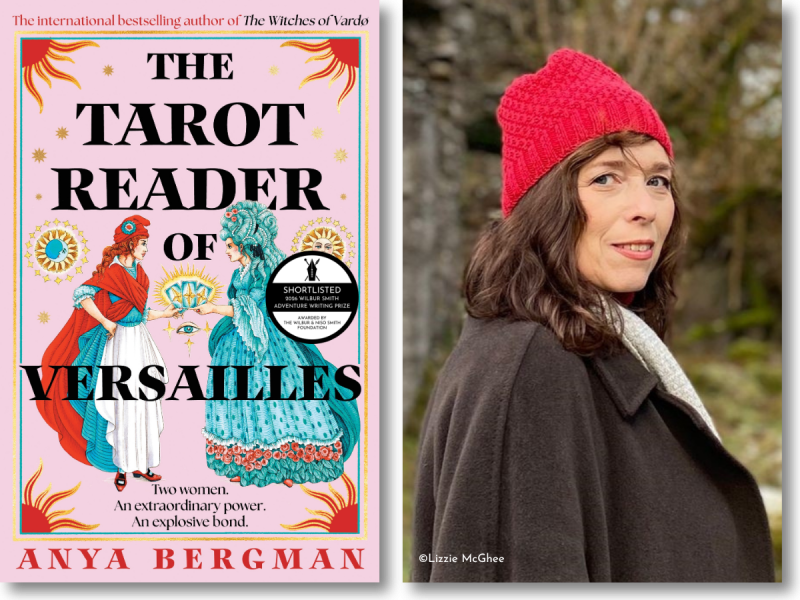
As a genre, magical realism can be confusing and often viewed as a vague blend of realism and fantasy. A common definition is that it brings a sense of the extraordinary into our real world. Blurred lines allow the reader space for their own interpretations – is this real or magical? But in the realm of historical adventure writing, magic realism provides the writer with opportunities to add a rich complexity to their adventure story.
The tradition of magic realist writing has long been associated with authors such as Gabriel García Márquez and Isabel Allende whereby the magical elements in their stories, set against dramatic historical events, act as a form of liberation from the trauma of colonisation. This approach influenced me when I wrote my novel The Witches Of Vardø about witch trials in Northern Norway in the 17th Century. Inspired by real trial records, I brought magic realist elements into the narrative, to give the accused women agency and liberate them from the trauma of patriarchal colonisation.
In The Tarot Reader Of Versailles, I utilised magic realism against the backdrop of the French Revolution and the Terror. Again, I encountered horrific violence in my historical research and implemented magic realist elements such as Caitlin’s interaction with the Irish Morrígan to articulate such terror. It’s up to the reader, if they believe the Irish mythological figure is a real entity or a figment of Caitlin’s imagination.
The historical figure Mademoiselle Lenormand’s profession as a Tarot reader communicating with the spirits of the dead, is an extraordinary historical fact. Here magic realism is utilised to give her power and authority in a world dominated by men.
As a writer of feminist historical fiction, magic realist elements in my adventure stories empower female characters and activate readers. Historical authenticity is essential to provide context for the whisper of the unknown, and endless possibilities of what is extraordinary. All adventures possess a little magic, don’t you think?
My top tips for writing historical magic realist adventure writing:
- Do your research. Historical authenticity is essential. If the reader does not believe in the accuracy of what you are writing about, they will not believe in the magical elements either!
- Have purpose. Why are there magical elements in your adventure story? Do you wish to empower a particular character/s?
- Go easy on the magic! Unless you want to write a historical fantasy novel, carefully seed the magical elements in your narrative. Subtext is your friend here. Hints of is it real or is it magic will intrigue and draw the reader in.
- Use motifs and symbols to activate the magic realism in your novel. For instance, in The Tarot Reader Of Versailles the bat is a portent of doom. Have a think about the way you respond to the extraordinary in your own life. Do you believe signs?
- Read Magic Realist Adventure Historical Fiction and learn from other writers. Isabelle Allende is a maestro of the craft.
Clare Whitfield: Criminal Adventures
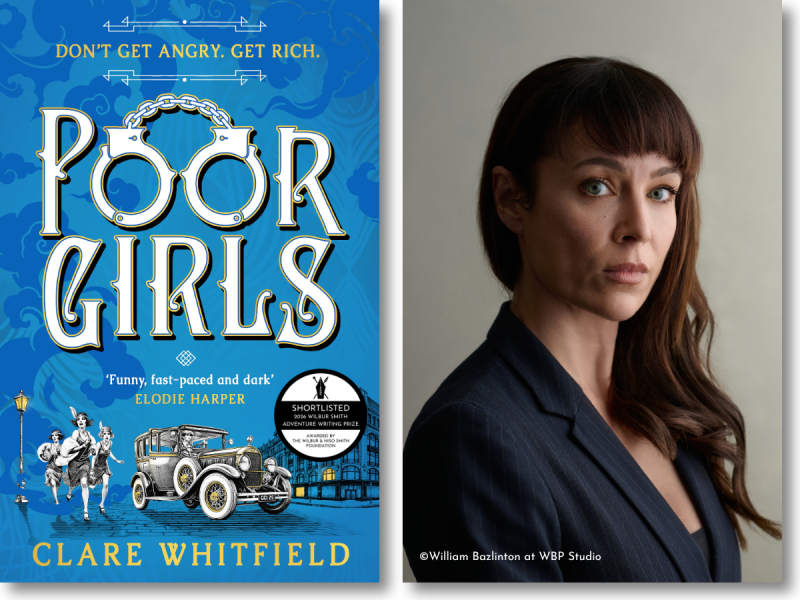
When it comes to my crime novels, the adventure often begins with the setting or situation my protagonist must find a way to escape from. It could be the poverty-stricken post-war environment of the 1920s, Victorian slums, the isolated wilderness of Shetland, a toxic family, or an abusive relationship. These are the terrains my protagonists often have to navigate first in order to find freedom, either through ingenuity, risk and perhaps, if you will, a certain willingness to bend the rules.
This creates the central tension: can we understand a character’s actions by understanding their circumstances? Can a person be both criminal and victim? Rebel, and transgressor? Adventure requires us to leave certainty behind and leap into the unknown. Crime does the same thing morally and starts with the setting, the trap, if you will, then it picks up pace with the first act of transgression. When a character crosses a social, moral or personal boundary, that is adventure. Whether that boundary is right or wrong is the debate.
The boundaries we push as individuals and as a collective society are some of the greatest rebellions we can undertake. From one person’s perspective, an act can be one of courage or liberation and from another, it’s a crime. What is also undeniable is that, when something is forbidden, it often seduces us with the thrill of adventure. Whether it’s stepping into the unknown, defying expectations or resisting oppression. In my novels, the protagonists are often flawed and difficult and dream of escape from their situation. They find themselves in conditions where they may have no other option but to commit a morally dubious deed (the crime) to achieve this. Does that make them unforgivable? Are we holding them to higher moral standards than we would others? Life’s adventure comes with the willingness to accept that someone’s personal choice may come at the expense of being considered ‘good’ or likeable by society at large.
I think that crime and adventure share another essential ingredient – danger. If we put right and wrong to one side, both involve risk, uncertainty and the threat of consequences. History shows us what is considered criminal can change over time. We now recognise many acts of defiance from the past as protest that led to a more equal society. That shifting perspective is what attracts me as a writer because it forces us to question who is the criminal and who may be the rebel. Sometimes the only route to freedom is to break the rules.
*****
Adam Oyebanji was born in Coatbridge, in the West of Scotland, and is now in Edinburgh, by way of Birmingham, London, Lagos, Nigeria, Chicago, Pittsburgh and New York. After graduating from Birmingham University and Harvard Law School, he worked as a barrister, before moving to New York to work in counter-terrorist financing in Wall Street, helping to choke off the money supply that builds weapons of mass destruction, narcotics empires and human trafficking networks. His first novel, Braking Day, was a finalist for the Canopus Award.
Anya Bergman is the internationally bestselling Irish author of The Witches Of Vardø. She has published ten novels under her real name Noelle Harrison and possesses a doctorate from Edinburgh Napier University, where she is also a Lecturer in Creative Writing. Anya has been reading Tarot cards professionally for over 30 years.
Author Photo (c) Lizzie McGhee
Clare Whitfield is a UK-based writer. While studying for an MA in Creative & Critical Writing at the University of Winchester, her fiction appeared on Spelk, Commuter-Lit, Literary Orphans and in Matt Shaw’s Masters Of Horror anthology. Poor Girls is Clare’s third novel after People Of Abandoned Character, which won the Goldsboro Glass Bell Award in 2021, and The Gone And The Forgotten.
Author Photo (c) William Bazlinton at WBP Studio
*****
Issue 29, featuring travel writer Tharik Hussain, is out now. You will be able to find it in libraries and other outlets. Alternatively, all current and previous editions can be found on our magazines page here.

You can hear great new ideas, creative work and writing tips on Write On! Audio. Find us on all major podcast platforms, including Apple and Google Podcasts and Spotify. Type Pen to Print into your browser and look for our logo, or find us on Podcasters.Spotify.com.
*****
If you or someone you know has been affected by issues covered in our pages, please see the relevant link below for information, advice and support: https://pentoprint.org/about/advice-support/
Related News

Showcase: They’re Building Us Up + Changes + Invisible Misery + Regeneration Spills Out + The Revival Rooted Here
- 28 May 2025
- News, WriteOn Showcase