Edited by Jaclyn Rajsic
Welcome to my third Showcase for October on our theme of ‘fractured.’
We’ve been thinking about broken things – ruins, fragments, memories, identities – and about repair. New pieces might fill the spaces left by what is lost; they might reshape the fractured object, place or person. Change can be disruptive, productive or something in between. But once done, fracture cannot be undone; its effects always will be seen, felt or remembered.
This week, I want to think more about the less visible effects of fracture. What happens when the cracks and breaks are not possible for people to see? When fracture is internal – when we ourselves break – can we be repaired? If we can, then are we left more vulnerable to future fractures? What happens when we’re beyond repair?
Today’s pieces approach these questions by reflecting on pain and possibilities of different kinds. We begin with two poems that powerfully explore the damage labelling and mislabelling can cause.
Our first poem reveals how burdens and traumas can shatter a person. Shows of strength can mask fragility underneath. Here, fracture is cumulative. Solitude becomes a protection against further damage, but can a person repair themselves alone?
Split
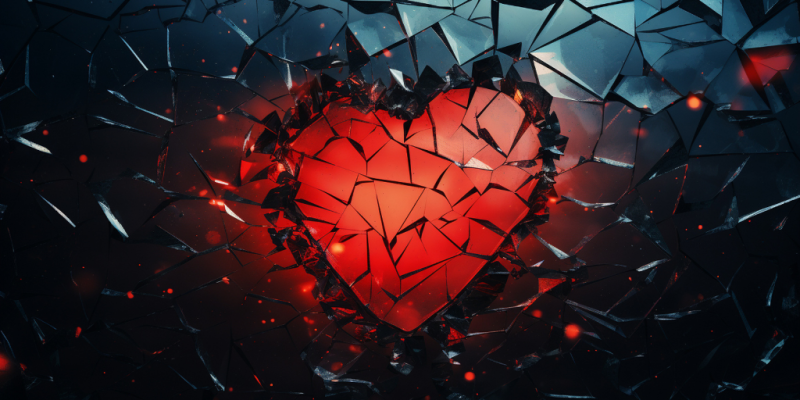
I didn’t so much as break but shatter.
Splitting myself to shoulder the load.
Labelled mature, resilient, old for her age.
Equally invisible and unseen.
Trauma piled upon trauma piled upon trauma.
Too much for one person it would seem.
Labelled strong. I was labelled wrong.
This face, it’s just a mask, a facade.
Lying not to just to you, but to me too.
Pretending. Playing. Acting. Copying.
A camouflage I’ve come to need.
Alone. Always. Almost.
It’s safer that way. No one to hurt me.
Break me further. Shatter me more.
Stamp upon the pieces left of me.
I strive for perfection.
To do things right.
To be seen.
To be normal.
Sometimes, to be anything but me.
They didn’t so much as break me.
But shattered me,
Left me split, torn apart.
Wondering, will I ever be whole again.
(c) Angela Marshall, 2026
*****
Labels can misidentify and miss a person, fracturing our much more complex identities. Our second poem shows us a mother who collects names broken from her, not to repair them but to keep them. For me, the poem offers a quiet resistance to fracture as the change of season turns survival to growth.
A Mother, Collected Her Broken Names
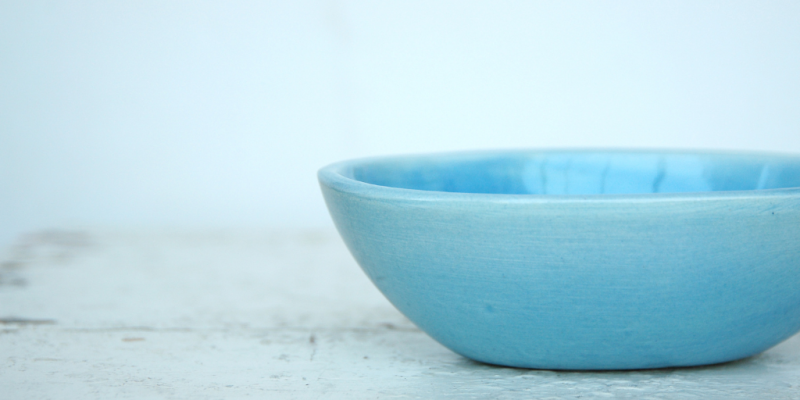
She kept them in a blue bowl beside the window
the names they had broken from her.
Daughter, wife, beautiful, good girl, even forgive them.
Each one had a hairline fracture,
like a small white wound running through the letters.
At night she lifted them, one by one into the moonlight,
listening for the sound of what had been taken from her.
Once, she found daughter split cleanly in two.
And inside it, a child was still waiting,
barefoot, holding a door open
for a mother who never returned.
She did not mend the name.
She buried it beneath the window.
Then winter passed and spring descended
and pushed green blades through the soil,
thin as a vein yet stubborn as an unanswered prayer.
People called it weed.
She knelt beside it and whispered softly?
“Hardly, this is what survived
when they thought they had named me to death.”
(c) Khayelihle Benghu, 2026
Connect with Khayelihle on Instagram: @KhayelihleBenghu
*****
Nature is central to our next poem, which stresses the life and new possibilities that can come from pain. The poem is full of energy and I love its creation imagery – the vast systems that emerge from the speaker’s own body. Like a phoenix, their body rises from fire and ash, here becoming something new. Perhaps, if we are fractured, we can find consolation in nature: its cycles of life, loss and metamorphosis. If we are beyond repair, then we can transform.
Formation
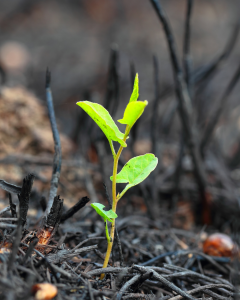
To release myself so furiously
into the night that my light
forms a cluster of stars
creating its own galaxy.
When I let go of this pain
I’ll shed this skin, bury it in the sand
planted like a tree
and a forest will grow.
When I let go of this pain
this body razed by wildfire
will rise again becoming a new ecosystem
plucked from the ash
and caught by the wind
condensation will form
quenching my thirst again.
(c) TAK Erzinger, 2026
Connect with TAK Erzinger on Instagram: @takerzinger
Formation is drawn from her latest Collection, A Woman Like That, available to purchase here.
*****
Pain permeates this poem also. The speaker reflects on the marks – visible or faded – love and relationships can leave on us. I absolutely love the central image of pressing flowers onto parchment. There is a beautiful contrast between fracture and continuity: between the broken stems and hearts and the sustained storytelling about love.
Stain
Flowers and ink may fade
but they remain testimony
to a great love.
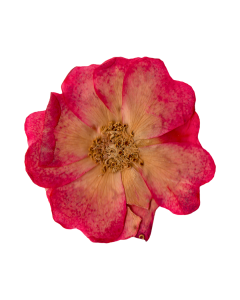
Press the petals on a
creamy plush parchment,
leave a rich red stain
like a wounded bloody mark.
Broken stems like broken hearts
cut off the continuity
of life – of love.
And the imprint of its pain
its joy, its precarious nature
can tell the tale again
and again.
(c) Eithne Cullen, 2025
Connect with Eithne on Instagram: @eithnecullen57
*****
We conclude this week by coming full circle, to the tensions between the seen and the unseen, with which we began. This inspiring piece calls attention to the painful hostility that hijab-wearing women frequently endure. The author argues there is power in invisibility – in veiling what is typically seen. Inspired by Hannah Gadsby’s award-winning comedy performance, Nanette (2018), the author’s discussion of gender, (in)visibility and (ab)normality encourages us to discard difference and come together in the face of fracture.
The Veiled Connection
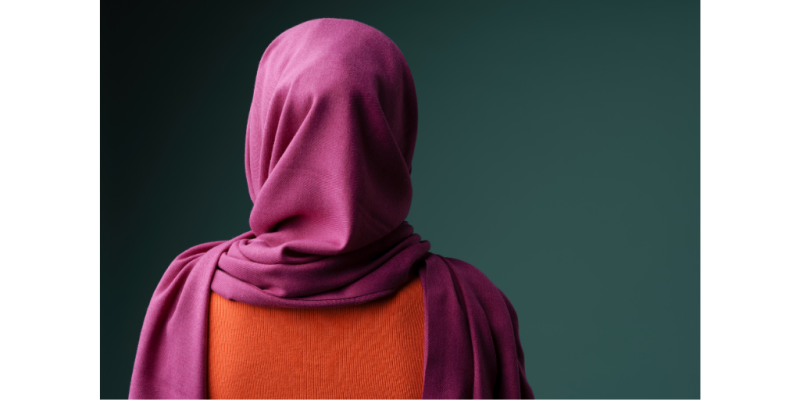
There is nothing particularly funny about being a hijab-wearing woman in 2026. In fact, there are probably hundreds of women in the UK who could stand up and tell you about the threat of aggression they face daily.
But: “What even are they? What they do, though, really?”
“I didn’t write that, that is not my joke.” Nor is that. It’s taken from Hannah Gadsby’s stand-up show, Nanette, in which we’re presented with a first-hand experience of being (what was called) “incorrectly female.” In my view, it was a game-changer in the comedy and feminist fields.
For Gadsby, being a woman and appearing “gender-not-normal” meant being subjected to years of tension, trauma and abuse. It’s within this notion the hijab-wearing woman can find a tether.
The truth not yet universally acknowledged is that, for many of us in the UK, the decision to veil is completely and utterly our own. But to do so, in line with our faith, means inadvertently challenging the typical public display of a woman. Like Gadsby, we remove all sense of stereotypical femininity and, instead, opt for a neutral appearance. The woman is present but the feminine is not.
This isn’t about hiding, but accessibility.
There is power in being able to remove from sight what is usually displayed, but for the heterosexual male unconscious (which is embedded into almost every representation of women, from film to marketing and music), this can cause discomfort. It’s a discomfort somewhat similar to interpretations of the male gaze, which suggest that the loss of voyeuristic display creates a sense of anxiety (in men) in which they will attempt to ‘escape’ so the woman is ‘reassuring rather than dangerous.’
In other words, the “gender-not-normal” woman and the hijab-wearing woman are equally othered, unified by a sense of abnormality.
Whilst Gadsby was physically assaulted at a bus stop, Muslim women have reported “being physically assaulted, threatened, spat at” and had “their hijab pulled” on public transport.1
The inconvenient truth here being that the threat of abuse is now an inherent part of our daily life. A new normal.
Ultimately, this new normal comes at the cost of being different and, as Gadsby says, “It is dangerous to be different.”
Still, there is some serenity in finding commonality with Gadsby in Nanette. Declaring this may ruffle some feathers, because for some: “It’s more important to be right than it is to appeal to the humanity of people we disagree with.”
The connection to Nanette is an unexpected but powerful one. The show was named after a barista Gadsby met in a café who looked at Gadsby “As if I represented everything that was wrong with the world.” Gadsby abruptly left, never offering her a chance to dispel those assumptions and, in that one second, the two formed a bond of missed opportunity.
What should have been a passing moment instead rebirthed a reminder to understand the people who look different to you. It’s only by doing this that maybe, just maybe, a connection can be formed you never anticipated.
(c) Azmina Sohail, 2026
1 Muslim Census 2025, https://muslimcensus.co.uk/muslim-safety-on-public-transport/
*****
Please join me next week for my fourth and final Showcase, in which we will explore fracture, identity and destruction.
*****
You can hear great new ideas, creative work and writing tips on Write On! Audio. Find us on all major podcast platforms, including Apple and Google Podcasts and Spotify. Type Pen to Print into your browser and look for our logo, or find us on Podcasters.Spotify.com.
*****
If you or someone you know has been affected by issues covered in our pages, please see the relevant link below for information, advice and support: https://pentoprint.org/about/advice-support/