Write On!’s Mirabel Lavelle interviews author Gilliam McAllister
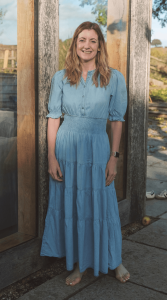
Gillian McAllister writes ordinary people into extraordinary situations – then forces them to make the kinds of choices that keep readers turning pages long into the night. These twisty moral dilemmas have propelled her psychological crime fiction to the top of The Sunday Times and New York Times bestseller lists.
When she pops up on my screen, her warmth immediately puts me at ease. I congratulate her on the publication of her latest novel, Caller Unknown. Her reply, “It’s a nice job, but not easy!” is framed with a wry smile.
Gillian is clear: there’s no magic wand. Nor does she look back on her journey with rose-coloured glasses. From unpublished novels and repeated rejection to international acclaim, her stellar success has been built on hard work, resilience and a determination to keep learning.
I begin by asking about family and the choices Gillian’s characters make by referencing a favourite saying from my Maltese grandmothers, who were young mothers during WWII: “Children are only loaned to you.”
Though I’m thinking primarily of the mother-daughter relationship Gillian captures so convincingly in Caller Unknown, I’m also reaching more widely, wondering whether the dilemma comes first or whether the character leads her there. Given Gillian’s instinct for emotional pressure points that draw readers into a story, the answer is unsurprising:
“It’s a case of putting yourself in someone else’s shoes. I spend much of my writing time thinking about how other people feel and making my best guess at it. But I tend to write with a concept in mind, so the dilemma generally arrives first.”
A bond that grips her imagination is that between parent and child. She explains:
“It’s a relationship like no other; the stakes become higher. In Caller Unknown, Simone would do almost anything to get her daughter back. Maternal instinct makes her more ruthless than she would be for a husband or sibling.”
Having explored what her characters will risk for those they love, I turn to what Gillian herself was prepared to endure for the work she loved. I ask her to go back 12 years, to the Gillian working on Everything But the Truth, a time she frames as a “painful apprenticeship.”
She completed two early novels. One attracted an agent and another was signed, but neither made it into print. Although she’d earned nothing from her writing to date, she was beginning to understand the industry better, including hooks and the power of genre.
From that, a premise emerged: A woman having a baby with a man who may have committed a crime. Gillian set it in Scotland where, at the time, a jury could return a ‘not proven’ verdict. This space between guilty and not guilty, became the core of her next novel.
By then, rejection had strengthened rather than diminished her resolve. Publishers might turn her down, but the one thing they couldn’t stop her doing was writing more books.
“I just really wanted it. More than I wanted anything.”
This hunger drove her to writing a ‘sliding door’ novel, Anything You Do Say, which led to a two-book deal with Penguin and became an immediate bestseller.
Digging deeper into where that determination began, I wonder whether it’s linked to her training as a property lawyer. Her answer suggests the connection lies less in resolve than in the habits of mind: “I do think it helped. So much of the law is around linguistic precision and thinking evidentially.”
That makes me curious about the habits that sustain her now and what’s she learned about the writing process itself.
“Get it down. Finish that first draft. Something psychological happens when you complete a draft. It gives you the material to edit.”
Editing, though, isn’t just about structure. Gillian carries the emotional memory of those opening scenes through every revision. However, this self-awareness also heightens the uncertainly she feels around her work.
“For 90% of the year, I’ll think my work is rubbish, but just before I deliver it, I realise it’s fine.”
Incidentally, this candour is also at the heart of the Honest Authors Podcast. Co-hosted by Gillian with Holly Seddon, it offers open, unbiased answers about the realities of a writer’s life.
Our conversation widens again to encompass the emotional territory beneath her fiction – and how, despite each generation experiencing them differently, human emotions remain constant. An avid reader, Gillian has always used writing to connect with that world, keeping diaries, writing a blog and, eventually, creating novels.
“The circumstances and fears may change,” she reflects, “but basic human emotions are pretty primal. They don’t change.”
But the world in which those emotions play out, does. This is thrown into sharp relief when Gillian turns to AI: “An extraordinary thing we are witnessing” and a moving target as she writes her current WIP. The premise is based on AI predicting a woman will murder her husband, though she has no idea why. In the short time Gillian’s been working on it, the technology has gone from being “wrong all the time” to “more useful than a search engine.”
Yet she doesn’t worry about AI writing novels as, to her, it remains essentially derivative. “AI can copy a Monet but can’t conceptualise something from scratch.” I find myself nodding.
In the novel, she has nationalised AI. This reflects her concern around placing such a powerful tool in the hands of capitalists when people often don’t know what they’re signing up for.
“AI should be harnessed for good,” she says, and believes that requires national oversight. I continue to nod.
From there, we move from what is changing at extraordinary speed to what she hopes storytelling will hold on to. In an age of TikTok reels and YouTube Shorts, Gillian wants long-form fiction to endure, even as she recognises that readers’ habits are changing.
“Over the last five years, I’ve definitely noticed my readership’s increased appetite for fast-paced novels.” She doesn’t resist that reality, explaining: “It’s the way we’ve evolved as a society.”
Even so, she’s optimistic. “I do hope long-form novels will stay. I’m encouraged by BookTok and the way Gen Z read.”
At home, those changing habits are already playing out. “I have a three-year-old who’s doing handstands while I read to him. I really want him to develop a love for the form.”
I recognise something familiar. With my own grandchildren, stories rarely stay confined to the page. We invent cartoon characters together, colour them in and introduce them into the story as we go. Perhaps that’s part of reading now – not replacing stories, but finding different ways to engage.
Changing the way we enter a story doesn’t change how it’s built, and I’m curious how Gillian approaches the architecture of her own work; delivering a new book every 12 months.
She tells me she spends the first six mulling over the idea, allowing herself to get lost until she discovers the story’s real core.
“It feels like messing around, but there’s a lot of mess to be made when writing a novel.”
The second six months see her finding the thread, redrafting and solving the central problem until “it becomes the pillar on which the book will stand.”
I ask how she decides what to reveal and what to hold back. In Wrong Place, Wrong Time, she puts the cards on the table without showing how they fit.
“I don’t want you to guess it, but you should be able to. I like the reader to make an assumption that’s wrong.”
Her forthcoming novel, Significant Other, in which a wife is asked by MI5 to spy on her husband, echoes this: “I like to hide in plain sight.” She prefers misdirection to saving everything for the final reveal.
When I confess to a page-turner being able to keep me up all night, Gillian is delighted. It’s her favourite thing too. By the time I circle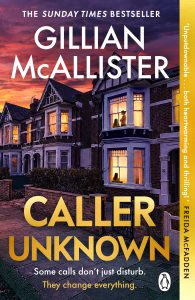 back to our theme of nostalgia and ask what she hopes we never lose, the answer is already there between us. Her eyes light up: “To stay up all night and read novels!”
We’re almost finished when she reveals a part of her process that makes me wince. Gillian plans the first draft meticulously and writes the whole thing. Only then does she discover what the book should really be.
“I have an epiphany and delete what I’ve written. I’ve done that for 11 out of 11 books – 80,000 words deleted – and I’m pretty sure I’ll do it for the 12th. It’s inefficient, but it’s the way I write!”
Another standout insight is Gillian’s key word: ‘if’. “This would be better if… If someone else narrates.” Each ‘if’ forces her to look again, until the story finally clicks. This brings me back to the warning with which our conversation began: “It’s a nice job, but not easy!”
There’s no magic wand, only the willingness to keep learning, questioning and starting again.
“It’s hard but it’s worth it…” Her books keep me up all night!
Listen to the podcast interview on Write On! Audio: https://open.spotify.com/episode/3iKINScQHOy98teXtRGvUT
*****
Issue 30, featuring Gillian McAllister is out now. You will find it in libraries and other outlets. Alternatively, all current and previous editions can be found on our magazines page here.

You can hear great new ideas, creative work and writing tips on Write On! Audio. Find us on all major podcast platforms, including Apple and Google Podcasts and Spotify. Type Pen to Print into your browser and look for our logo, or find us on Podcasters.Spotify.com.
*****
If you or someone you know has been affected by issues covered in our pages, please see the relevant link below for information, advice and support: https://pentoprint.org/about/advice-support/