Showcase: Like My Father + Arnold + World Art Day + Identity After Brain Injury
- 15 April 2026
- News, WriteOn Showcase
Edited by Sebastian Elanko
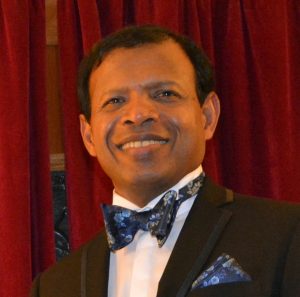
Welcome to my third Showcase of the month. This week I wanted to start by saying that today, 15 April, is when we celebrate World Art Day. This was originally proposed by the International Association Of Art in 2011, with the first event occurring in 2012. As an artist, celebrating creativity in different forms is close to my heart and photography is one of my passions. In fact, whenever I’ve had an exhibition, it’s wonderful to see people relating to my work.
Leonardo da Vinci was a master borrower. He borrowed from nature, birds in flight, water flowing, muscle flexing. He borrowed from old masters and his own curiosity. He borrowed across disciplines: painting, anatomy, engineering, music and leaving notebooks of his interpretation and expansion of the borrowed knowledge; creating something of his own. When UNESCO proclaimed April 15 as World Art Day in 2019 to mark da Vinci’s birthday, it seemed very fitting, as he represents peace, freedom of expression, tolerance and multiculturalism. He teaches us that, to borrow well from one period of time, is to give back in return for the future.
This week’s Showcase reflects on this idea of borrowed time in its many forms. Time is the one thing we never seem to have enough of. And yet, it is also the one thing we can choose to give. Not something stolen or lost, but something lent, offered freely, even when we have little to spare. We borrow time, memories, experience, knowledge and, in the borrowing, we create something new. I remember my A level days. Me and my friends were preparing for exams that would shape our future, yet we found ourselves tutoring children who couldn’t afford extra classes in maths and science. We borrowed time from our own studies. We borrowed a church hall. The priest lent his time to supervise us, as did the nuns. None of us had hours to give. But we gave what we had. This is what borrowing truly means: holding something precious and choosing to share it.
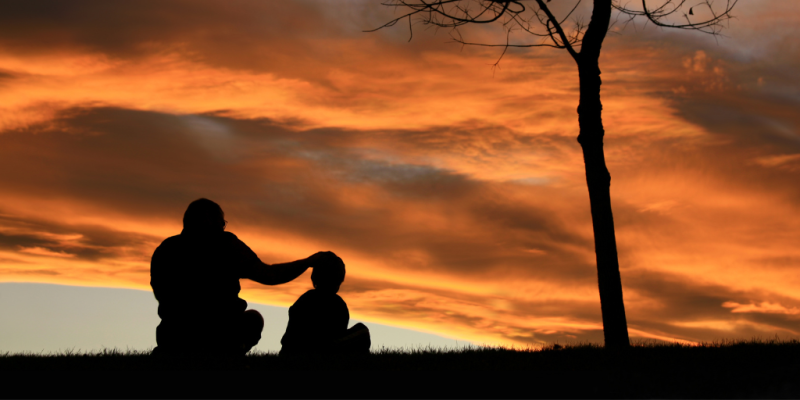
This brings me nicely to the first piece on borrowed memories between a father and son. The time they spent together in the past is captured vividly and expressively in the following poem. It has made me reflect on my own journey between myself and my father. I do hope it stirs a similar sense of reflection for you!
Like My Father
My father said his house must not be empty;
when he grew old and full of years,
when the shades of trees fell on his eyes
and dark lines appeared along his temple,
he must not be lonely and heartbroken.
He was a pine surrounded by broken branches;
some have fallen off, others lay shaking in the wind,
and when the storms came, they, too, fell off,
where the wind had more strength than the tree,
and flowers had no beauty to stop their death,
though the bract was their place of birth.
He saw darkness hovering around his compound,
where he kept watch each morning and evening,
waiting for the time to return to his ancestors;
but he held my hands and closed his eyes
breathed into me the air of his lungs,
transferring to me the power in his loins
to stop the decay and restore some peace.
He said he transferred his old age to me
and I should fill him up with my youth,
but what is youth without the power
to create new blooms or stop the old death,
and follow the spirals of coming and going?
I have a witness in his closing eyes
which recorded the transaction between us,
how my father filled me up with his old skin
and I became his double without his weaknesses.
But he was aware of the ridges of his ruin,
how time had tinkered with the state of youth
and the gift of old age has no more beauty today.
© Jonathan Chibuike, 2026
Connect with Jonathan on Facebook: Chibuikeukasoanya@facebook.com, Instagram: @Chibuikeukasoanya and X: @Johnking1502
*****
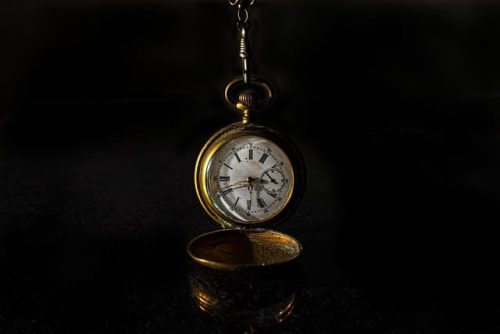
Gloria Maloney calls this a historical poem. It’s about Arnold, a pocket watch chronometer invented in the 1800s, set every day to an accurate time taken from the Royal Observatory in Greenwich, London. She allows Arnold to tell his own story.
Arnold
Still in my embryonic state
Tourbillion beating proud heart
I’m a work of art on John Arnold’s work bench
Destined for a life with the aristocracy
The Duke of Sussex to be precise
Delivered up in a resplendent golden case
Rejected, thrown out
for resembling a bedpan
Rescued from the depths of despair
John Henry Belville polishes me with care
A fresh-faced chronometer, with a silver look, more in keeping
with treading the London streets
Certificate of accuracy from the London Royal Observatory
Christened into the art of selling time
Presented to bankers and shop merchants for a tidy sum
I even saw off a rival
Usurper St John Waynne
His malicious gossip in The Times
accusing me of paltering my trade
From high society to low born
my name rolled off their tongues
Headlined in The Tatler
I wore the badge of infamy with
dignity, selling time with my honest face
to an increased admiring clientele
Part of the family for two generations
Cherished in their safe hands and pockets
Counting time
Now I’m retired in the Science Museum
No longer counting time
© Gloria Maloney, 2026
*****
I just loved this expressive image, which says so much. As they say, a picture speaks a thousand words and in this case I do believe it’s true! The artist writes the following: I created this Montage as a celebration of Performance Art caught in action for World Art Day. These images struck me as timeless moments and memories caught when something was organically being created and performed through connections.
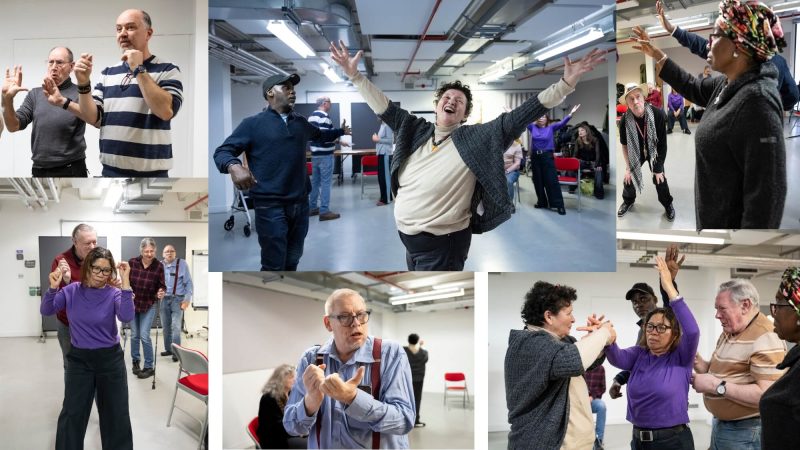
World Art Day – Celebration Of Performance Art © Dr Afsana Elanko, 2026
*****
This final piece, from Lucinda Jarrett, seems a fitting way to close to my page, as it brings it back to World Art Day: how stroke and brain injury survivors borrow from heroes, from the past, from creativity itself to build new identities and new futures. I hope her writing reminds you of a time when you gave freely. Remember – what we borrow with an open hand is never truly lost, as we also give with an open hand.
Identity After Brain Injury
 Rosetta Life, an arts in health innovation charity, is celebrating its 25th anniversary. All the evidence from the research suggests that people who take part benefit from discovering something new and finding new ways to live. One of the questions we often debate is whether, after the trauma of a stroke or a brain injury, we become a different person with a new identity, or whether we remain the same person. Are we borrowing from the past to build something new? Or are we holding onto the life we led as we accept life after our injury?
Creativity enables people to imagine new futures: a garage mechanic envisions a new life as a member of a choir, a former horsewoman becomes an actress. It also enables us to graft new opportunities onto our former lives: a nurse becomes a company manager, caring for all members of the cast, a former bus conductor makes sure no one is left behind as he ensures that stage directions are clearly understood by everyone.
The ambassadors, graduates of our programmes, Stroke and Brain Odysseys, have taken part in a tailored performance arts training programme and have now launched a new performance arts company, Beyond The Odds. They will launch the company this Autumn at The Place Theatre, London, with a new work, Conversations With Our Heroes: The Superfan Club. Each member of the cast chose a hero who has inspired them; borrowing from ideal heroes, they each find new ways to provide an expression of an identity they are seeking. A woman with severe aphasia chooses the orator, Marcus Garvey, a young woman whose life was defined by pain after a traumatic brain injury chooses Frida Kahlo, who famously said: “When your dreams come crashing down around you, create new dreams through art.” A woman who has no words finds a hero in a choreographer, Milca Mayerova, who sought a new language for the world through dance after the trauma of the years of the first world war. Each person borrows from an ideal to create a new dream, a new future.
Jiddu Krishnamurti set out on an inner journey to discover psychological and spiritual insights that could offer him something new, fearing we are products of religion and ideology that we cannot escape. We are second-hand people…We are the result of all kinds of influences, and there is nothing new in us, nothing that we have discovered for ourselves: nothing original, pristine, clear.
Perhaps the trauma of brain injury offers us a similar spiritual opportunity, a chance to make a journey to discover something new, something that escapes the second hand and borrowed language of cultural and political and religious ideologies. Perhaps creativity is an expressive tool that offers us routes for this journey.
© Lucinda Jarrett, 2026
Connect with Lucinda on Facebook: Rosetta Life, Instagram: @lvjarrett / @rosettalife, LinkedIn: Lucinda Jarrett or via their website: www.rosettalife.org
*****
Thank you for letting me borrow some of your time, which you gave freely in reading my page. Sharing time with others and making connections is never time lost, but it enriches our lives in ways we cannot imagine. Finally, I invite you to keep submitting your work and you can see yourself published on this page too.
*****
Issue 27, featuring eco-poet Sarah Westcott is out now. You will be able to find it in libraries and other outlets. Alternatively, all current and previous editions can be found on our magazines page here.
You can hear great new ideas, creative work and writing tips on Write On! Audio. Find us on all major podcast platforms, including Apple and Google Podcasts and Spotify. Type Pen to Print into your browser and look for our logo, or find us on Podcasters.Spotify.com.
*****
If you or someone you know has been affected by issues covered in our pages, please see the relevant link below for information, advice and support: https://pentoprint.org/about/advice-support/
Related News
Write On! Features: Why I Left X And Joined Substack by James Marshall
- 29 September 2023
- News, WriteOn Features
Showcase: Voyage In The Dark + Half Term Reading + East End Women’s Museum
- 17 February 2021
- News, WriteOn Showcase
