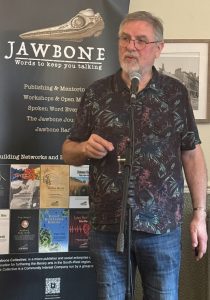
 Hello, I’m Peter Roe, a poet and writer and the founder of The Jawbone Collective, Editor of The Jawbone Journal and The Grand Bard Of Dorset (2024-29). I’m feeling a little nostalgic because this is my second time as guest editor for Write On! Extra. So since the theme is Nostalgia, there’s a lot to talk about. In the year and a half since I was last here, our Not-For-Profit Collective has taken over a cafe to run as a venue for all things word-related, as well as providing essential fuel for creatives in the form of coffee and cake.
The best thing about our cafe is that it’s a former Post Office and General Store and was a place Thomas Hardy would have known. It’s a short walk from Hardy’s home, Max Gate in Fordington Green in Dorchester. Hardy fictionalised this area in his novels as Durnover Green in Casterbridge. In the real world, he was connected with the Moule family who lived in The Vicarage of St George’s Church and his last secretary May O’Rourke also lived on the green.
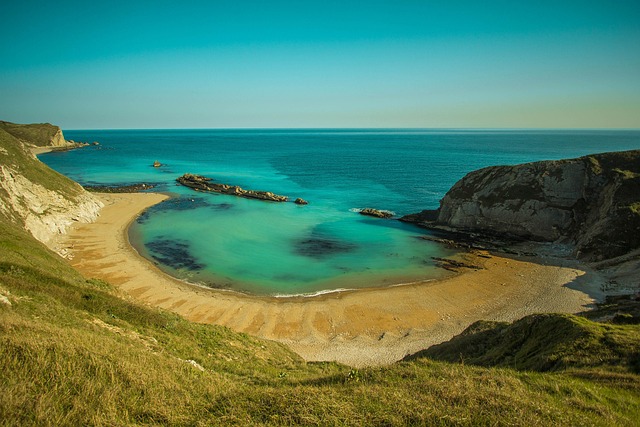
In 2028, it’s the 100th anniversary of the death of Thomas Hardy and we will be looking back, just as we did for Keats’ 200th. Keats came ashore at Lulworth Cove in Dorset on his way to Italy and, 100 years later, Hardy imagined himself on that same shore, observing.
At Lulworth Cove A Century Back
Had I but lived a hundred years ago
I might have gone, as I have gone this year,
By Warmwell Cross on to a Cove I know,
And Time have placed his finger on me there:
“You see that man?” — I might have looked, and said,
“O yes: I see him. One that boat has brought
Which dropped down Channel round Saint Alban’s Head.
So commonplace a youth calls not my thought.”
“You see that man?” — “Why yes; I told you; yes:
Of an idling town-sort; thin; hair brown in hue;
And as the evening light scants less and less
He looks up at a star, as many do.”
“You see that man?” — “Nay, leave me!” then I plead,
“I have fifteen miles to vamp across the lea,
And it grows dark, and I am weary-kneed:
I have said the third time; yes, that man I see!”
“Good. That man goes to Rome — to death, despair;
And no one notes him now but you and I:
A hundred years, and the world will follow him there,
And bend with reverence where his ashes lie.”
(c) Thomas Hardy, 1920
*****
Hardy looked backwards and imagined those who had occupied the Dorset landscape before him. We now look backwards and imagine Hardy occupying that same landscape. But to understand him properly, we have to do more than look at him through the comfortable certainty of hindsight. We need to imaginatively stand beside him, remove everything he could not yet know, and look forward into his future. Only then can we begin to understand what his world actually felt like. To Hardy, 1928 was not history while he was living towards it. His future was as uncertain and unknowable as ours is now.
What we think of as ‘Nostalgia’ is our personal history writing itself and we interpret it through our modern sensibilities. This piece by Eis Mount really spoke to me.
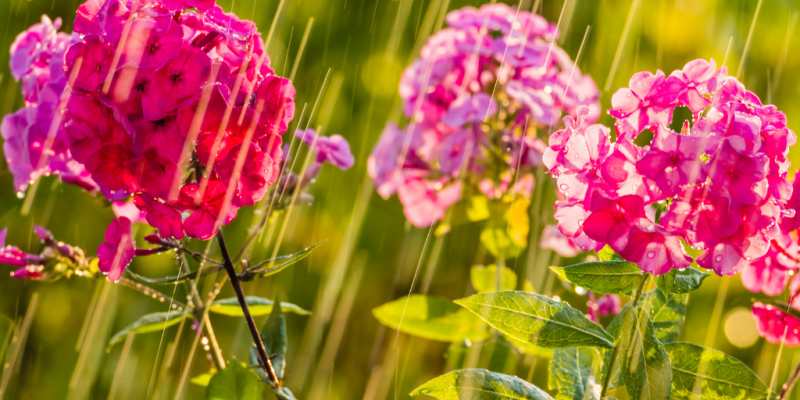
Nostalgia Smells Like Warm Summer Rain
Nostalgia does not announce itself. It does not knock. It simply enters – through a gap in a window, a stranger passing by, a radio left on in another room. One moment you are here, fully present, and the next you are somewhere else entirely. Somewhere that no longer exists, except inside you.
It arrives through the senses. All five of them. And each one opens a different door.
Smell is the fastest. A whiff of rain-soaked asphalt after a scorching day, and suddenly I’m four years old again, standing barefoot on the porch, watching the sky darken. The rain that fell that evening was neither cold nor gloomy — it was gentle, almost tender. The drops hit the sun-warmed earth and released a fragrance so specific, so irreplaceable, that I’ve spent my whole life recognising it in other places and other summers. Sometimes it finds me in the metro — someone’s wet jacket, a gust from an open door — and for a few seconds I’m not on my way to work. I am home.
Sound reaches deeper. A melody can do what photographs can’t – it doesn’t just show you the past, it makes you feel it. There’s a piece of music from a children’s programme I watched before bed as a child, a quiet, unhurried tune that meant the day was over and I was safe. I heard it recently by accident, and something in my chest went still. Not sad, exactly. Something more like the feeling of being held. Sound carries not just memory but the emotional weather of a moment: the warmth of a lamp, the weight of a blanket, the particular peace of being small and cared for.
Taste is the most intimate. It bypasses thought entirely and lands somewhere older. A sour cherry pulled straight from the branch on the way to the river, still warm from the sun. A glass of cold water from a well. These are not complicated flavours, but they carry everything: the whole texture of those summers, the freedom of days with no structure, the way time moved differently then. I have eaten better food since. None of it has tasted like that.
Touch is subtler, but no less powerful. The rough bark of a tree under my palms as I climbed; I still remember the feeling of finding a foothold, of pulling myself higher. Scraped knees on the way home. The handlebar of a bicycle on a long afternoon when it felt like we could ride anywhere and the world would keep producing new streets. Sometimes I notice it in unexpected moments: the weight of a heavy blanket, or warm grass under bare feet, and something in my body remembers before my mind does.
Sight is perhaps the most deceptive. We trust it most, but it is the easiest to misread. What nostalgia shows us is not photography, it’s impressionism. The colours of childhood are always slightly too warm, the light always golden, the proportions gently wrong. The street was probably narrower than I remember. The summers were probably not all sunny. But the image that rises when I close my eyes is luminous and still, like a painting of a place that existed partly in fact and partly in feeling.
I didn’t think about nostalgia when I was young. There was no need; the present was too full, too loud. But somewhere along the way it began arriving more often, and with less warning. I’ve read that this is common: that, as we age, ordinary moments accrue meaning in retrospect. What once felt unremarkable becomes irreplaceable simply because it is gone. We don’t mourn what we have. We mourn what we can no longer reach.
Sometimes, lost in those memories, I almost hear a knock at the door. For a fleeting moment I’m certain it is Katya, or Roma, or Khrystyna, coming to ask if I want to come out. As though all I need to do is run outside, and there, beneath the old trees, my childhood will be waiting.
But the door remains still. Beyond the window lies another time, another life.
And yet – I’m beginning to think that nostalgia is not only loss. It is also a kind of inheritance. Those summers live inside me still: in the way I stop when rain begins, in the impulse to pick fruit straight from a branch, in the moments when I choose courage over caution and surprise myself. Perhaps the past does not disappear. Perhaps it simply moves inward, waiting to be recalled by the right smell, the right sound, the right quality of afternoon light.
Only the scent of warm summer rain finds its way through the years – reminding me that, somewhere in memory, that endless summer is still alive. And so, in some small way, am I.
(c) Eis Mount, 2026
Connect with Eis Mount on Instagram @nadiaeismont
*****
Engagement of the senses is vital if we are to bear witness to the events around us. As writers, we are witnesses to the here and now. Living in the moment, an aspiration for many great religions, to e present. When we write from the heart, when we record what we see ‘In This Moment…’ we are witness and recorder to a moment that one day someone will look back at and call ‘Nostalgia.’
Writing poetry or prose is a vibrant, shifting, surging, flowing distillation of words and feelings crafted into a snapshot that conveys an idea, thought, feeling, transient moment or a piece of history the writer wanted to share.
Photographic Memory
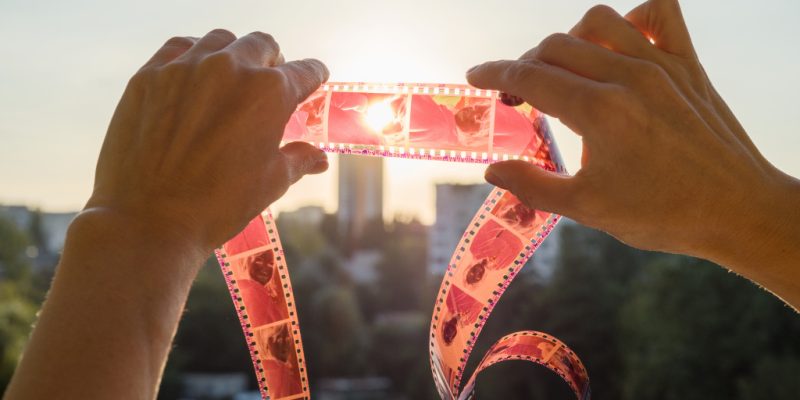
My head is full of colourful moments
a near perfect recall
of pictures, places
noise, smells, emotion
expressions on faces
time, locations
A collection of moments
like a box of mixed photographs
The journeys between memories
have become flat
My daily walk to school
has merged into one
everything that happened
mashed in to a single
laminate journey
The links between moments
have become ephemeral
Tissues of Memory
blown away
by winds of time
Mind fills the gaps
with things that were never mine
Was it really like that
way back when?
Is that a TV memory
something someone else said?
Is this a thing I know…
is my mind…
filling in the blanks?
(c) Peter Roe, 2020
Connect with me on Instagram: @mediachap
*****
We all have things in our heads, events or encounters that were never recorded by a camera. That exist only in our heads. To get a glass of water, you have to turn on the tap. To be a writer, you have to write. Turn on the tap, tell us about your moments. If it’s ‘Nostalgia,’ submit it to: pentoprint.org/get-involved/submit-to-write-on/
I’ll finish this week’s column with the appropriately named The Last Of Things. This poem connected with me on so many levels. I’m still nostalgic for those days of childhood when home deliveries were the norm. Next week, I will share with you my own memories of ‘The Sweet Shop Van.’
The Last Of Things
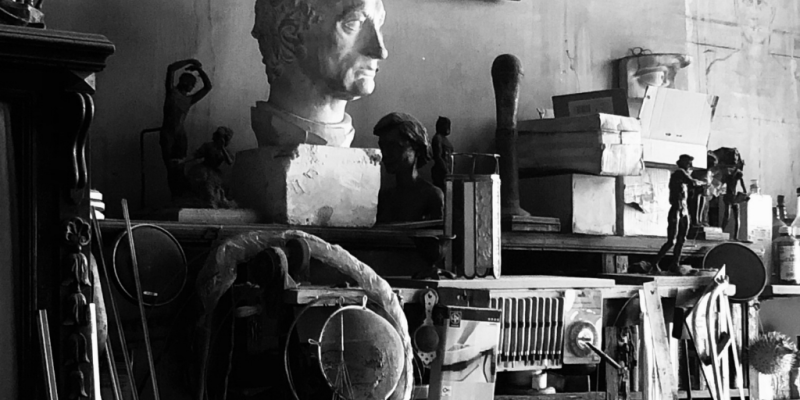
We never know when we’re living through the last of things,
when our everyday is about to become all our yesterdays.
Like the tradespeople who no longer call, because today has
traded them in for history. Necessity becoming nostalgia.
The coalman who’d arrive in his laden flatbed lorry, shoulder
each dusty sack along the side path to empty it into the open
jaws of the concrete bunker, then return and repeat, whistling.
My mother would have ordered it from Mr. Cage’s narrow shop
at the bottom of the high street, with its display wares carefully
arranged in bright, clean bags. At the same time, she might have
ordered bread from Mr. Dilnot, who’d wear a smart straw boater
when home delivering it later from his familiar sign-written van.
Mr. Nicholson, our milkman, in striped apron and peaked cap,
would leave toffees for us children on the silver bottle tops.
In winter, the frozen milk would expand those tops upwards,
and in spring, bluetits pecked right through the foil for a sip.
Sometimes, he’d let us climb aboard the milk float, help him carry
bottles to doorstep crates. Our reward, a half-pint of fresh orange juice.
I’ll always remember the day when the chimney sweep arrived,
bearing his strange bouquet of tall, bristly sticks. My grandmother
took me out into the garden, where together we waited to watch
for the brush to emerge from the red brick stack, shaking coal dust
from its great dried flower head like a cloud of grey pollen.
It will bring us good luck, she’d said. Within a few short years
she would have died, and we had moved away. Had the last of
that luck already run out, or did someone else see it first, that day?
(c) Mary Anne Smith Sellen, 2026
Connect with Mary on Facebook: Mary Anne Smith Sellen: Writer and Artist and Instagram: @maryannesmithsellen
*****
Thank you for joining me on this journey down memory lane. Let’s do it again next week!
*****

You can hear great new ideas, creative work and writing tips on Write On! Audio. Find us on all major podcast platforms, including Apple and Google Podcasts and Spotify. Type Pen to Print into your browser and look for our logo, or find us on Podcasters.Spotify.com.
*****
If you or someone you know has been affected by issues covered in our pages, please see the relevant link below for information, advice and support: https://pentoprint.org/about/advice-support/