
Walking The Line
Last week, I was thinking about the messages that follow on from us: barrows on hillsides, photographs in boxes, trees planted beside roads, poems in books and the spaces we leave behind.
Sometimes, though, the messages from our own past arrive in much less deliberate ways. Recently, my mother found an old programme from a Johnny Cash concert in Manchester. Interesting enough in itself – but inside it my father had written something in pencil, which triggered a world of memories. Coupled with some of the wonderful submissions we’ve received, exploring the people, places and spaces we leave behind and the memories they continue to hold, that discovery is what’s brought this fourth Showcase together. So in today’s page, I’m weaving some of those voices through my own memories and family stories, looking at what survives, what is lost and what writing can preserve.
Back to my father… He worked on the railway when he was young and was also a musician. The two worlds sometimes overlapped. Some years later, I sat over breakfast listening to two of his old friends telling stories about him. Apparently, the railway waiting room occasionally became an impromptu rehearsal room. Friends would turn up, instruments would appear and tunes would be practised between the ordinary business of keeping the railway moving. That conversation eventually became this poem.
‘Man In Black’
Jams at the station
where you held court
Friends would come
Learn chords and technique
Taught “my way, or the highway…”
“No time for idle buggers…”
In between you would
Check platforms
Carry gear
Sell tickets
Do what had to be done
to keep the railway rolling
The waiting room
an impromptu practice place
where you learned the tunes
that were the backing track
to my memories of you
Tales shared by your friends
over breakfast…
after departure…
When my father…
‘Walked the Line’
© Peter Roe, 2023
Music forms part of my memories of my father and, like so many memories, certain songs or artists become attached to people until it is almost impossible to separate one from the other. The tunes of Johnny Cash are part of a backing track to my own life. Apparently, in October 1963, Johnny Cash made his UK debut appearance in Manchester. My dad wrote a poem about tower blocks being built in Salford.
High In The Sky
Out of the back streets of Salford
Nearer the heat of the sun
Juts a new ivory tower
To take mum and dad from the slums
It rose like the tower of Babel
And reached nearly up to the sky
Cos they mixed the concrete like puddings
And it set 22 stories high
We’ll split up the family unit
One unit per flat – ten per floor
And there’s a balcony there to fall off of
And we wont know the people next door
Now down our old street we had neighbours
And all of the neighbours had lads
And all of the kids had toys to amuse them
Like dead moggies and old dustbin lids
We’d swing on the arms of the lamppost
Play football with empty tin cans
And run when we spotted a copper
And cadge dinner down at our nans
But now its goodbye to the ally
And we wont know where the old folks home is
To cadge a tanner off us nana
To buy us our hot fish n chips
We’ve got a new porcelain bathtub
Mum says I’ll be in it today
But how can a fellow get mucky
When there ain’t nowhere to play
We’re cooped like battery chickens
I’m tied to the house like a snail
So if i grow up a bloody delinquent
They can throw the ruddy planners in JAIL.
© John Roe, circa 1960
*****
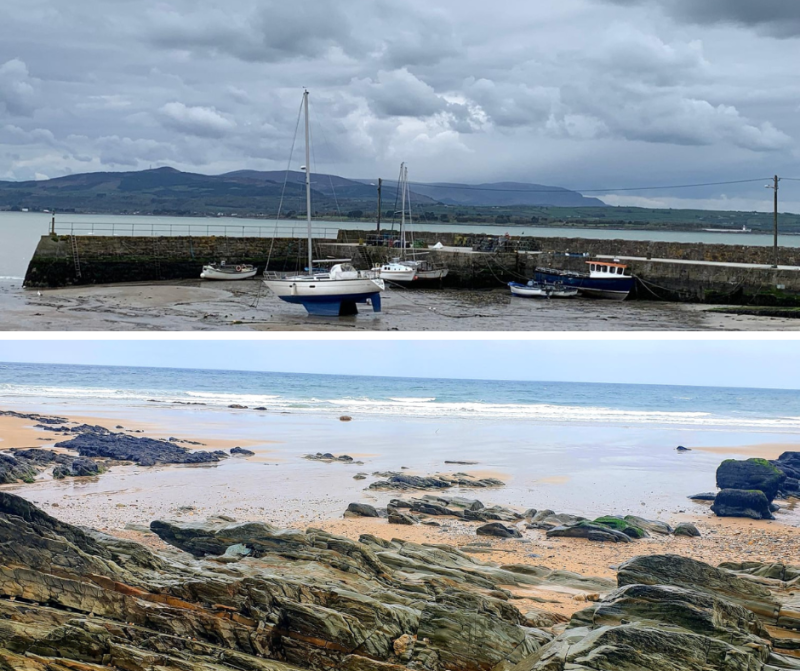
Reading my father’s work made me think of this lovely piece submitted by poet and author Mary L Walsh. Part of the Irish diaspora, Mary writes poignantly about the pull of the land we leave behind and the way a sense of home can remain with us wherever we go.
Leaving The Land Of My Ancestors
Leaving the land of my ancestors,
I am struck with a sudden sense of longing to return,
to be Shirley O’Valentine
cover myself in the green heathered hills
Leave footprints in the sandy coves
Fill my ears and heart with the sound of Uilleann pipes
So, my soul remains there still
© Mary Walsh, 2026
Connect with Mary on Instagram: @marelwa60
*****
This next poem by Jonathan Chibuike Ukah draws us into that sense of loss we so often associate with nostalgia, while taking us somewhere deeper. In The Flowers Of My Village, he imbues the flowers with a kind of magical realism, which carries both the pain of absence and that need to return to memory. It reminds me of how we worry at a painful tooth, drawn back by the very ache of it because there is comfort in the hurt.
The Flowers Of My Village
I tried to teach the flowers of my village
that I have just returned from abroad,
where their mates live and bloom
in pots, fields, gardens and lawns,
in long and lonely parks in cities
or the rural areas where some nice girls
pluck their leaves and sniff in their noses
before smiling at the sun and walking away;
I tried to teach them how every rose and lily
has acquired a sugar mummy or daddy
to cuddle them into their homes and hearts,
and stuff them into colourful clay jars
where they will never chafe to silent death;
I tried to teach them how this comfort
does not make them see the stars every day,
caged in glass houses and green parks,
they don’t have the blankets of their gods.
I tried to teach them that there is a new thing
which takes over the hearts of the people
who once fell in love with their mates
and no longer allows them to admire them.
Now is the worst time of the year
for flowers to bloom, breathe and break
the sky-bound barrier to growth or blossom,
Yet the sprouting of dandelions and roses
will never be the subject of such tariffs.
Soon, they will not be in gardens and parks
where the government has decided to levy
if the citizens continue to enjoy a stroll
or relax on benches, fields and lawns,
or lie on the grass to tan in the blustery sun.
Now is a terrible time to be a flower
when tariffs fall on every vase and urn
or each vessel of soil and water for their growth.
The flowers of my village shake their heads in pain,
open their blades to the sun and suck in air;
turning to the trees and thistles around them,
they release a yawn of satisfaction and glee,
how their glory in the forests of wild leaves,
illustrates the illusion of power and affluence.
(c) Jonathan Chibuike Ukah, 2026
Connect with Jonathan on Facebook: @chibuikeukasoanya
*****
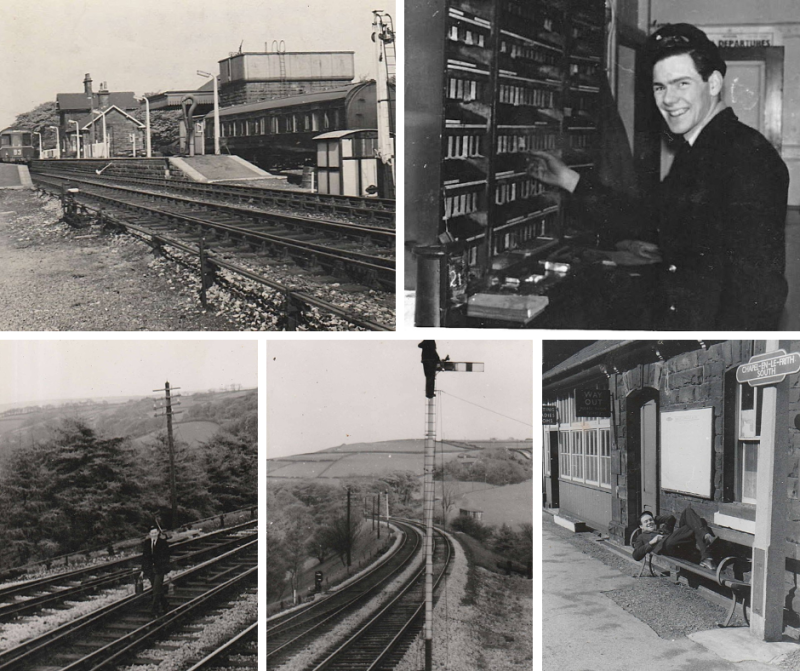
I’d like to finish with with a final poem from my father’s railway days. This one is full of named people: Juddy, Claude, Fred, Brian, Ginger… Characters, individuals… Men who annoy one another, drink tea, play cards, make music, swear, work, joke and apparently attempt to blow one another up. I’m also delighted I have some pictures to share with you!
The Long And The Short Of It
(with apologies to 129 Gang)
At Chapel working on the length
Is Juddy’s Gang one short of strength
At the Head, this man named Jud
It’s often said that he’s no good
But he’s the chap who takes the onus
Of seeing that his lads get bonus
Now Juddy has “Oh praise the Lord”
A sub-ganger who is know as Claude
Who helps when working on the track
To ease the burden off his back
He also has three other men
Each one can do the work of ten
One well built, by name of Fred
Who walks along with heavy tread
Another one by name of Brian
On judgement day he’ll be fryin’
He plays at cards but never wins
‘Cause Gingers marked them all with pins
Our Ginger makes good use of brains
And keeps good lookout for the trains
On seeing one he blows his trumpet
And also watches passing crumpet
And so we leave these trusty bods
Old Juddy thinks they’re idle sods
If lazy lot wont work for him
His future’s looking pretty grim
He’s so worn out he’s like a ghost
So Grindy is practicing Last Post
His energy is well nigh spent
His knee’s are getting pretty bent
His hammer’s grooved his shoulder deep
And poor old Jud can’t get no sleep
He’s worrying both night and day
But what about we just can’t say
He ought to join the Sputnik Race
And consign them all to outer space.
© John Roe + Signalman from Chapel South Station, 1960s
What survives in pieces like this is more than family memory. Names, jokes and working lives that might otherwise disappear are caught on the page.
Talking to my mother and brother brought some of these people back into focus for me. ‘Juddy’s Gang’ stopped simply being characters in an old comic poem and became railwaymen again.
Nostalgia isn’t just about looking backwards. Instead, it’s about the fragments we preserve, the stories we inherit and the meaning we continue to make from them. A photograph, a poem, an old object or a half-remembered story can suddenly open a door into another life. And that’s what the pieces shared in this week’s Showcase have done too: each holding onto a place, a memory, a loss or a voice that might otherwise slip away.
So over the next few days, do look into your own family archive and have a think about the stories that have survived. What objects have lost their explanations? Who were your parents or grandparents before you knew them simply as Mum, Dad, Gran or Grandad? You might like to use some of these as writing prompts for our new theme ‘Fractured.’
Join me again next week for the final part of my September exploration of nostalgia, when I’ll return to Dorset, its landscape, its dialect and the way old voices can find new speakers, while bringing you some more wonderful writing from the Write On! submissions folder.
*****

You can hear great new ideas, creative work and writing tips on Write On! Audio. Find us on all major podcast platforms, including Apple and Google Podcasts and Spotify. Type Pen to Print into your browser and look for our logo, or find us on Podcasters.Spotify.com.
*****
If you or someone you know has been affected by issues covered in our pages, please see the relevant link below for information, advice and support: https://pentoprint.org/about/advice-support/