Edited by Jaclyn Rajsic
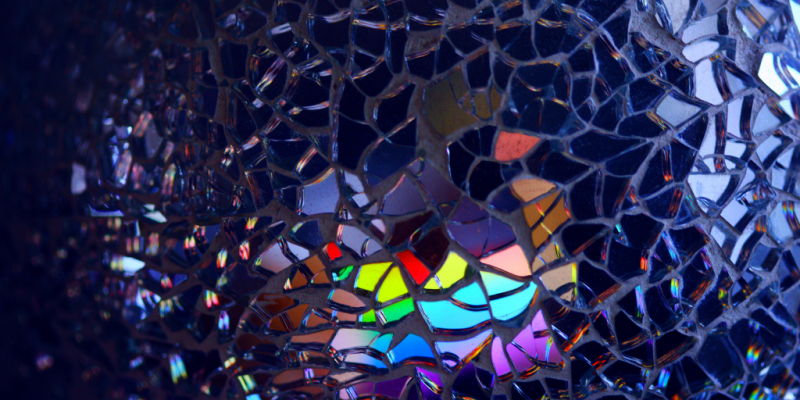
Welcome to my second Showcase for the month, in which we continue to explore our new theme of ‘fractured’.
Last week, we looked at pieces of London to reflect on fragments that shape histories, memories and experiences of place. This week, I’ve been thinking about fracture in relation to family history and inheritance: the stories, memories, ancestries and relationships that shape who we are. Stories and histories can be passed down through generations, for example through family trees, objects or family heirlooms. Those objects hold sentimental value, but they can also take on symbolic value.
What happens when those treasured objects break? Our first poem explores just that, as the speaker repairs a broken teapot given to her by her late grandmother. The object cannot fully be repaired, but the memories of the person it represents remain intact.
Surviving
I dropped it you see, whilst cleaning it
as I do,
how many glasses and cups have gone this way?
It’s hard to say,
swept up and unceremoniously binned,
the teapot though…
In disbelief (at the same time it was no surprise)
I regarded its demise.
Carefully I picked up the pieces
as many as I could find,
sharp shards, shattered slithers,
a bit like my saddening mind.
You see it’s all I have left of Gran
given to me,
a treasure, since I was sixteen.
On the table I looked at my broken finds, remembering
a time, my job, working with archaeological finds.
Could I put it together? Because
unbelievably, the front of the tea pot and lid was intact,
the peonies still glistened in their glaze,
the handle curved and raised.
It was starting to look like a pottery puzzle
and Gran always liked a jigsaw puzzle.
My fingers sought pieces that fit together,
superglue became our friend
and the tea pot began to take form again.
Stout and cheerful from the front, yet
a triangular hole now gaped in its back,
empty of pieces that couldn’t be saved.
Now, the teapot is back on the shelf,
it holds a secret shared with my self
not broken but fractured and surviving
still holding memories of Gran.
(c) Lesley Anne Armour 2026
Connect with Lesley on Instagram: @seasand_lesleyanne
*****
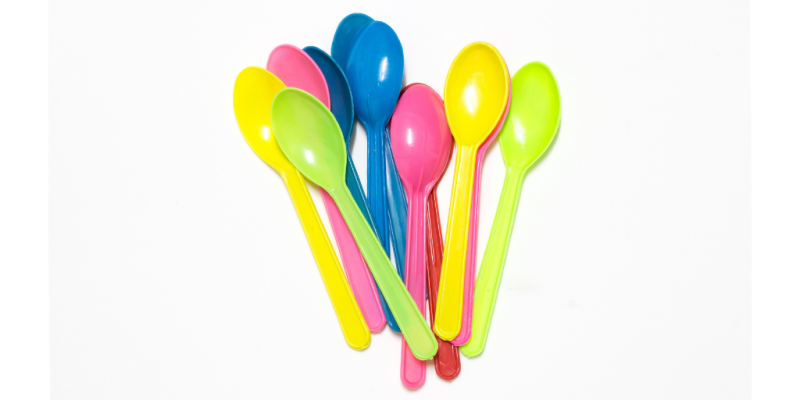
In our next piece we think about another symbolic object – the spoon – not as a repository of memory but as a sign of what we inherit or receive at birth. The speaker reflects on different-coloured spoons in a powerful and moving poem that explores privilege, pain, colour and fate.
The Best Gift Of My Life
My sister wanted to buy a gift for me,
in celebration of my seventieth birthday.
I enquired from my mother who was there
the day I was born in the convergence of pain,
the colour of the spoon dangling from my mouth,
as I screamed out of her body in a pool of blood.
Some spoons are red, some are blue and pink;
many are green and silver, others gold and violet,
and as I was not available at my birth,
I was wondering what else my life would lack.
How I hate to acquire what I have acquired,
or accumulate the things I have accumulated,
though beauty is not a victim of boredom
except when it goes into unnecessary overdrive,
and desire is a tricky and dangerous thing
that keeps on coming until it’s crashing day.
Note that even beauty can be a long river,
or like every colour carrying debris along,
slowing down its progress, filling up its spaces.
What else could be worse than a purple spoon
stretching from my lips like a tongue of blood,
and it would scare everyone away from me,
slumping me into a lonely and miserable life.
Neither would a yellow spoon be better for me,
that could serve as a warning to my generation,
and command them to avoid the fatigue of a man like me.
How I taunted myself with the colour diamond,
that it must be the most awful thing in the world,
if millions of people died in the diamond wars of Africa.
I couldn’t have been born with a silver spoon,
for my father was a bricklayer and a trader,
while my mother was a crayfish seller in a public market,
except that the colours had switched sides.
A silver spoon is still the petty pageant of privilege.
What is my fate when all colours are fatal
and I spend the rest of my life in perpetual horror?
Or that I might be a memoir to the colourless,
to those who live and love without colour,
to those who judge without colour in their eyes.
(c) Jonathan Chibuike Ukah, 2026
Connect with Jonathan on Facebook: @Chibuikeukasoanya and LinkedIn: JohnKing1502@LinkedIn.com
*****
Finally, a short story invites us to think about how research into our origins and family history can disrupt or challenge understandings of who we are. Newly-discovered family members, and the revelations that come from previously untold stories, might fracture our identity at first. Yet, those stories and connections can lead to the formation of new relationships and can help us to better understand aspects of ourselves. What might have seemed broken is put back together, this time with new pieces. The person who emerges is forever changed.
Fractured Identity

“Danny, are you listening?”
“What? Er, welcoming people, Miss?”
Miss Taylor sighed. “Yes, Danny. I was saying,” she shot a look at the sniggering boys at the back, “that we want to get to know Year 7 and a big part of that is where you come from. This school has children with many languages and cultures but it’s not just that. What jobs do your family do, are there jobs or traditions passed on? It’s your homework to research this and share with the tutor group.”
“Diversity, innit,” whispered his best friend Tracey, rolling her eyes.
“Something wrong, Tracey?” asked Miss Taylor.
“No, Miss. Something in my eye, that’s all.”
After school, Danny caught up with Tracey and her neighbour, Si, to walk home. It hadn’t been a bad day really. Most of the teachers were OK and science was cool, but Danny was stressing about his project.
“What are you going to do about this project?” he asked.
“Project?” Si pushed his glasses further up his nose.
“You two!” Tracey shook her head, braids flicking. “It’s a whole diversity thing, innit? So me, I write about my mum’s family, all born in England but moving to London for work and my dad coming over from Jamaica. Knowing English and patois, eating roast and jerk chicken, Miss Taylor’ll love all that.”
“What about us?” Si said, “We’re pure English.”
Danny and Tracey looked at Si, so white he was positively translucent.
“Yeah, but have your family always lived in London? Haven’t your whole family been butchers? You could look at how the job’s changed over time. Even if they all speak English, what about local slang and stuff?” Danny said.
“Yeah, and you can add the Welsh stuff, Danny, remember?” said Tracey. “Don’t you speak all that with your dad?”
“A bit,” said Danny. “Yeah, I could include that. Might do food, too.”
They walked together a bit further, scuffing up autumn leaves as they chatted about their boring maths teacher and the new shopping centre opening at the weekend.
As Tracey and Si turned off, Danny savoured the last ten minutes on his own, enjoying the quiet. Turning the key in his lock, the change was instant.
“Hi love,” said his mum, but he could barely hear her over Rhys and Owain fighting and the baby screaming. She wiped her face, “Your dad’ll be home soon, pet,” she said.
Danny nodded and went to his room to start his homework. But with the noise from his brothers and no clue how to begin the project, he soon gave up. Instead, he scrolled through Tik Tok, watching silly videos Tracey had sent and a comedy sketch by some boys in their year until his mum called him down for dinner.
They were halfway through their pasta before his dad asked about homework. “Not too bad, is it, Danny? Not six pages of maths, I hope.”
“Nah, maths is OK,” said Danny, “It’s just this project thing.” Mum and Dad exchanged glances as he spoke. “Anyway,” he finished, “it won’t be as exciting as Tracey’s, but I suppose I could do the family tree, then write about the English and Welsh things in my life, language, food. Hopefully, it won’t take too long.”
“No,” said his dad slowly. “We’ll help. Once your brothers have gone to bed, we’ll talk about it together.”
Mum’s hand knocked the salt cellar off the table as she agreed. “Yes, dear, we’ll have a chat later.”
Once his brothers had eventually settled down, Danny grabbed his homework planner and went down to the dining room. His mum and dad were already sitting there with three cups of tea, looking serious.’Blimey,’ he thought, ‘it’s only homework.’ He looked at them both.
Mum looked at Dad before speaking. “The thing is, Danny, we’ve been meaning to speak to you for a while, and this project means it’s the right time.” She paused. “The thing is, Dad isn’t actually your real dad. He’s technically your stepdad.”
“What?!” cried Danny, horrified. No one had ever told him anything about this.
“Didn’t you ever wonder why only your brothers have Welsh names?” said Mum.
“Never really thought about it. Loads of kids are called Rhys and they’re not Welsh. I didn’t really think about whether our names are English or Welsh.”
“Look,” said Dad. “I met your mum when you were six months old. I consider myself your dad.”
“Yeah, well, so did I until a minute ago,” snapped Danny. “And what about my real dad? Where is he? Is he English?”
Mum hesitated but Dad nodded at her.
“Your dad wasn’t English, he was Romani. And he’s dead. We’d already broken up before you were born, but he died not long after.”
“And there’s nobody else? No gran or cousins or anything?”
“I’m not sure,” said Mum. “They were never keen on your dad marrying me. They didn’t want a diddakoi, as they called it, in the family.”
“A diddakoi?”
“Mixed, gypsy and other, gorger, they said.”
“Great, so I’m an unwanted mixed race with gyppo blood? Marvellous. I’m not writing that up.”
“What you choose to share is up to you, but it’s part of who you are.”
“Yes, and there’s lots that you get from your dad. He loved his music and dancing, and he was great with animals, just like you,” said Mum.
“I can’t believe you just expect me to be OK with this!” Danny stomped upstairs.
The following day, he ran to school early and kept his head down at tutor group, even though he could feel Tracey and Si looking at him. He wasn’t with them for morning lessons, but Tracey cornered him at lunch.
“What’s going on?”
“Nothing.”
“Really? ‘Cause if you’ve got a problem with me, spit it out!”
That made Danny look up. He sighed, “It’s not you, it’s this project.” He explained everything, as Si drew his chair closer and Tracey nodded through his story.
“Wow!” gasped Si. “That’s epic.”
“Not the word I’d use,” said Danny, laughing. At least none of his friends had run away pointing and screaming. “It’s not exactly cool.”
“Yes, it is,” said Si. “Your project will be really unique.”
“And you might be able to trace some of your Romani family, but you’ve still got all your Welsh knowledge. You’ve kind of inherited from three groups really,” Tracey said.
That gave Danny pause. Perhaps he had been a bit rude to Dad. He was still his dad; he’d brought him up after all. Could he keep his Englishness and Welshness and still research his Romani roots?
***
Four months later, Danny was about to walk on stage at a borough speaking festival: Miss Taylor had been more than impressed with his final project. It hadn’t been easy; he’d spent a week referring to his dad as “Carwyn” rather than “Dad” at the start, and driven his mum mad before starting to process his new understanding of his identity.
For his speech, Danny had made links with the common threads of his three inheritances – the storytelling, care for animals and love of music – as well as unique features of each, from English invention to Welsh passion and Romani crafts. He’d slowly started meeting his Romani family but was also going to the rugby club his dad ran, though his mum still said football came first. Danny thought he might like to work with animals one day, but that was a long way off.
He looked around, taking in his parents and brothers moving along to make way for his Romani gran and eldest cousin. His mum still looked nervous, and Gran gathered her skirts self-consciously, but they were all there. He stood in the middle, glanced at his papers and began.“Good day, bore da and lachho dives…”
(c) Rebecca Seaton, 2026
Connect on Instagram: @rebecca.seaton.9
*****
Please join me again next week, as we look at fractured identities that are beyond repair.
*****

You can hear great new ideas, creative work and writing tips on Write On! Audio. Find us on all major podcast platforms, including Apple and Google Podcasts and Spotify. Type Pen to Print into your browser and look for our logo, or find us on Podcasters.Spotify.com.
*****
If you or someone you know has been affected by issues covered in our pages, please see the relevant link below for information, advice and support: https://pentoprint.org/about/advice-support/